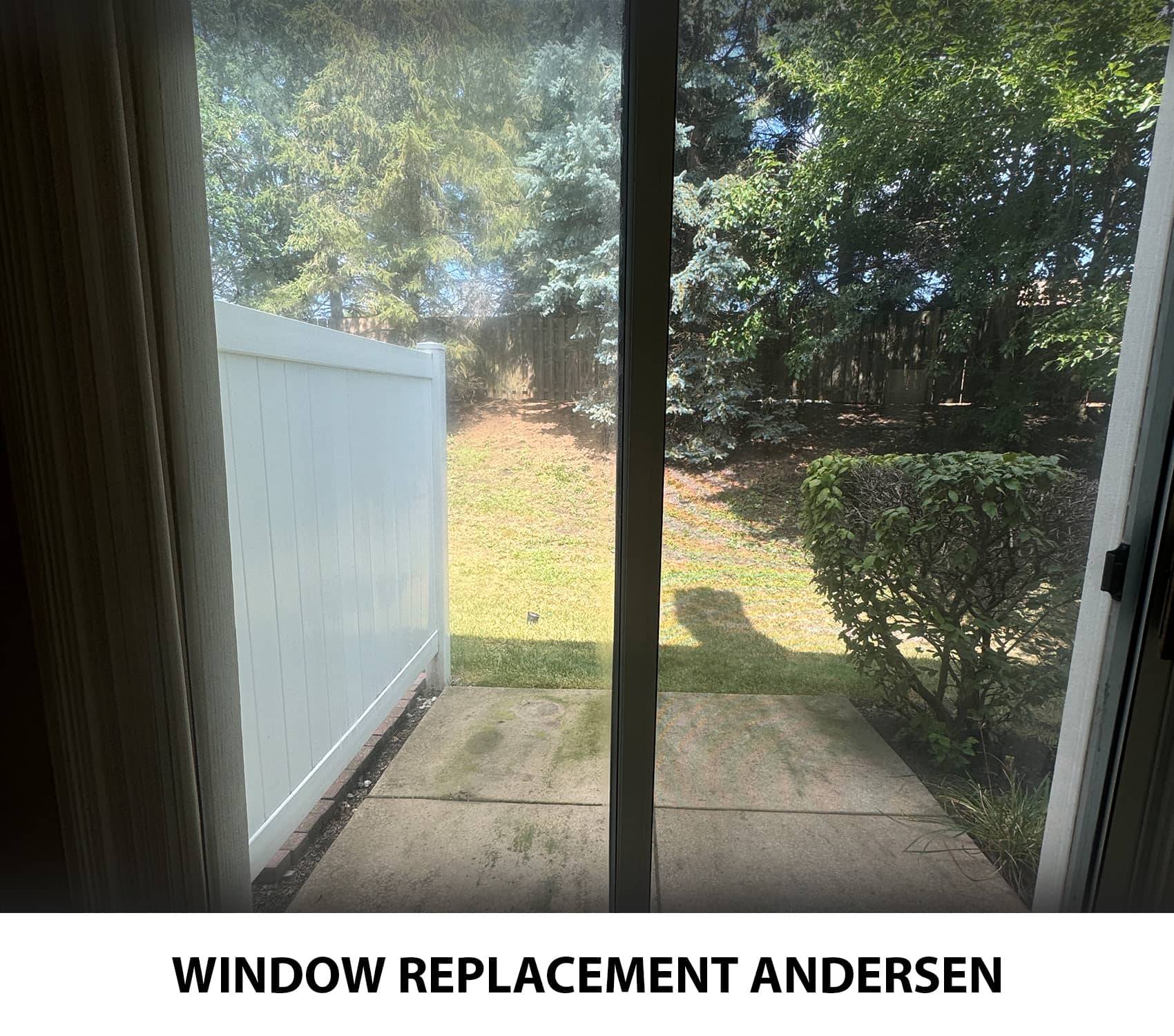
What Andersen window problems look like in real life
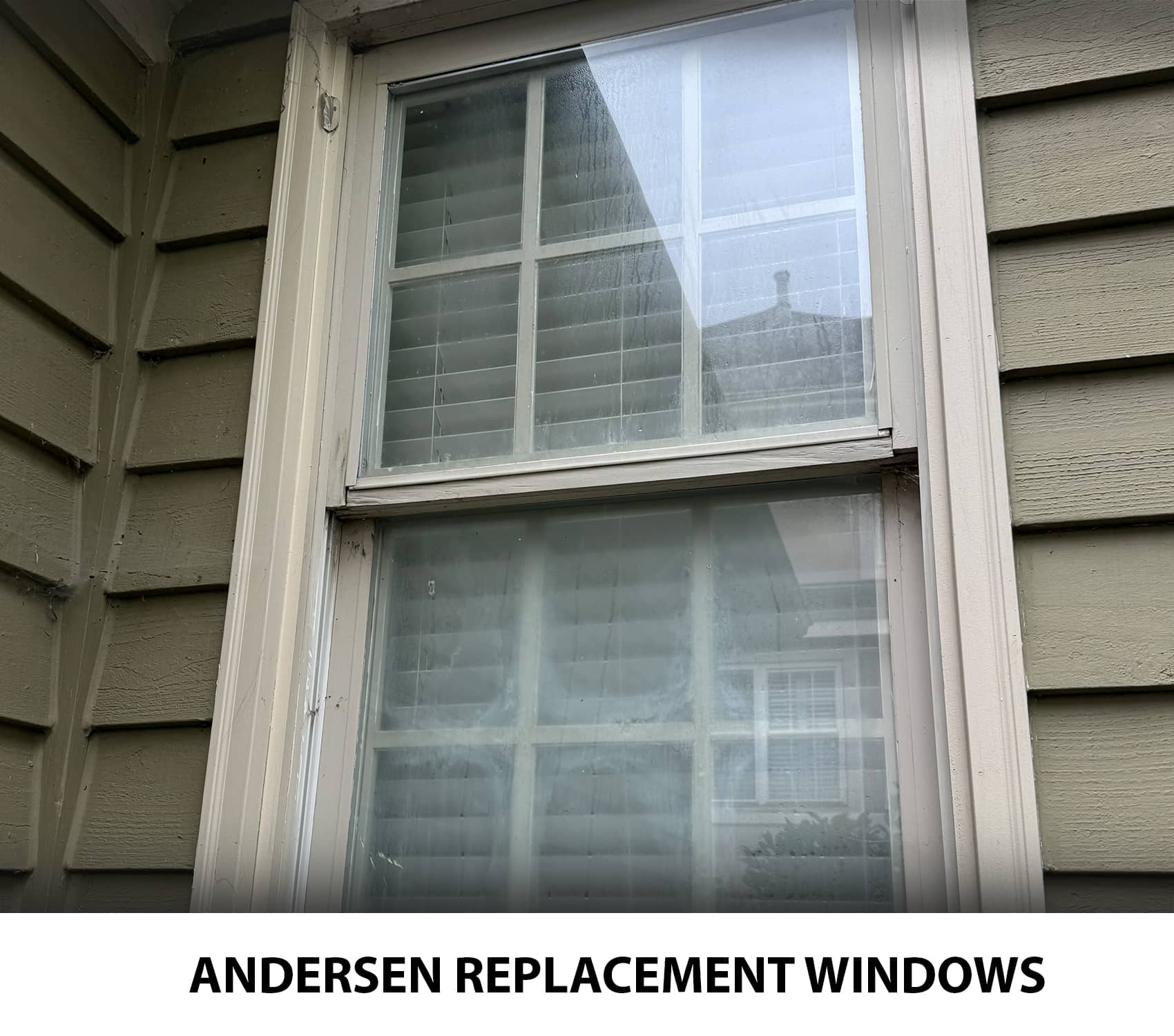
The quickest way to get a handle on the issue is to name the symptom itself, not just the annoyance around it. Fog sitting between the panes usually signals a failed insulated-glass seal. A cracked pane or a chipped edge is a different kind of failure, and in that situation glass replacement is often the more direct fix. A draft on windy days, even when the window is fully closed, usually traces back to worn weatherseals, hardware that no longer draws the sash in tight enough, or frame and wood conditions that prevent an even seal all the way around. When the sash keeps sliding down, the balance system is one of the first things worth checking. When the lock comes close but never fully engages, the cause is often not the lock by itself but alignment drift from wear, settling, or slight warping. On gliding windows and patio doors, the pattern is usually easier to feel than to see: a panel that scrapes, a sticking sash, or that dull, gritty drag in the track. In a lot of cases, the root of it sits in the rollers, the track itself, or basic alignment that has slowly moved off.
What a real Andersen diagnosis should include
Solid Andersen repair starts with a simple principle: find the exact point of failure first, then match the repair to the specific part or condition behind it. A surprising amount of Andersen service work comes down to individual components. These units are built more like coordinated systems than one-piece products, which means a failed operator, latch, insert, or smaller hardware part can often be identified, sourced correctly, and replaced without tearing out the original window or door.
A reliable process usually follows a sensible sequence. It starts with an on-site inspection, then tracks the problem to its real source, whether that turns out to be a failed glass seal, worn hardware, slight frame movement, or early wood deterioration. After that comes exact measuring anywhere replacement parts have to fit precisely, identification of the damaged piece, and a written scope with an estimate that clearly separates repair work from full replacement. That matching step matters more than it may seem. A part that is almost right can look acceptable at first, then start dragging, shifting, or slipping back out of line not long after.
The final check matters just as much, because the goal is not simply to get the unit to open again. It should move smoothly, close square, lock properly, and seal evenly around the full perimeter. If the sash still rubs, or the lock still catches only halfway, the repair is not really finished. Good service in Arlington, VA should also leave behind a few practical maintenance notes after the work is done, so the same problem does not keep returning with every season change.
Service standards that protect the repair
Paying for service is not really about buying a replacement part by itself. The part matters, but the real measure is what happens after the work is finished: smooth operation, a consistent seal, and a window or door that stays aligned instead of slowly drifting back out after a few muggy months in Arlington, VA.
One of the clearer signs of solid work is the use of genuine Andersen parts for operators, cranks, handles, and locking hardware. Those details have a direct effect on fit, day-to-day security, and how tightly the unit draws in when closed. Another good sign is when the repair is done with Andersen-approved materials and methods, at least in cases where the provider defines the work that way, because that keeps the finished result closer to the performance the system was designed to give in the first place.
From the homeowner side, the basic protections are pretty simple. The contractor should be licensed, insured, and clear about pricing before the job starts. That is not paperwork for the sake of paperwork. Glass work carries real risk, patio door panels are heavier than they look, and wood repair can turn into more than a surface fix once dark trim, a soft sill, or damp framing has already started showing up.
Fix paths by component
Glass and seal failures
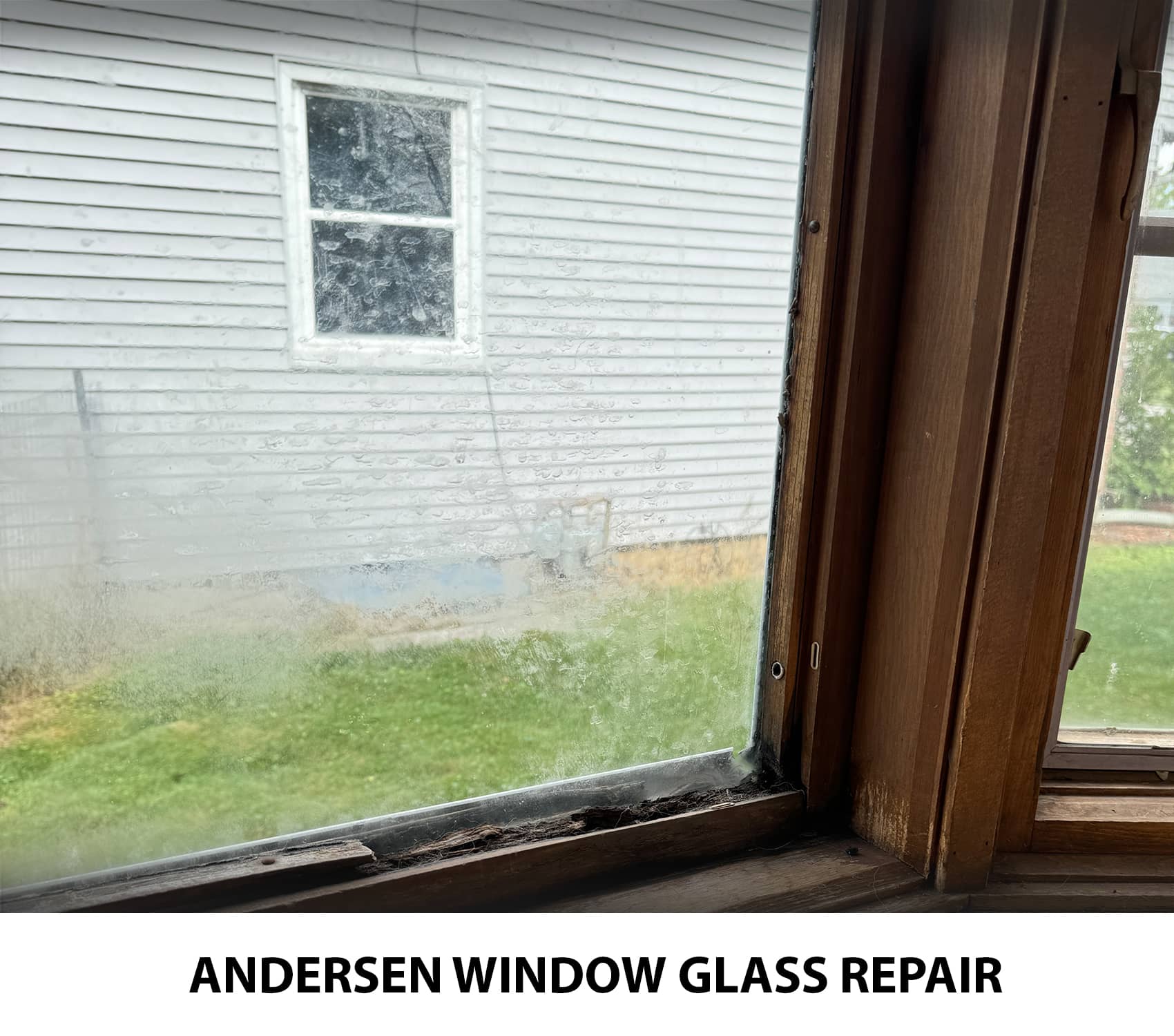
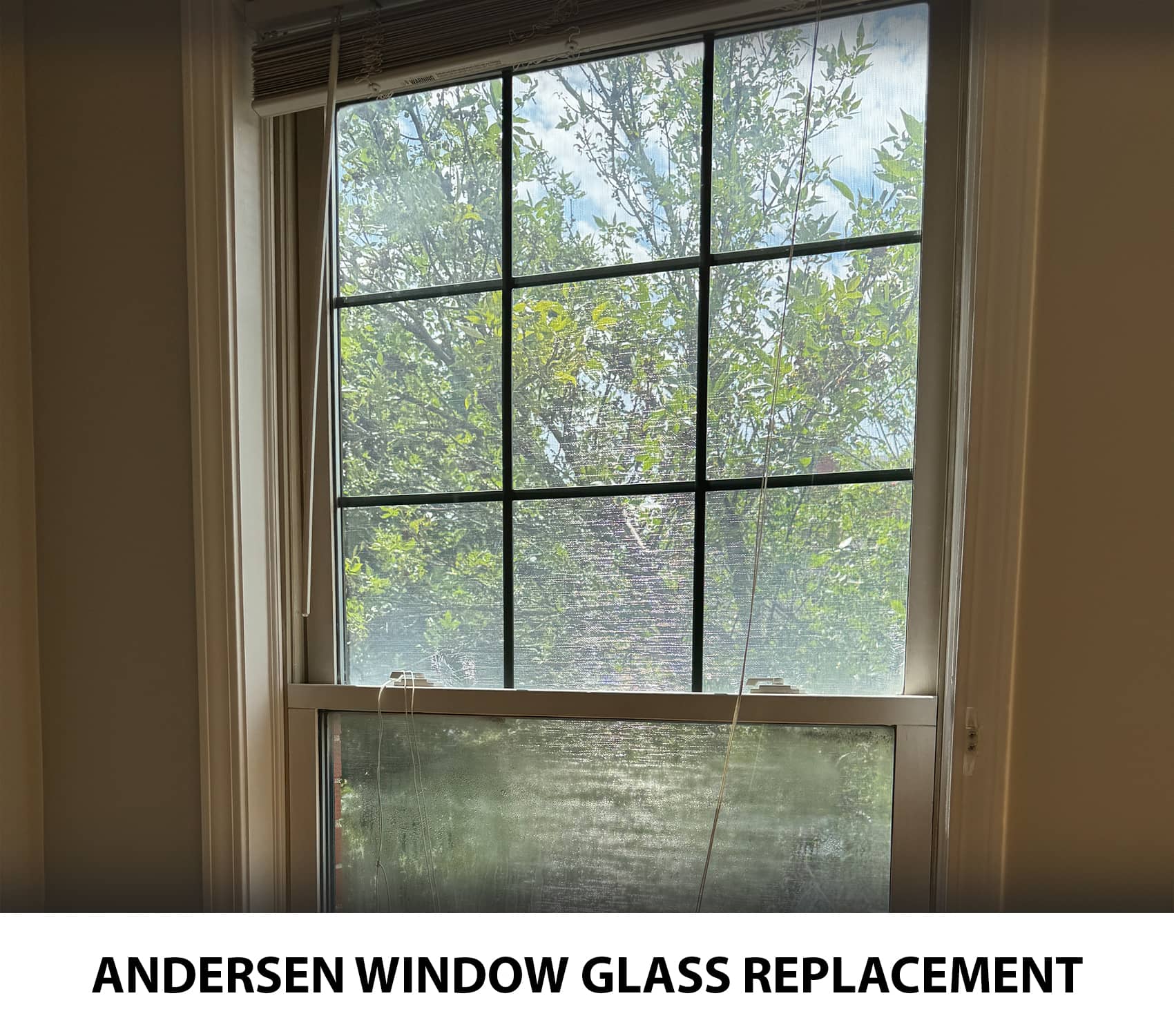
When a double-pane unit turns cloudy or starts holding moisture between the panes, the problem is usually the seal, not surface dirt. In most situations, the insulated glass unit has failed, and the normal repair path is replacing that glass unit or fitting matching replacement glass made for that exact sash or door setup. Fogged Andersen glass is usually handled this way: a new energy-efficient insulated unit is installed, then the sealing work is done with care so the haze does not come back after another stretch of Arlington, VA heat, humidity, and hard rain.
Cracked glass or a chipped pane is a different kind of problem. At that point, replacement is usually the smarter route, both for safety and for the stability of the unit itself. The same logic applies to patio doors, except the work gets heavier and less forgiving because the glass area is larger and the panels carry much more weight.
A real job-site example makes that repair-or-replace decision easier to picture. When a patio door has moisture trapped between the panes, the repair may involve taking the panel out, removing the failed glass, clearing away old glazing material and leftover debris, and then setting the new glass with fresh compound and proper sealing. That prep work is not some small detail. A long-lasting result depends on much more than slipping in a new pane and calling the job finished.
Hardware, balances, and moving parts
A big share of Andersen service calls comes back to the mechanical side. Cranks wear out. Hinges shift. Locks stop lining up with the strike the way they should. Balances weaken, and the sash starts sliding down or will not stay where it belongs. On gliding windows and patio doors, the usual pattern is drag: sticky movement, a panel that feels unusually heavy, or a track that starts feeling gritty and rough once the rollers wear down or debris builds up.
Repairs in this category are not just simple part changes. The real goal is to get the whole unit working properly again. That often means replacing worn cranks, handles, locks, or other hardware with genuine Andersen parts, restoring springs and balance systems when a sash drops or refuses to hold, and correcting alignment so the window or door closes square, latches cleanly, and seals the way it was originally meant to.
Wood rot, sash, sill, and frame restoration
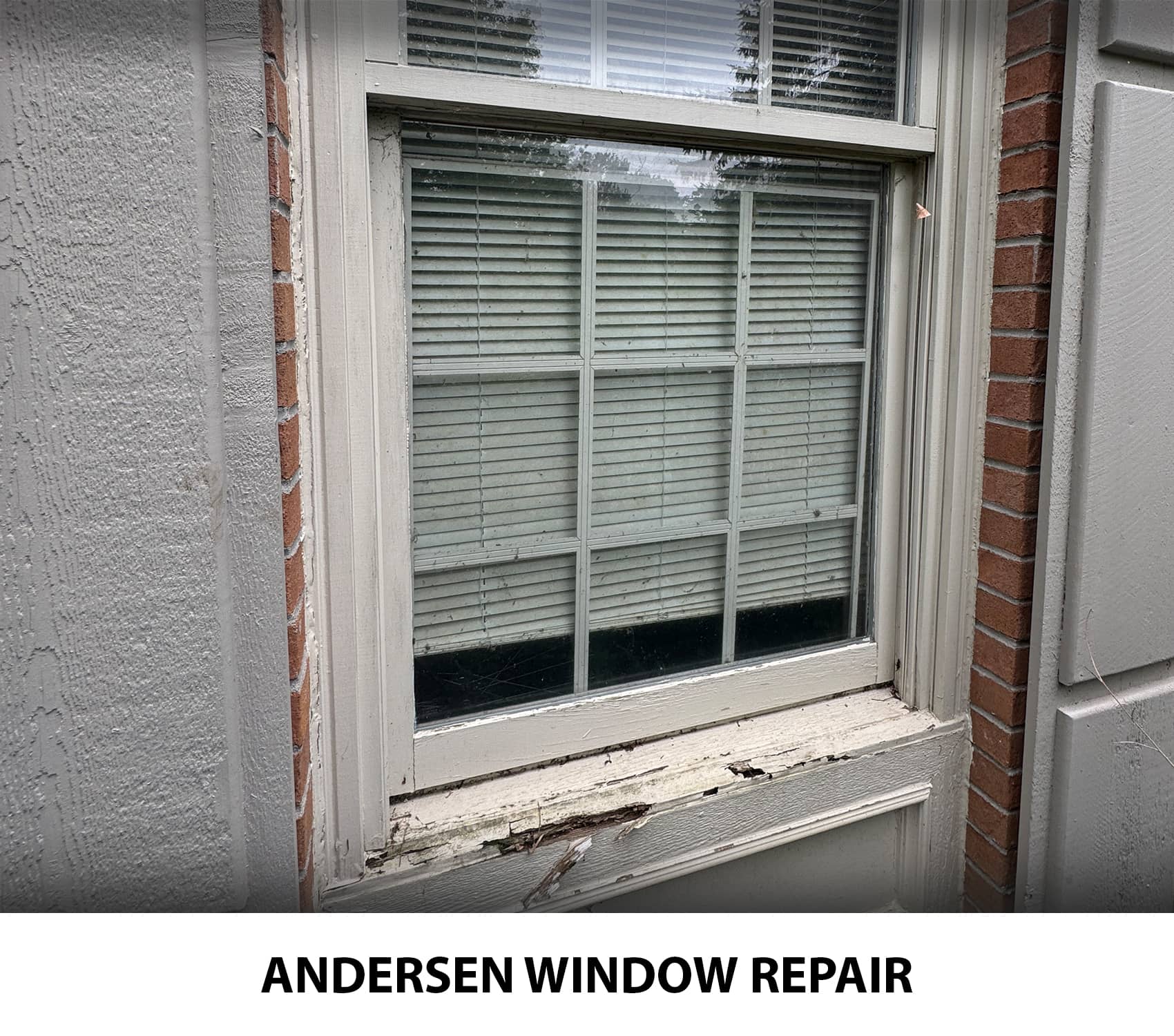
Wood damage has a way of staying quiet until it suddenly is not. What starts as a limited repair can turn into a much larger structural problem once rot, splitting, or swelling gets far enough along. The trouble usually shows up where moisture hangs on the longest: at the sill, along the lower sash, or down in the bottom corners, where paint begins to bubble and the wood starts feeling soft and dark to the touch. In Arlington, VA, repair at that point may involve cutting out rotted sections, rebuilding weakened spots, replacing wood that is no longer stable, and blending the finish so the rest of the window system can remain intact.
Wood breakdown also causes more side effects than it first appears to. A lot of symptoms that seem like hardware trouble actually start there. Once those edges begin shifting, swelling, or losing stiffness, locks stop lining up the way they should, sealing pressure becomes uneven, and sash movement starts feeling off because the unit is no longer traveling on a clean, straight line.
Drafts, weather sealing, and water intrusion
A draft coming through a closed window usually means something around the perimeter is no longer sealing the way it should. The right fix depends on what is really creating that opening. A practical way to read it is simple: air leakage through a fully shut window often comes back to worn sealing surfaces, tired hardware, or slight frame distortion. In real repair work, that can lead to several different fixes, including hardware replacement, sill repair, sash correction, or wood restoration, because any one of those can be the reason the window no longer closes tightly enough to compress the weather seal.
Replacing worn weatherstripping is one of the more direct solutions when the sealing edge itself has gone flat, torn, or lost its spring. Full weatherstripping service can make a real difference with drafts, wind noise, and minor water seepage. But when the unit has moved out of square, weatherstripping by itself usually does not change much. The sash or frame has to be brought back into proper shape first, or the same cold draft on windy days keeps coming back after every Arlington, VA weather swing.
When the larger goal is better energy performance with fewer air leaks, installation details matter too. Once the conversation starts moving toward replacement, it helps to pay close attention to how air-leak control is handled during the job, not just to the frame material or the type of glass being installed.
Screens and related parts
Screens are easy to dismiss as a minor detail, but in practice they say quite a lot. They affect how the unit feels in daily use, and they also make it obvious whether the shop pays attention to measuring, fit, and finish on the smaller parts of the job. Screens can be rebuilt with a precise fit and seated neatly in the opening, and that same level of care should carry over when matching glass units, rollers, balances, and operators.
How Andersen repairs differ by frame material
The repair paths above can show up across a wide range of Andersen products, but frame material still changes the picture in a real way. It affects which problems usually appear first, how far the damage tends to travel once it begins, and what a solid repair actually looks like in the field.
Wood (classic interior wood, wood-forward builds)
Wood is often chosen for its familiar look and strong insulating value, but it is also the material most likely to turn a manageable repair into something more structural. When an Andersen unit includes wood in the sash, sill, or frame, that condition has to be treated as part of the working system, not just a cosmetic issue. Once the wood starts softening, swelling, or darkening, the rest of the assembly usually follows its lead. Locks stop landing where they should. Sealing pressure changes from one side to the other. Drafts keep slipping in, especially after long wet spells in Arlington, VA or on windy days. In wood-heavy assemblies, proper restoration is often what separates a lasting repair from another shallow patch job that only buys a little time.
Fiberglass
Fiberglass is usually valued for staying stable, wearing hard, and reacting less to seasonal weather swings. In real service terms, that often means fewer problems tied to the frame material itself and more issues centered on the parts that wear out no matter what the frame is made of. Glass seals fail. Weatherstripping loses its shape. Operators wear down from repeated use. Hinges, balances, and locks start acting up. With fiberglass, the frame is often not the weak point. Trouble tends to collect at the moving parts and along the edges that do the real work.
Vinyl
Vinyl is often picked for its more straightforward cost, good energy performance, and lower-maintenance upkeep. On vinyl units, repair work usually clusters around failed glass seals, worn hardware, and sealing issues, because those are the areas that take the daily wear. When a vinyl Andersen window starts feeling drafty, stubborn, or slightly off in its track, the cause is often found in alignment, operating hardware, or the seal itself rather than in the frame body. The material can stay structurally sound while the surrounding components slowly lose fit, accuracy, and smooth operation.
Composite (Fibrex)
Composite frames, including Fibrex, are usually positioned as a middle ground: some of the solidity commonly tied to wood, with some of the lower-upkeep appeal that often comes with vinyl. Andersen-family descriptions also tend to highlight strength, rigidity, and better resistance to weather exposure. Still, in everyday repair work, the usual trouble spots do not disappear. Glass units lose their seal. Weathersealing edges flatten or wear out. Hardware stops pulling the sash in tightly enough to create an even close. A stiff frame helps to a point, but only to a point. When the moving parts are worn or the sash is no longer seating properly, that built-in rigidity does not solve the real problem on its own. In Arlington, VA, those limits tend to show themselves pretty clearly after repeated seasonal shifts.
Aluminum
Aluminum is often chosen for its cleaner modern look and its reputation for durability. Even so, the service pattern usually circles back to the same core systems: the condition of the glass, the quality of the seal, and the state of the operating hardware. The frame material affects the appearance and overall feel of the unit, but most repair calls still come down to the basics. Does the unit close square? Does the lock engage cleanly without having to fight the strike? Does it slide or swing the way it should, or has the movement turned rough and resistant? Those are usually the questions that point the repair in the right direction.
Material-to-service focus table
|
Frame material
|
What usually makes it appealing
|
Where repair work most often ends up
|
|
Wood
|
Classic look; strong traditional character indoors
|
Repair work often reaches the wood itself: sash, sill, or frame areas, along with failed insulated glass, worn hardware, and sealing that has gone uneven
|
|
Fiberglass
|
Stable material; handles weather shifts and frame movement better than many alternatives
|
Service usually concentrates on failed insulated glass units, worn sealing edges, and moving parts such as locks, operators, balances, and hinges
|
|
Vinyl
|
Easier upkeep; more budget-friendly performance
|
Most repairs gather around failed glass seals, flattened weatherstripping, and tired working parts like balances, locks, and operators
|
|
Composite (Fibrex)
|
Combination of wood-like rigidity and simpler maintenance
|
Calls more often lead back to glass failure, worn sealing surfaces, and operating hardware rather than to the frame body itself
|
|
Aluminum
|
Crisp modern appearance; durable frame structure
|
Repair attention usually goes to glass condition, sealing contact areas, and the hardware responsible for opening, closing, and locking
|
Fix paths by window type
Double-hung
On double-hung windows, the first trouble usually shows up in the balances and around the sealing edge. The sash starts slipping down a little at a time, the balance system loses its hold, and the weatherstripping slowly flattens and wears thin. Once the sash or frame shifts even a little, the lock often stops lining up the way it should. A solid repair has to read that whole chain of problems, not just the one that stands out first. Alignment, closing pressure, and perimeter sealing have to be brought back together as one working setup, not treated like separate small fixes.
Casement
Casement windows usually start having trouble on the operator side. Cranks wear down, hinges begin to sag, and the sash can move out of a true square fit. When that happens, the unit may still appear to latch, but it does not draw in evenly and never sits quite right. The real purpose of this repair is to restore even contact around the full edge and bring sealing pressure back where it belongs. In many cases, that means correcting alignment and replacing worn operator hardware, not over-tightening the handle and pretending the issue is gone.
Gliding / sliding
With gliding windows and sliding patio doors, the movement system is usually the first place things start going wrong. Rollers wear flat, tracks collect damage and grit, and the panel begins dragging, pausing, or sticking instead of moving in a clean, easy line. In Arlington, VA, repairs in this category often come back to track cleaning, roller replacement, and alignment correction so the unit moves more smoothly and closes without leaving small air gaps or that familiar cold draft that shows up on windy days.
Awning, bay/bow, and specialty
Awning windows usually need repair around the hinges, operators, and sealing points. Bay and bow units tend to be more involved because the assembly carries more weight and includes more connection points, so the work may call for both component replacement and structural correction. Specialty windows leave almost no room for approximation. Exact measurements and precise part matching matter here, because a substitute that is only close enough often creates new fit problems, uneven sealing, or hardware issues that were never part of the original complaint.
Conclusion
Andersen window and door service makes the most sense when the unit is treated as one connected system: glass, seals, moving hardware, alignment, and, where wood is involved, the condition of the wood itself. Most failures start in one part or one limited area, which is exactly why targeted repair can be such a strong option while the larger assembly is still sound. Once the unit stops holding a proper fit, an even seal, and reliable operation, especially after serious deterioration has already set in, replacement usually becomes the cleaner long-term answer. In Arlington, VA, the strongest result usually comes from fixing the real source of the problem instead of chasing the symptom that happens to be easiest to notice first.