Why Feldco windows and doors need a real evaluation
Feldco is usually positioned as a value-driven brand with an emphasis on energy efficiency, custom-fit replacement projects, and a service life that is meant to hold up over time. That matters in Arlington, VA, because many homes are not dealing with a throwaway unit that should be ripped out the moment something starts acting up. If the core structure is still sound, repair may be the smarter move. Once the opening has broken down too far or the unit has lost too much rigidity, replacement starts looking far more justified.
What gets missed all the time is the link between the symptom on the surface and the failure underneath it. A window that begins working badly may be dealing with a shifted frame relationship, worn hardware, sash trouble, or jamb movement that has pulled things out of alignment. Fogged glass usually points in another direction, most often a failed insulated glass unit. A front door with cracked glass is judged one way. A sliding patio door with worn rollers, loose handle parts, or stubborn hardware is a different case altogether. A real inspection sorts those problems out first, then determines what truly belongs in the repair category and what has reached the point where replacement makes more sense.
Common Feldco window and door problems homeowners notice first
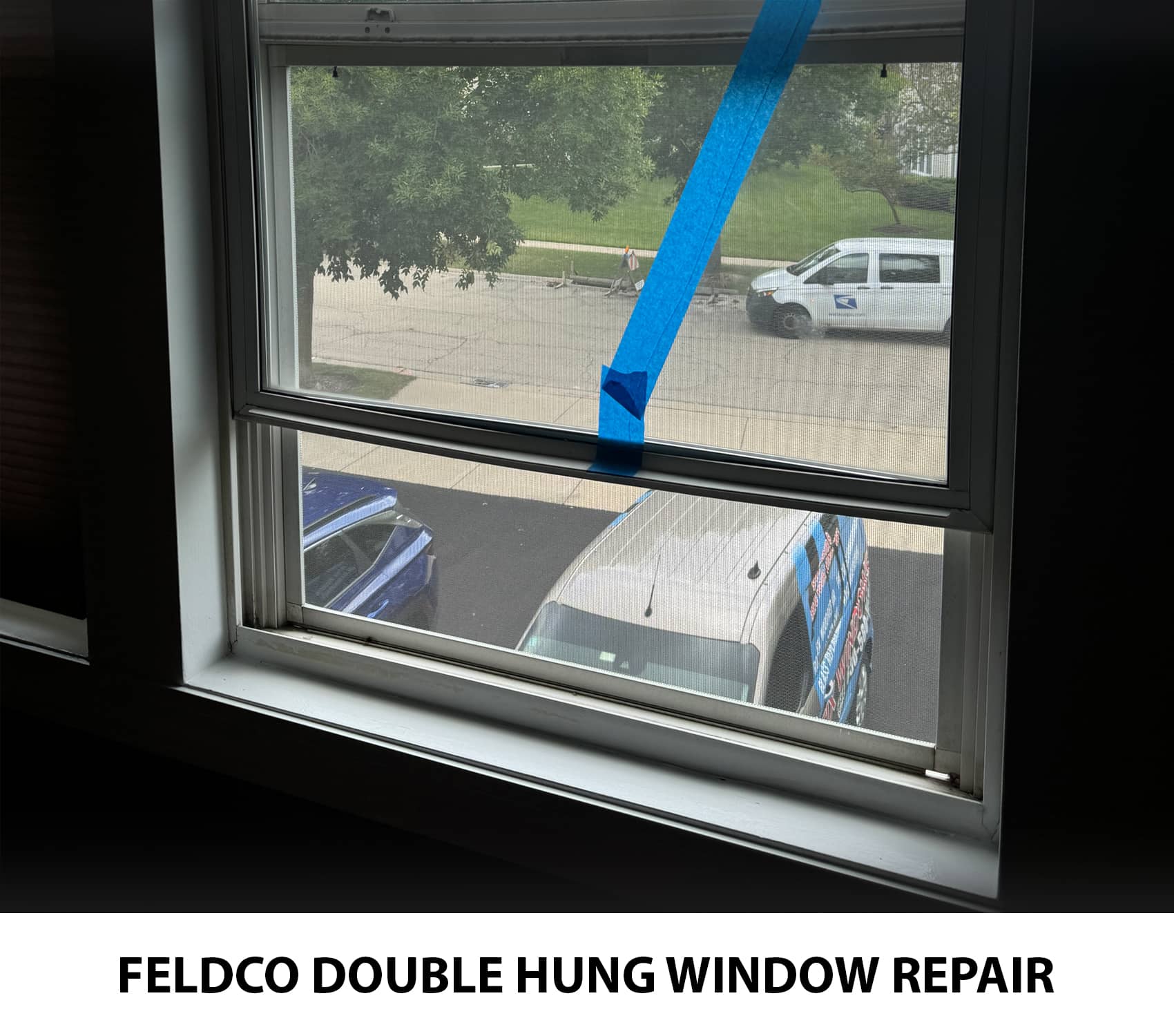
The first sign is often not dramatic. A Feldco window starts feeling heavier in the hand, tougher to close, or less cooperative on the way up and down. Sometimes the sash begins brushing the frame, catching at one corner, or moving with that slight off-track feel that was not there before. When it has been happening for a while, the sash-to-frame fit is usually already under stress.
The next thing people notice is the change in how the room feels. Drafts start slipping in around the sash or along the glass line. A room in Arlington, VA may stay colder than the rest of the house, or outside noise may suddenly seem sharper and easier to hear. Once the profile begins cracking or the seal is no longer holding evenly, the issue can move beyond comfort and turn into real weather exposure, letting wind-driven rain and outside air creep deeper into the opening.
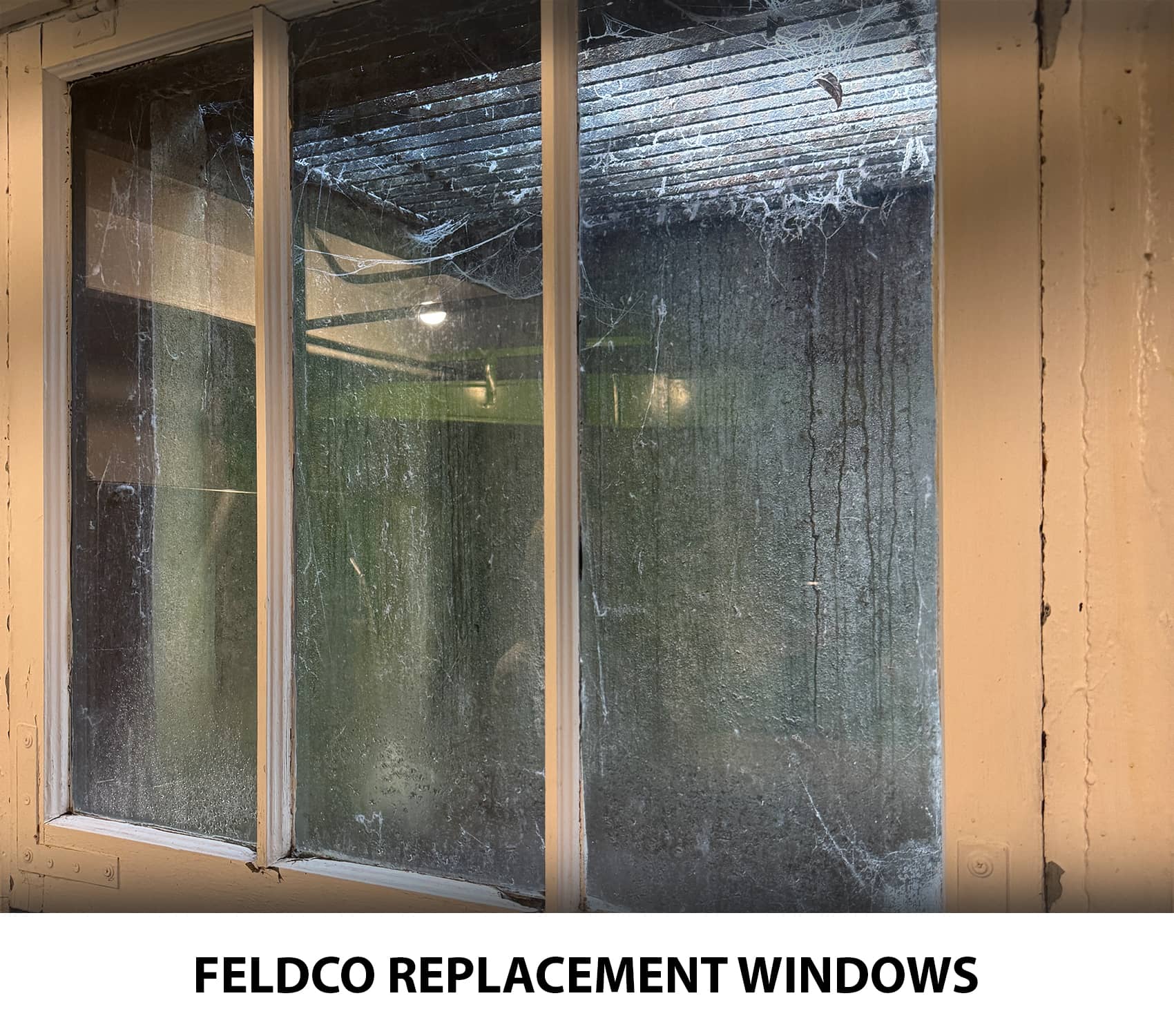
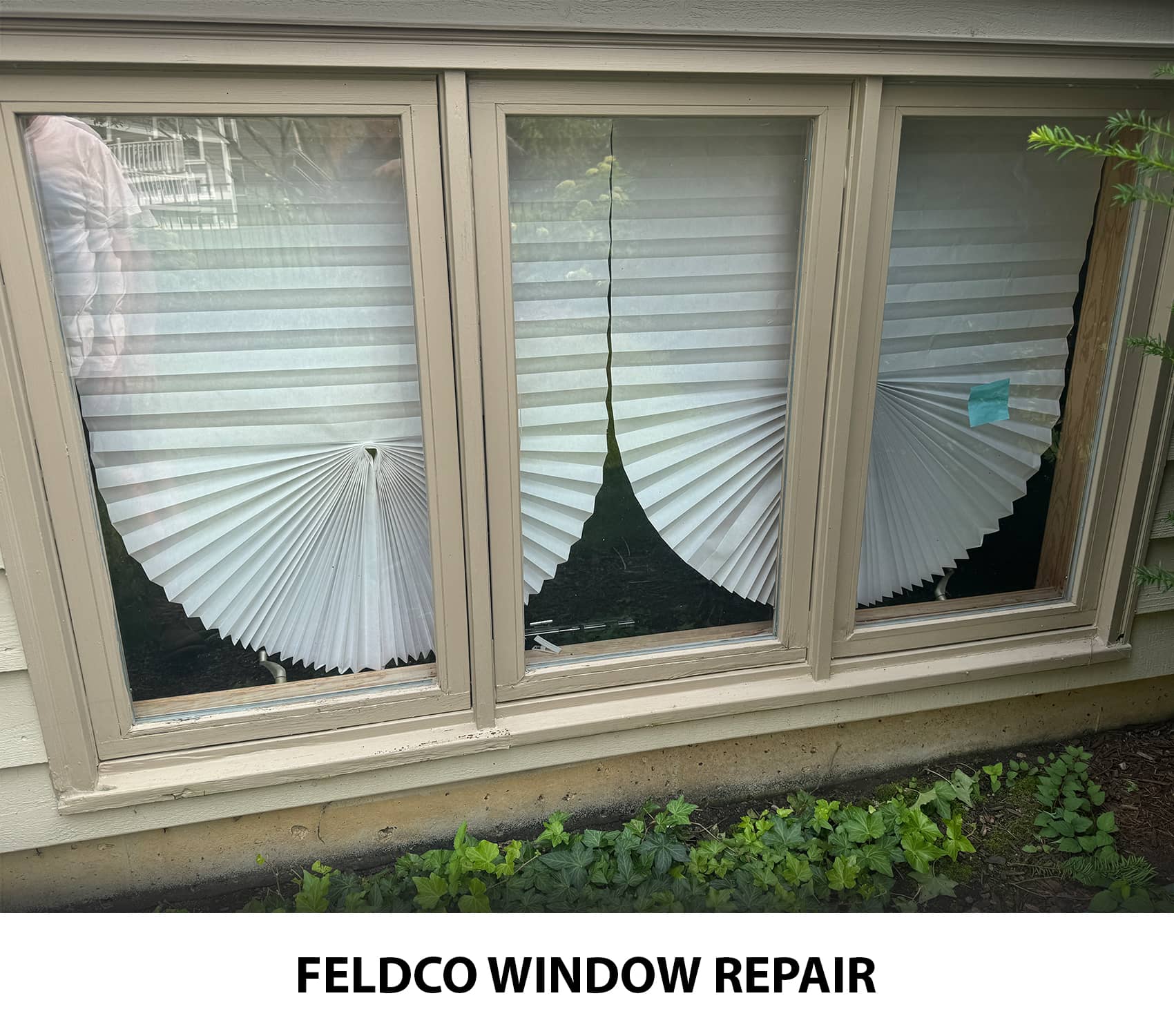
Glass failure usually has its own pattern. Fogging between panes, trapped moisture, or that dull, washed-out look that some homeowners describe as a blackout effect usually points to a problem inside the insulated glass unit, not a cleaning issue. Broken glass is a different matter again. In many situations, the repair can remain at the glass-unit level, depending on the condition of the sash, the frame, and the adjoining parts.
Hardware problems belong in that same broader discussion. Handles, rollers, locks, hinges, and other moving parts can wear down or fail even when the main unit still has years left in it. That is true for both windows and doors. Sash, sill, and frame work should be evaluated on its own, not lumped together with window glass replacement, window hardware repair, full window replacement, or sliding door repair. The service scope often goes further than people expect, covering patio door repair, patio door hardware repair, front door repair, and, when the condition calls for it, full door replacement.
There is also an earlier stage that gets ignored all the time. The sash starts grazing the frame. A small adjustment gets put off. Then the whole opening begins fighting itself, and what might have stayed minor turns into a larger repair than it ever needed to be.
What those symptoms usually point to
When a window or door starts resisting every opening and closing cycle, the trouble is usually tied to hardware, structure, or both, not something superficial. On the surface, the complaint may seem minor. In reality, once the moving parts stop lining up the way they should with the sash and frame, the whole unit starts losing its rhythm. One part drifts, another compensates, and the operation gradually gets worse.
Another common category is poor fit and lost alignment. Warped window covers and badly set double-glass units with overly wide gaps around them matter more than they first appear to. The visible complaint may come out as nothing more than “it feels drafty” or “it does not open right,” but the deeper issue is often that the unit is no longer sitting where it was meant to sit. In Arlington, VA, that kind of shift tends to show itself quickly once the opening starts taking regular pressure from wind and temperature swings.
Condensation between panes usually points to a failed seal inside the insulated glass unit. That is a separate condition from moisture collecting on the room-facing side because of indoor humidity. In practical terms, haze, fogging, or moisture trapped inside the glass usually pushes the job toward insulated-glass or double-pane replacement, not a full-frame tear-out.
Drafts, weaker sound control, and water finding its way through the opening usually suggest worn seals, gaps along the glass line, or a window or door that no longer pulls shut tightly enough to perform properly. That can still stay in the repair lane when the weak point is limited and localized. The discussion starts moving toward replacement when the same failure shows up across the whole unit and the loss of comfort becomes harder to ignore.
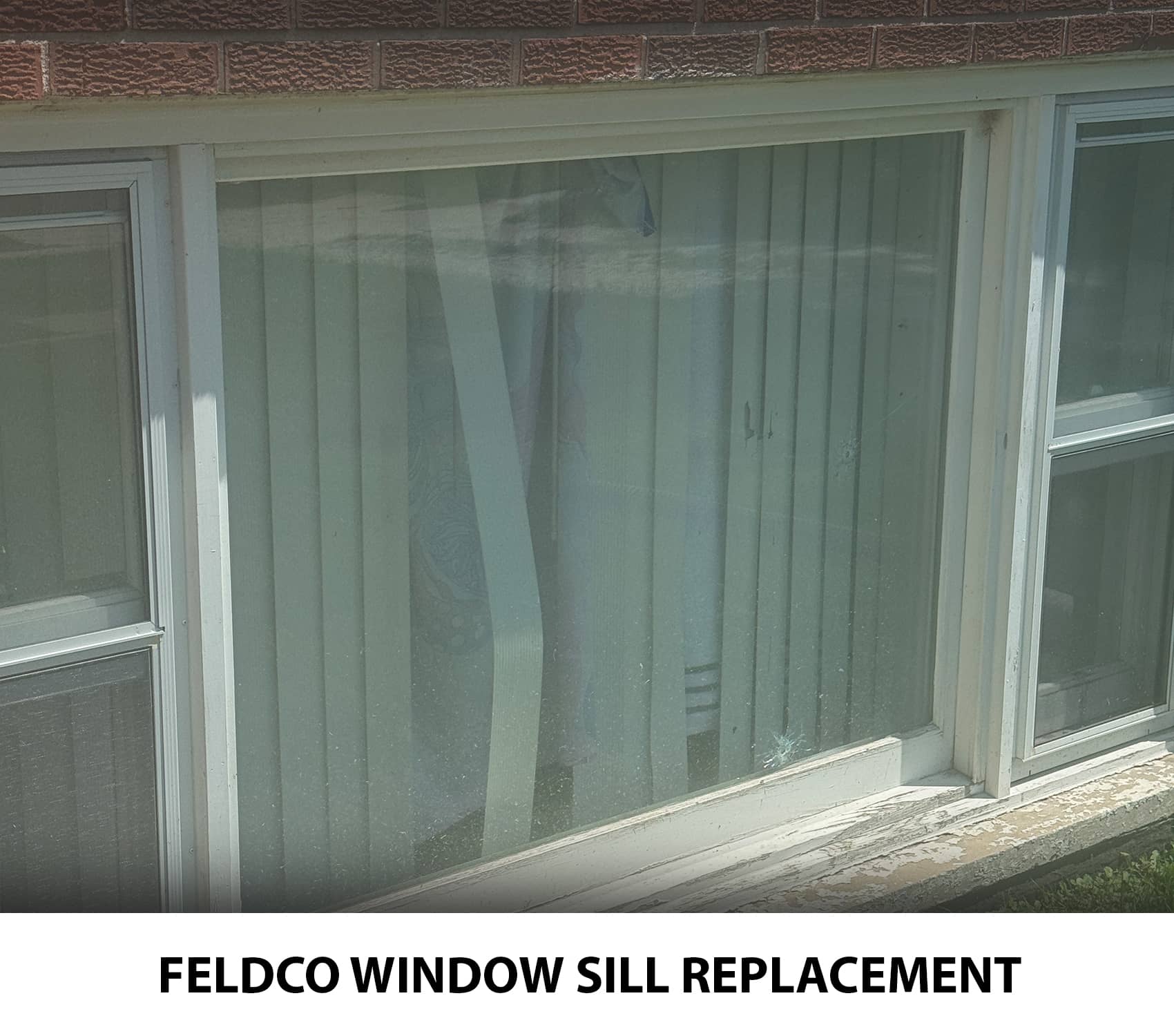
Sash, sill, and frame issues need to be judged on their own, especially with older units and wood windows. A sill repair is one type of job. A sash problem points somewhere else. A broader frame failure can change the direction completely and move the project into a much bigger category.
Repair or replace? Use this Go / Caution / No-Go tool
A practical decision tool should do more than drop problems into neat boxes. It should also show which conditions are safe to move forward on, which ones call for a closer look first, and where spending on repair work or full replacement starts making sense.
|
Condition
|
Go: repair is still a sensible move
|
Caution: inspect more closely
|
No-Go: replacement is usually the stronger path
|
Verify first
|
|
Operation
|
One window or door has a distinct, limited operating problem and the rest of the unit still works as it should.
|
Operation is getting worse, and the trouble may involve more than one part.
|
The unit is badly out of alignment, visibly twisted, or no longer closes the right way.
|
Jamb condition, spring or balance issues, hardware wear, and sash-to-frame contact.
|
|
Glass
|
Broken glass or a failed insulated glass unit appears confined to one opening.
|
Glass trouble is showing up alongside visible wear in nearby components.
|
Glass failure is tied to larger sash, frame, or whole-unit decline.
|
Whether the issue stops at the glass unit or extends into the sash and frame.
|
|
Air and water control
|
Drafts or leakage seem to come from one failed seal or one isolated weak point.
|
Comfort has dropped off, but the exact source still needs to be pinned down.
|
Air leakage, water intrusion, and poor performance are showing up across the entire unit.
|
Gaps around the glass, profile cracks, seal condition, and closing pressure.
|
|
Hardware
|
A lock, hinge, handle, roller, or another operating part has failed on an otherwise sound unit.
|
Hardware problems are appearing in several places at once.
|
Hardware failure is only one part of a broader pattern of decline.
|
Whether matching parts are still available and whether the rest of the unit remains worth keeping.
|
|
Material condition
|
Wood, vinyl, or another material still has a sound core structure, with damage limited to one area.
|
The surface looks worn enough that the repair path is no longer completely clear.
|
Material breakdown is widespread enough that repair would only postpone the real decision.
|
Whether the damage is localized or part of deeper structural wear.
|
|
Value
|
Repair addresses a specific defect and preserves meaningful years of use.
|
The repair estimate keeps climbing, and the long-term payoff is hard to judge.
|
The money would go into a temporary fix instead of a durable result.
|
Whether the estimate solves one defined problem or several overlapping failures.
|
If replacement is the smarter move, what should be compared
Once replacement starts making more sense, the decision should not narrow down to frame material alone.
That matters because the new unit needs to solve the same weakness that made the old one fail in the first place. If the main problem is drafts, poor insulation, and outside noise working farther into the room, then the glass setup and the quality of the seal deserve serious attention. If ongoing upkeep is the bigger frustration, material choice moves much closer to the front of the discussion. If the opening gets used constantly, stable hardware and smooth operation matter just as much as appearance. In Arlington, VA, that balance usually becomes obvious fast once winter air, traffic noise, and everyday wear begin exposing the weak points.
On the vinyl side of Feldco, the product language leans on multi-chamber construction, composite I-beam support, spacer systems, foam-filled sash and frame sections, magnetic sash seals, locking screens, staggered ventilation latches, child-safety locks, and reinforcement carried through the frame-and-sash assembly. There is no real need to memorize every branded label attached to those features. The practical point is much simpler: a replacement should tighten the structure, improve sealing, make operation feel cleaner, and raise day-to-day comfort all at once.
Exact measurement is not a minor detail here. It carries more weight than many homeowners first think, because a poorly fitted replacement can bring back the same cold drafts, loose feel, or stubborn operation that started the whole project in the first place.
Conclusion
Feldco window and door service works best when the decision stays practical and disciplined. Start with the failure itself. Repair what is clearly limited and localized. Move toward replacement when the structure, performance, and long-term value all begin pointing the same way.
That same logic carries across materials too. Wood often stays repairable longer, especially when the damage is still concentrated in one section. Vinyl sits in both lanes, but in these sources it stands out most clearly as the main replacement path. Fiberglass shows up more often as the more durable comparison when replacement is already on the table. Doors follow much the same rule as windows. Trouble with rollers, hardware, glass, or day-to-day operation does not automatically mean the whole unit belongs in the replacement category.
The strongest result is not “repair everything,” and it is not a reflex tear-out either. It is choosing the fix that actually matches the real condition of the Feldco unit. In Arlington, VA, that distinction matters because weather swings, repeated use, and everyday exposure tend to reveal weak spots fast.