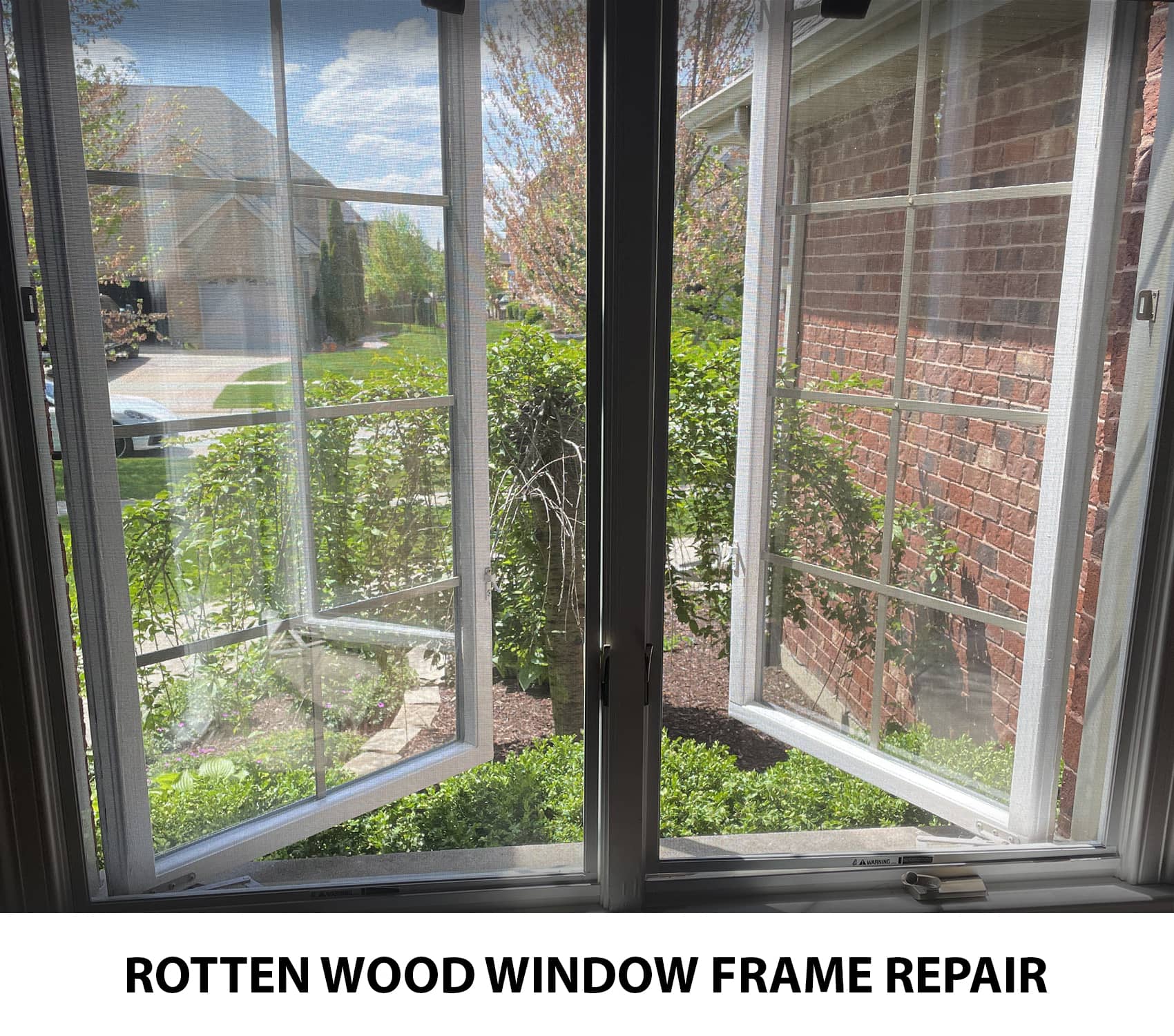
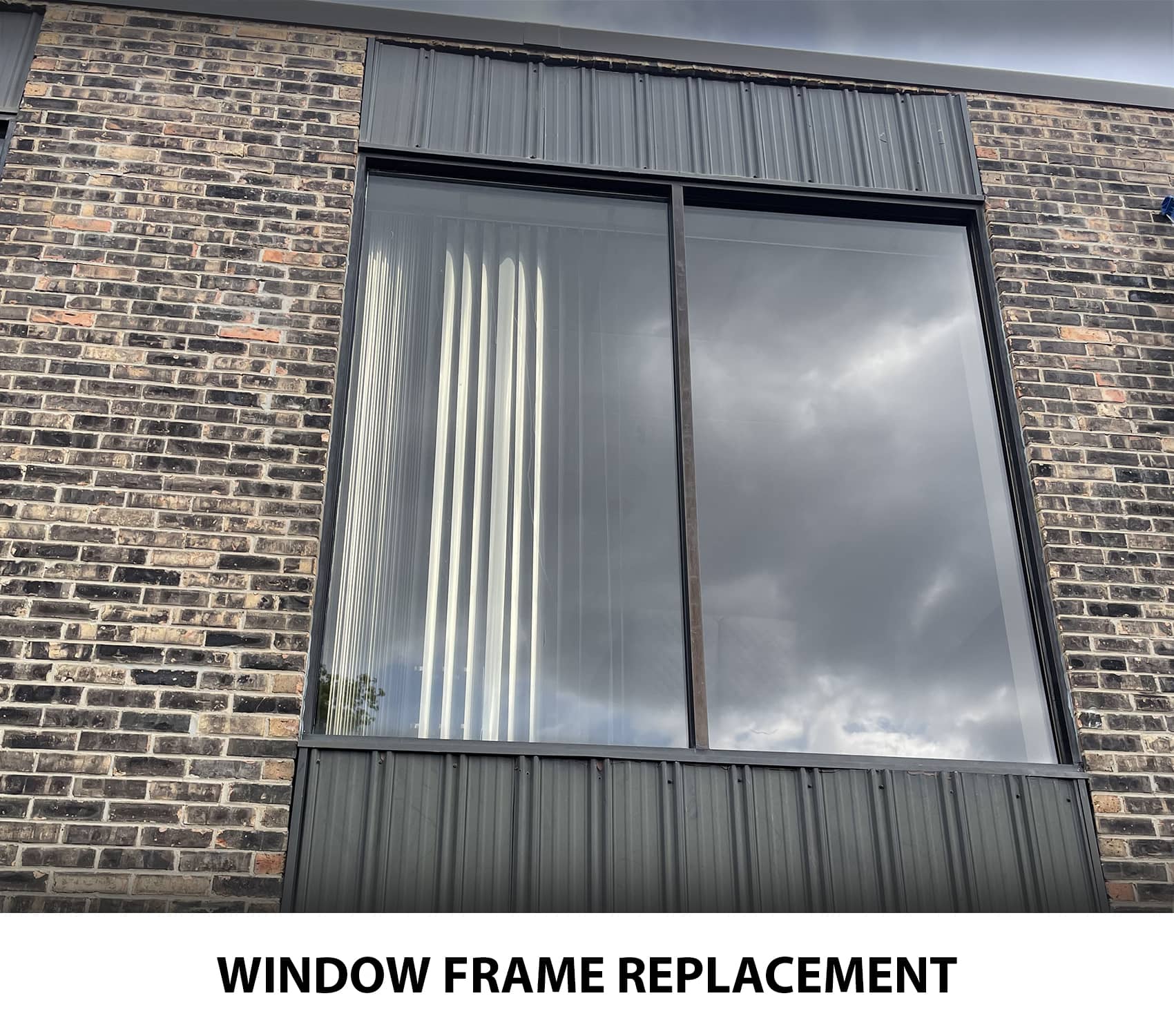
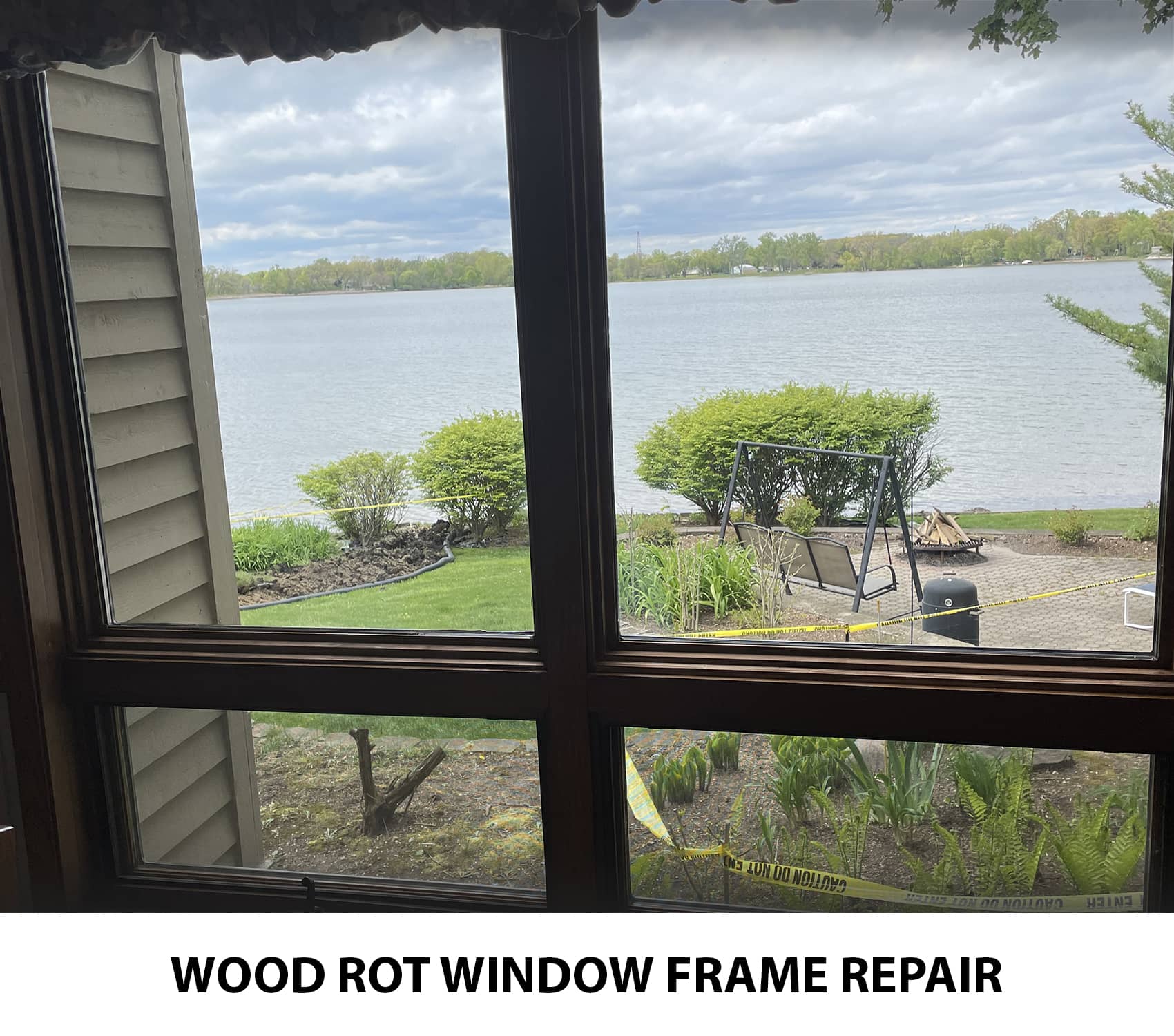
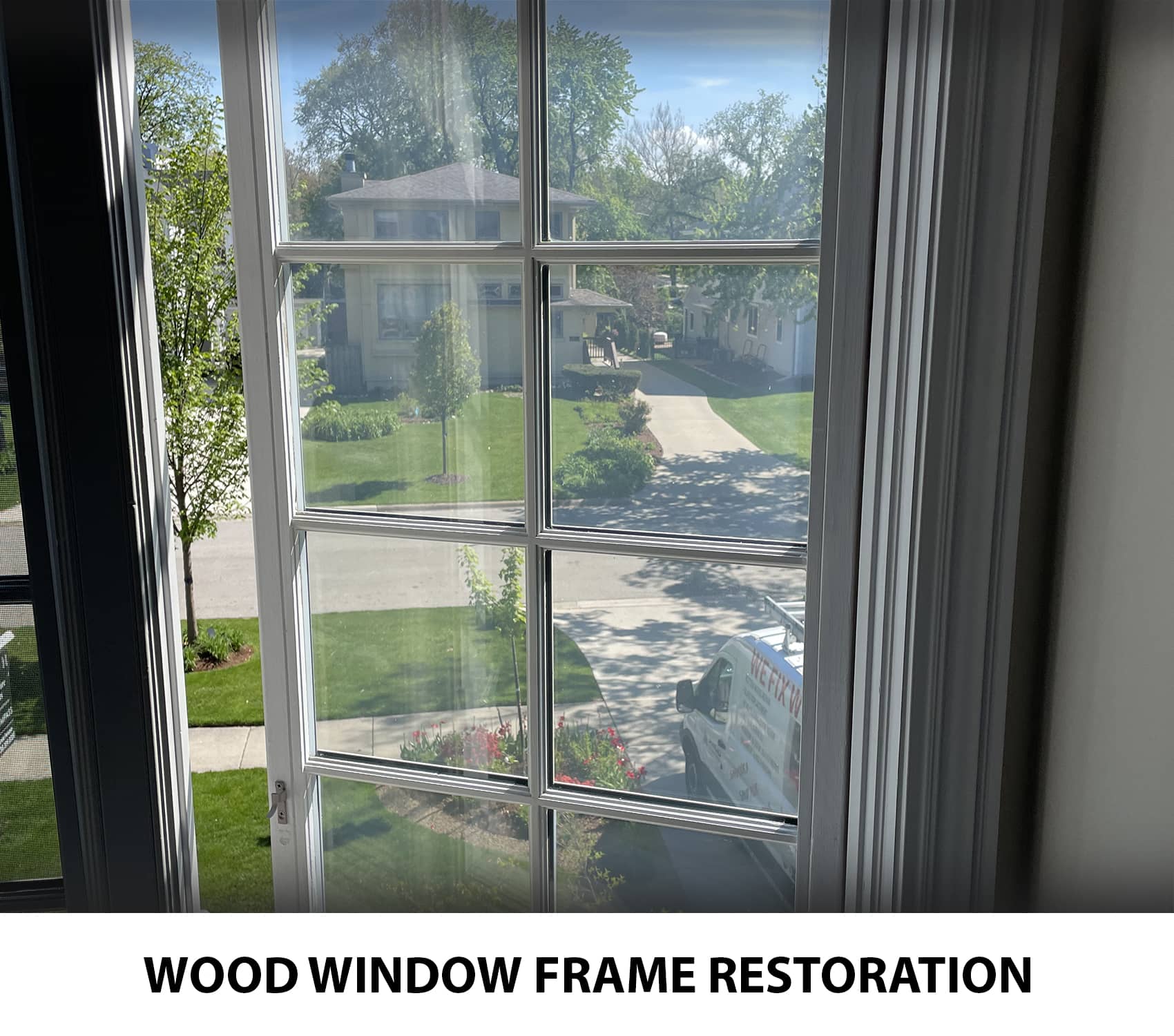
Window frame repair and replacement services we provide
Window frame repair and replacement work is rarely limited to one neat little fix, because the frame supports the entire window assembly. A standard call can involve cutting back rotted material, rebuilding or replacing a failed sill, correcting sash-related issues, and bringing trim or molding around the opening back into sound shape. In plenty of cases, brick molding, center trim, and interior molding have to be addressed too, since those frame-connected pieces often become the path that lets water in and starts the same damage all over again. In many Arlington, VA houses, what begins as house window frame repair grows into a wider correction once damp wood, loose trim, or bubbling paint starts showing around the perimeter.
Frame trouble also shows up in the way the window behaves day to day. A unit may begin sticking, drifting out of alignment, or refusing to lock unless forced. Sometimes an adjustment and a hardware swap are enough. Sometimes they are not. Once moisture has already altered the opening, the repair moves beyond simple parts work and into carpentry, especially when the sill feels wet after rain, the wood has gone dark and spongy, or the frame has started falling out of square. At that point, wood window frame repair near Arlington or rotten wood window frame repair near Arlington becomes a more accurate name for what the job actually involves.
When the damage runs too far, patching stops being the smart answer. The scope may shift to partial window frame replacement, full window frame replacement, or full window and frame replacement if the condition of the structure, fit, and seal all point that way. In Arlington, VA, the right decision comes down to how much solid material is still there and whether the opening can still be restored to a stable, weather-tight condition.
What “the window frame” actually includes
Many homeowners use “frame” as a catchall for nearly the entire window, but repair work splits those parts up much more carefully. The frame is the fixed structure secured inside the wall opening: the head at the top, the side jambs, and the sill at the bottom. Around that core, there are usually trim and molding elements that can break down too, especially exterior pieces like brick molding, so a proper inspection in Arlington, VA goes past the main frame and looks at the surrounding areas as well. The sash is a separate component. It is the moving section that carries the glass. It can also wear out or begin to rot, but sash repairs follow a different track than damage in the stationary frame.
Common window frame problems and what we usually do about them
Most repair calls start with familiar signs: softened wood near the lower edge, open splits, paint that keeps peeling back in the same trouble spot, water marks, a draft during windy weather, or a window that scrapes, catches, or drags instead of closing cleanly. Details like that are easy to brush off, but they usually tell a lot. In many cases, they point the diagnosis toward the right fix, whether that means frame restoration, resealing, hardware correction, glass replacement, or a mix of repairs handled together.
Symptom-to-service quick guide
|
What appears
|
What it usually points to
|
Usual next step
|
|
Soft or darkened wood along the lower frame, paint that keeps blistering in the same area
|
Moisture damage affecting the sill, lower jamb ends, or nearby trim
|
Remove the decayed material, rebuild the damaged section, repair the sill or frame, or replace the affected parts if the deterioration has spread too far
|
|
Noticeable draft even when the window is fully closed
|
Worn weatherstripping, poor fit, or frame alignment trouble
|
Replace seals or weatherstripping, make the needed adjustments, and carry out frame or sash repairs if the opening is no longer sitting correctly
|
|
Window sticks, drags, or refuses to open
|
Worn hardware, a swollen or misshapen sash, or movement caused by moisture
|
Repair or replace the hardware, bring the alignment back into place, and address any rot that is causing the window to bind
|
|
Foggy or hazy glass inside a double-pane unit
|
Failed thermal seal or loss of the IGU seal
|
Replace the insulated glass unit and check the surrounding wood for related moisture damage
|
|
Visible chip or crack in the glass
|
Direct glass damage
|
Replace the broken glass
|
Why wood frames rot in the first place
Wood rot does not appear out of nowhere. It begins when moisture stays in the wood long enough for decay to take hold and keep moving. The usual causes are familiar: repeated wetting, water working through hairline cracks or opened joints, condensation that keeps forming, flattened weatherstripping, failing caulk, and poor airflow that never lets the area dry out properly. In Arlington, VA, seasonal changes put extra stress on windows, so even a minor leak or thinning paint can turn one small weak spot into a section that keeps getting wet again and again.
One thing matters more than anything else. Cutting out bad wood without stopping the moisture source usually means the same failure comes back.
Repair vs. replacement: how we decide without guessing
There is no one-rule answer for every window. What matters is how far the damage has gone and whether the frame still has enough strength left to support the load and keep a proper seal. When rot is limited to one corner or a short run of sill, that section can often be removed and rebuilt. When decay spreads farther, the frame stops gripping fasteners, or the opening begins falling out of square, replacement usually becomes the better path. Sometimes only one section has to be changed. Sometimes full frame replacement makes more sense. And in some cases, the whole window unit needs to come out when that is the only realistic way to restore strength, alignment, and a weather-tight fit.
Repair vs. replace decision tool
|
Decision
|
When this is usually the right move
|
What a solid service approach normally includes
|
|
GO (Repair is a reasonable option)
|
The damage is limited to one section, the surrounding wood still feels solid, and the window can be brought back into proper alignment
|
Remove the weakened material, rebuild the damaged area, restore the frame shape, reseal and weatherproof the opening, then finish the repaired section properly
|
|
CAUTION (Repair may still work, but the window needs a closer look)
|
Rot is showing up in more than one spot, corners feel soft, gaps suggest the frame has started shifting, or the sash is sticking because moisture has caused swelling
|
Carry out a full inspection, check for hidden decay, and then decide whether a sectional rebuild is enough or partial replacement is the safer answer
|
|
NO-GO (Replacement usually becomes the better path)
|
Decay is advanced, the frame has lost structural strength, will not stay square, no longer holds hardware securely, or has large deteriorated sections
|
Replace the failed parts or the full frame; when the damage is more extensive, move on to full window replacement
|
How the service visit usually works (Inspection → Diagnosis → Repair → Warranty)
Our competent frame-repair crew usually works in a clear order: inspect the opening, identify the real cause, complete the repair or replacement, and finish with written warranty or guarantee terms that document the completed work. In many our Arlington, VA projects, that first visit is also when the scope and estimate get laid out in plain words: what still makes sense to repair, what already needs replacement, and what the job actually includes, whether that means sealing, finish work, hardware correction, glass work, or several of those in one visit. Warranty language matters for a basic reason. A frame repair should stand up to summer heat, rain, damp conditions, and winter cold, not just look decent for a few weeks. Coverage differs from one company to the next, but it should be discussed before the work begins.
How professional frame repair is done (what you’re paying for)
A real repair is not a matter of packing damaged spots with filler and moving on. The lasting part of the job comes from restoring structure, bringing the opening back into line, and protecting it against the same failure returning.
Step 1: Comprehensive inspection
A thorough inspection checks how far the decay has spread, whether trim or molding has been affected too, and whether failed seals, hardware problems, or alignment issues are still giving moisture a path back in.
Step 2: Map every affected area
Rot usually shows up where water lingers longest, such as lower corners, sill ends, and the areas hidden behind exterior molding. A skilled technician tracks the full extent of the damage so weakened wood is not left buried inside the repair, where it can keep deteriorating out of sight.
Step 3: Remove damaged wood and prep a solid base
Every section of decayed wood has to be removed. If even part of it stays behind, the deterioration often keeps creeping into the sound material next to it. But removal alone is not enough. The preparation stage is what gives the repair a real chance to hold up. Depending on the condition of the frame, that can mean taking off loose paint or failing finish, cleaning the area thoroughly, drying it fully, and treating surface cracks or checks with epoxy-based repair methods before any rebuilding starts. When the remaining wood is still damp, unstable, or poorly prepared, fillers and patch materials tend to fail early, and the same corner often begins opening up again.
Step 4: Rebuild with durable materials, restore geometry, and reinforce where needed
After that, the rebuild begins. Rotted sections and weakened areas are replaced or reconstructed with durable materials so the frame can carry its load again and hold its shape. When the original profile matters, especially on older wood windows in Arlington, VA, new pieces are usually cut and fitted to follow the existing lines. That keeps the repair from ending up with clumsy joints, uneven reveals, or visible gaps that fail faster than they should.
Reinforcement is the part most people never notice, but it often makes the difference. If the frame has started loosening, shifting, or flexing, the surrounding area may need extra support to stabilize the unit. That helps the hardware stay anchored, allows the sash to move more smoothly, and lowers the chance of seams reopening as the frame expands and contracts through humidity and temperature changes.
Step 5: Seal the opening, close gaps, and improve the barrier against moisture
Once the frame is structurally sound again, the next priority is keeping water and outside air from finding a way back in. Open seams, small voids, and hollow spots may need to be filled to improve support and help with insulation. In some situations, foam insulation is a good fit. In others, a different material lasts better and performs more reliably over time. After that, sealing and weatherproofing build the protective layer that helps block returning moisture and cuts down on air leakage around the opening.
Step 6: Smooth, sand, and finish so the repair blends and stays protected
The finishing stage is not just cosmetic. Filler is applied where needed to even out small imperfections, the surface is sanded smooth, and paint or another protective coating is added so the repaired section blends into the rest of the frame and stays shielded from moisture. A good finish does more than make the repair look right. It also helps keep water from working its way back into the restored area later on.
Before the job can really be considered finished, the window should be operating properly again. It should open and close without dragging, sit correctly in the opening, latch and lock without a struggle, and seal without obvious gaps or a draft on windy days. In Arlington, VA, that final check matters every bit as much as the rebuilding itself.
A real-world note about dust and containment
Wood restoration can involve sanding, grinding, and stripping old paint, and that part of the job can get messy fast. Dust control matters. The work needs either careful containment on site or a setup that lets the heavier prep stages be handled in a controlled area.
Materials commonly used in rotted wood frame repair
Material choice depends on what turns up after the frame is opened and the full extent of the damage becomes visible. Light surface decay is treated one way, deeper structural loss calls for a heavier solution, and a few tight splits are not handled the same way as sections that have started breaking down, separating, or turning soft through the middle. The scope of the job changes the material lineup too. If better sealing or added insulation is part of the repair, the system usually changes with it. Common options include epoxy consolidants and fillers, resin-based products for stabilizing cracks, replacement wood or composite inserts selected for stronger rot resistance, and moisture-blocking materials such as sealants and updated weatherstripping. Some repairs also involve filling hidden voids or adding insulation where that improves rigidity, cuts drafts, and makes the window feel steadier in daily use.
How long does window frame repair take?
The timeline depends on how much rot is present, how many windows are involved, and whether the work stays in the repair lane or shifts into replacement. In Arlington, VA, once the project gets underway, many window frame repair jobs land somewhere between a few hours and a few days.
Conclusion
Window frame repair and replacement services need to do three things well: bring structural strength back, return the unit to proper square so it opens, closes, and seals the way it should, and stop the moisture path that caused the damage in the first place. In some cases, that means a localized rebuild. In others, partial replacement is the smarter route. And when the frame has broken down too far, full replacement is often the cleanest way back to a stable, tight-fitting window. In Arlington, VA, soft wood, paint that keeps blistering in the same spot, drafts, or a sash that sticks over and over usually mean the problem is moving forward, not staying put. A timely inspection and a clearly defined scope can keep a manageable repair from turning into a much larger replacement project.