What a casement window is (and what “working right” feels like)
A casement window uses a side-hinged sash that swings outward to one side, usually with a folding crank handle that folds down out of the way when the window is closed. When opened all the way, the sash can sit almost square to the frame. That layout is a big part of the appeal: stronger cross-ventilation, better air catch, and easier cleaning from inside the house. When the unit is in solid shape, the movement feels steady instead of jumpy, the lock draws the sash in firmly, and the frame does not give off any scrape, shake, or play.
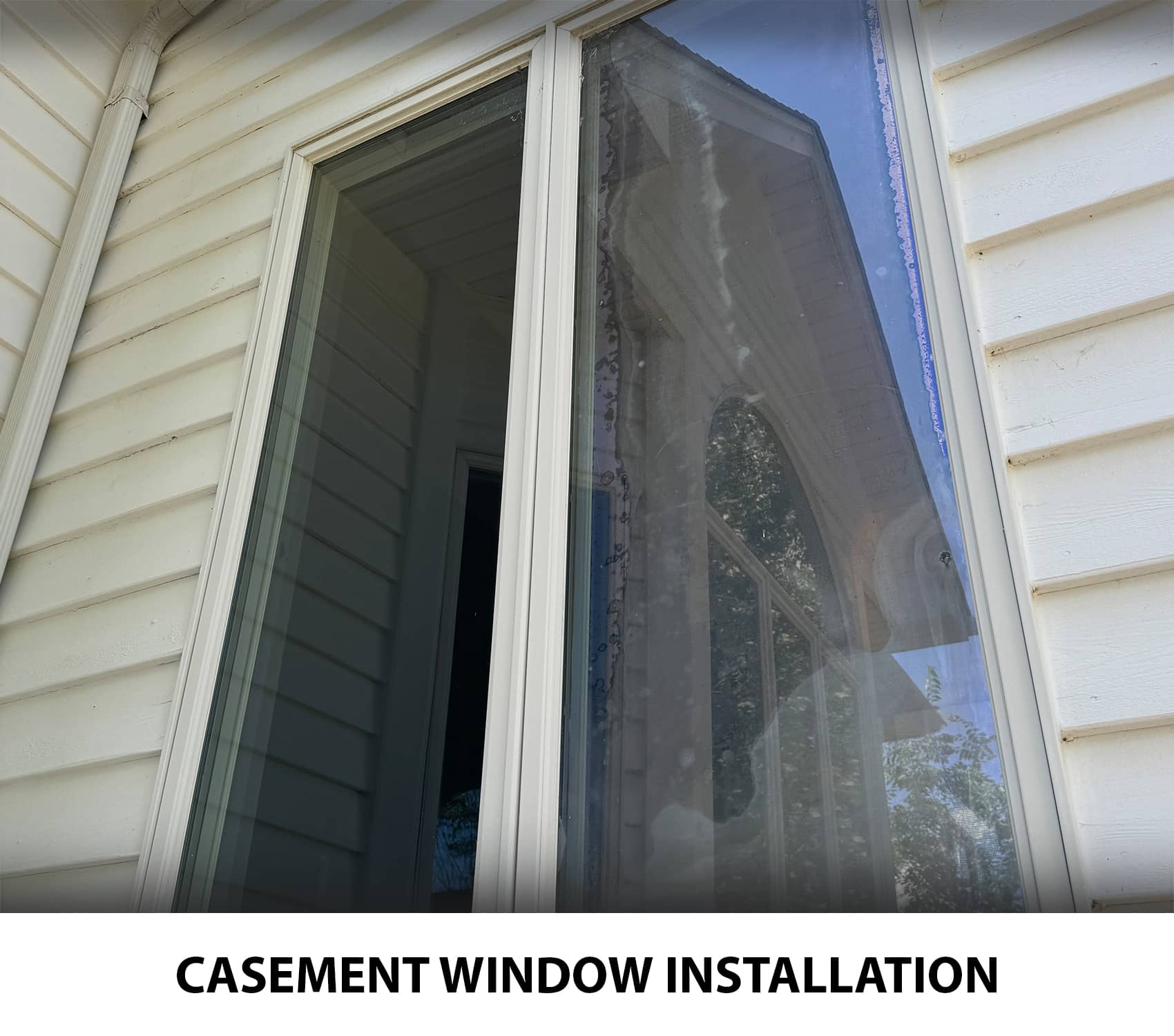
In day-to-day use, this style usually makes the most sense where reach and convenience matter most: over kitchen sinks, beside countertops, in tighter wall sections, and in rooms that need regular airflow without breaking up the glass area too much. It also suits taller Arlington, VA homes, where cleaning from indoors is more than just a small convenience. In some floor plans, a replacement casement window can even be sized to help with egress goals while still keeping the wall opening relatively compact, though local requirements still need to be confirmed before casement window replacement or casement window installation begins.
One drawback needs attention early. A standard casement opens outward like a small door, so exterior clearance is not something to leave for later. In many cases that issue is manageable, but it still has to be checked before replacing casement windows or setting up a replacing casement window project. Otherwise, the sash may keep brushing shrubs, nicking exterior hardware, or pushing too far into a walkway every single day. In older openings, the same setup can start exposing alignment problems too, especially once the lower corner begins to bind, paint near the sill starts to blister, or the wood along the hinge side goes dark and a little soft. At that stage, repairing casement windows is often the smarter move than overlooking the warning signs and letting the problem grow into a bigger failure.
The 4 problems that drive most casement service calls
The same weak points keep surfacing in casement window services, no matter the brand on the frame or the age of the unit. In most situations, the real question is not whether the window has a problem, but which part of the system started giving way first. The list stays fairly consistent: worn hardware, a failed insulated-glass seal, moisture getting into the assembly, or a sash-to-frame fit that has drifted far enough to become a daily irritation. In Arlington, VA, that pattern shows up again and again after long stretches of wind, humidity, and temperature swings.
Hard to open or close (stiff crank, rubbing, jamming)
Why it happens: dirt works into the moving parts, hinges begin to corrode, and gradual movement in the frame can push the sash just far enough out of position to create drag. What begins as a little extra effort rarely stays minor. Before long, the crank feels loaded, the sash starts catching on one side, and opening or closing becomes an everyday hassle.
Most affected parts: hinges, crank mechanism, sash.
What repair services do: loosening up hinge movement, replacing worn hardware once the mechanism is no longer dependable, and bringing the sash back into a truer fit with the frame so it lands evenly instead of rubbing or hanging at one corner. In many cases, that kind of targeted casement window repair is enough to fix the issue without pushing the project toward full casement window replacement.
How to prevent a repeat: routine cleaning, a light amount of the correct lubricant, and service at the first sign of stiffness. A sticking sash is rarely just some harmless quirk. In many Arlington, VA homes, it is the first visible hint that a window casement repair problem is already taking shape, especially once the crank starts feeling gritty or a draft begins slipping through on windy days.
Broken or foggy glass
Why it happens: one sharp impact, long-term exposure to moisture, or insulated seals that have simply aged out. One of the clearest indicators is a cloudy layer or trapped condensation showing up between the panes. That usually means the seal has failed, not that indoor humidity is doing something unusual. In many Arlington, VA homes, the first sign is not a visible crack at all, but glass that turns flat, whitish, or permanently hazy and never really looks clean, no matter how often it gets wiped down.
Most affected parts: the glass itself, the perimeter seals around the insulated unit, and sometimes the nearby frame if moisture has been sitting there for too long.
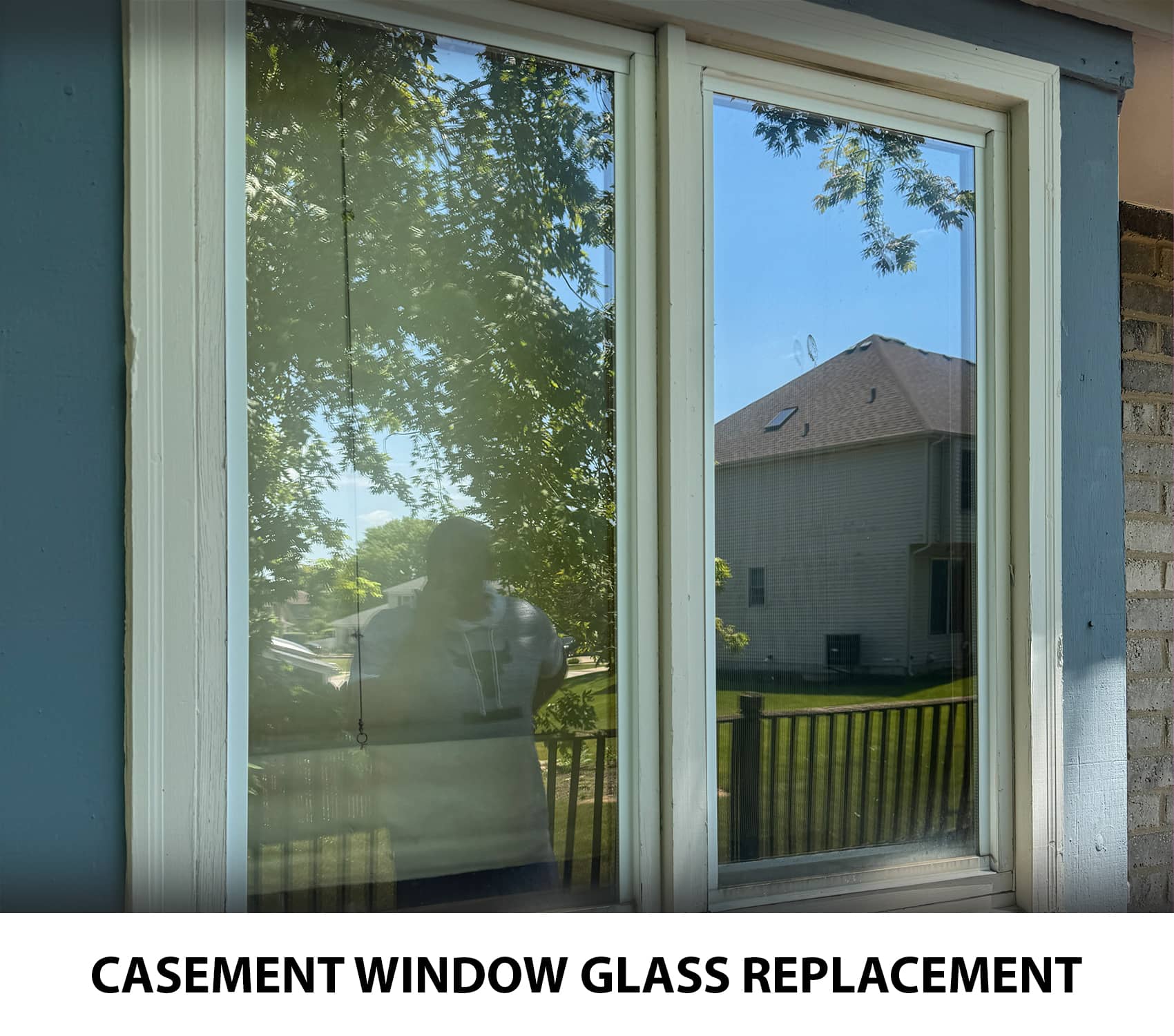
What repair services do: handling casement window glass repair when the damage is limited and the fix still makes practical sense, carrying out casement window glass replacement when the pane is cracked or the insulated unit has lost its seal, and in some cases upgrading to a more efficient glass package when replacement is already the smarter direction. If moisture has been hanging around the opening, the surrounding frame may need work too, especially where paint has started peeling upward or the lower wood looks darker than normal.
How to prevent a repeat: check the glass from time to time, pay attention to seal condition, and avoid slamming the sash shut. Repeated shock loads the unit more than it appears to at first glance, and over the years that extra force can shorten the life of both the glass and the seals around it.
Rotted wood (soft/dark areas, bubbled paint, recurring moisture)
Why it happens: repeated water exposure combined with maintenance that got delayed too long. Once moisture keeps returning to the same weak area, decay usually does not stay contained. It may begin at the sill, move into the sash, and then travel deeper into the frame. In older Arlington, VA homes, the first signs are often quiet ones: blistered paint near the lower edge, a damp sill that never seems to dry fully, or wood around the corner joints that feels a little soft under light pressure.
Most affected parts: sash, sill, frame.
What repair services do: cutting out unsound wood, rebuilding damaged areas with epoxy or filler where that method still holds up, resealing and repainting the repaired section, or replacing affected components once the deterioration has moved too far. When the damage runs deeper than the surface suggests, sash replacement or broader frame work is often a more believable answer than a shallow cosmetic patch.
How to prevent a repeat: catch leaks early, keep paint and sealant in decent condition, make sure drainage is not holding water against the unit, and do not leave a damp sill wet for days at a time. Rot usually grows out of a repeated pattern, not a one-off event. Once that pattern is broken early, the repair scope usually stays much more manageable.
Faulty hardware (locks, cranks, hinges)
Why it happens: daily use, corrosion, or a sash that has shifted just enough to throw the hardware out of sync, especially on windows that get opened all the time and almost never get serviced. Once one part begins binding or resisting, the rest of the assembly usually starts absorbing the strain. The crank turns gritty. The lock stops engaging cleanly. The hinge side ends up carrying pressure it was never meant to take for very long.
Most affected parts: locks, cranks, hinges.
What repair services do: replacing worn or failed parts, resetting the sash so the lock engages without being forced, and updating older components when the original setup has become unreliable, difficult to match, or simply too far gone to trust. In many Arlington, VA homes, this is where casement windows repair still makes good practical sense, because the failure usually sits in the hardware sequence rather than in the entire unit.
How to prevent a repeat: keep moving parts lightly lubricated, check hardware before it reaches full failure, avoid forcing the crank through resistance, and reduce long-term moisture around metal components so rust does not get a head start.
A useful way to look at sealing and security is to treat them as two sides of the same mechanism. A multi-point lock can draw the sash in firmly and make forced entry more difficult, but only while the window is still closing square and the hardware is doing its job properly. Once the sash begins pressing into the frame at the wrong angle, the lock usually becomes less dependable at exactly the same moment the seal starts letting air slip through.
How problems change by frame material (wood, vinyl, fiberglass, aluminum, composite)
For anyone trying to repair first and hold off on replacement until the window has plainly run out of road, frame material changes the conversation from the start. It affects what usually begins breaking down, what still has a believable chance of being saved, and which service actually makes sense instead of throwing money at the wrong fix. The same outward complaint can point to very different causes depending on whether the unit is wood, vinyl, fiberglass, aluminum, or composite.
Wood casement windows
Wood comes with clear advantages. It usually has a stronger visual finish than most alternatives, and its insulating performance is often solid. The downside shows up once water keeps getting into the same area and the paint or sealant starts losing ground. After that, wood rarely fails in a clean, contained way. It darkens, swells, softens, and gradually moves out of shape. From a service standpoint, that often shifts the job into a different category altogether: not just a hardware tune-up or a small adjustment, but cutting out decay, rebuilding weakened sections, and tracing the moisture path that started the damage in the first place.
Vinyl casement windows
Vinyl usually gets picked for straightforward, practical reasons. It is commonly less expensive, does not demand much upkeep, and tends to handle everyday use fairly well. Still, it moves with temperature change, and over the years that expansion and contraction can alter how the sash sits in the frame. In Arlington, VA, where seasonal swings can be hard on window alignment, many vinyl problems that sound major at first end up being more contained: flattened weatherstripping, hardware that needs to be reset, or a sash that has crept just far enough out of line to create drag and air leakage without any real structural failure in the frame.
Fiberglass casement windows
Fiberglass is often treated as the more robust choice. It holds its shape better than vinyl, does not tempt rot the way wood can, and is generally less likely to drift out of form as the years pass. The price at the start is usually steeper, but the upkeep side is often easier. In real service work, that tends to mean fewer calls focused on the frame itself and more attention on the parts that keep aging regardless of what surrounds them. Operators wear out. Hinges develop play. Insulated glass seals eventually start clouding over. So even with a tougher frame, the usual weak areas still tend to be the moving hardware and the glass unit.
Aluminum (and aluminum-clad) casements
Aluminum is often called durable, and that is true as far as basic toughness goes, but comfort usually is not its strongest side. That difference matters more than it first appears. When the main complaint is less about operation and more about how the room feels, such as glass-adjacent surfaces turning cold, a draft showing up as soon as the weather shifts, or a space that never quite settles in winter, an older aluminum unit often leans more naturally toward replacement than repair. That becomes even easier to justify when major hardware work or a large glass change is already on the table. In Arlington, VA, older aluminum casements often remain structurally sound while still underperforming in everyday comfort.
Composite (example: Fibrex®)
Composite frames, including products such as Fibrex®, are usually promoted as low-maintenance, resistant to rot and corrosion, and sturdier than standard vinyl. In day-to-day repair work, though, the real discussion usually drops back to the ordinary details that matter far more than product claims ever do. Does the sash come in square? Is the weatherstripping still sealing properly? Do the lock and crank still pull the unit in tight? Those are the things that decide how the window actually feels in use, how well it holds air, and whether it behaves like a dependable part of the house or turns into the same repeating annoyance week after week.
Material-based service triage table (what to expect a pro to focus on)
|
Frame material
|
Typical failure pattern
|
What repair usually includes
|
When replacement usually makes more sense
|
|
Wood
|
Moisture damage usually starts in the sash, sill, or frame and gradually spreads if it is left alone
|
Cut out rotten sections, rebuild weakened areas with epoxy or filler where that still makes sense, reseal, repaint, and address related seal or hardware problems
|
When decay has moved too far through the sash or frame and a localized repair no longer looks believable
|
|
Vinyl
|
Fit problems caused by expansion and contraction, often leading to sash drift, drag, or air leakage
|
Re-square the sash, correct the fit, and reset or replace worn hardware as needed
|
When sealing or alignment problems still remain after proper adjustment and hardware correction
|
|
Fiberglass
|
Hardware wear, glass issues, and seal failure tend to show up more often than frame decay
|
Parts-based repair, usually focused on hardware replacement plus glass or seal work
|
When components keep failing over and over or the frame itself has taken on significant damage
|
|
Aluminum
|
The frame often stays intact for years, but thermal performance and day-to-day comfort tend to lag behind
|
Hardware and glass work can still be practical, though comfort complaints often stay part of the discussion
|
When indoor comfort is the main complaint and major repair costs are already adding up, especially in Arlington, VA
|
|
Composite
|
The frame itself usually holds up well, but seals and hardware still control how the window performs in everyday use
|
Restore sealing performance, replace worn hardware, and correct the way the sash closes and locks
|
When the frame is damaged or the project already calls for a size change or a different window style
|
What “casement window repair services” typically include
The usual casement window repair division is structural repair or rebuild work, especially on wood units, glass replacement for cracked panes or fogged insulated glass, and hardware service centered on adjustment, part replacement, or a combination of the two. That breakdown is not marketing talk. It is simply the clearest way to describe what has gone wrong and what kind of repair the window actually calls for.
One of the fastest ways to size up a contractor is to watch whether the problem gets placed in the correct category and explained in plain terms instead of padded with vague language. A reliable company can usually tell when the issue is mainly structural, when it points to glass failure, and when the real trouble sits in the hardware. The reasoning matters just as much. In Arlington, VA, that point carries real weight, because a sticking sash, cloudy glass, or a crank that suddenly starts pushing back can look like one large breakdown when the actual cause is much more contained.
Conclusion
Casement window repair and replacement usually go better when the decision starts with diagnosis instead of a sales pitch. The practical path is to begin with the symptom, trace it back to the part that is actually failing, whether that means worn hardware, seal failure in the glass, moisture damage, or a sash that has drifted out of position, and then choose the smallest scope that still has a real chance of lasting. Wood units often call for moisture-related restoration. Vinyl units can fall out of fit as temperatures shift. Fiberglass and composite windows more often push service toward the usual wear points, such as cranks, hinges, locks, and seals. Once the frame itself can no longer be counted on, or the goal is to change the opening altogether, insert work or full-frame casement window replacement usually becomes the more direct answer.