Before choosing a fix: quick triage that helps avoid the wrong repair
The first thing that shows up is usually the symptom, but the symptom is not the same as the cause. A slider that feels unusually heavy may be dealing with a packed track, tired rollers, frame shift, or a mix of problems working together.
If the panel is mainly difficult to slide, the track is the logical place to begin. Fine grit, pet hair, and compacted debris tend to build up in the lower channel. Then it helps to pay attention to how the dragging happens. Resistance that stays about the same from end to end suggests one kind of issue. Resistance that shows up in one section only suggests another. The reveal matters too. If the gap between the panel and frame looks tighter at the top and wider at the bottom, or the opposite, the unit is usually sitting out of square or beginning to sag, and that throws off the lock as much as the slide.
Air leakage gets misread all the time. A whistle along the edge or a draft on windy days is often dismissed as weather, but more often it is what misalignment and worn sealing look like in everyday use. The panel may seem fully closed and still fail to press the weatherstripping the way it needs to. In Arlington, VA, that kind of gap becomes obvious pretty quickly once colder weather settles in.
Movement instability is the more serious sign. If the door shifts in a strange way, feels like it might drop, hops in the track, or seems to rest in two different positions, pushing harder is the wrong answer. At that stage, the guiding hardware is no longer keeping the panel under control. The practical rule is straightforward: a visual check is fine, but once the panel feels unstable, slips off line, or the handle has to be muscled just to get the lock to engage, a proper inspection usually makes more sense than guessing through it.
What service actually means
A sound repair visit does not begin with guesswork. It begins with identifying the exact failure pattern, then tying the repair to the right lane: glass, rollers, track work, wood repair, hardware, adjustment, or full replacement. That distinction matters more than it may seem. A door that feels improved for only a short stretch usually got a shallow fix. A door that keeps sliding cleanly and locking right for years usually got the repair it actually needed.
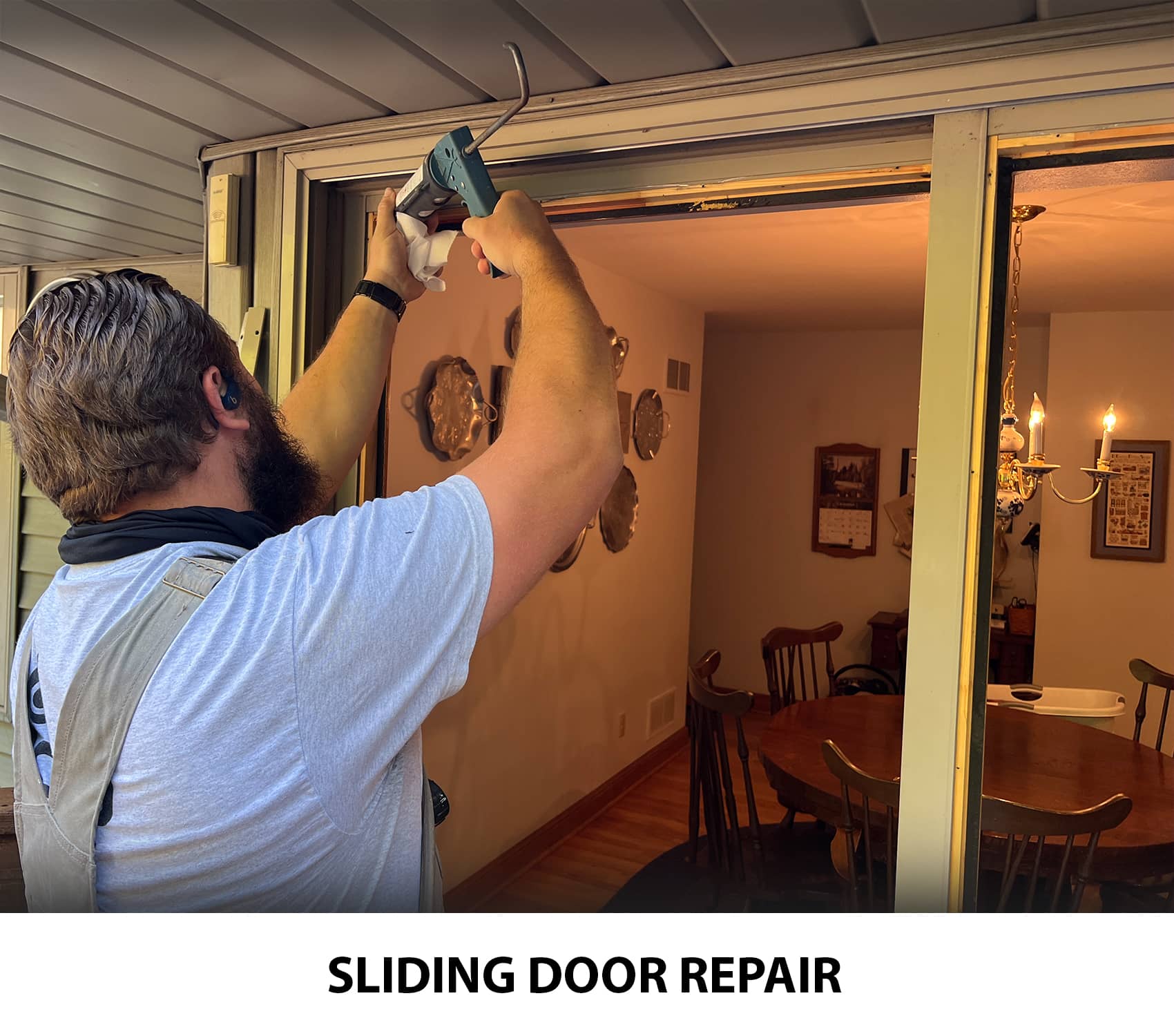
A good sliding door repair company in Arlington looks at the entire assembly instead of reacting only to the most obvious symptom. That is the real line between temporary relief and lasting operation. The same logic holds whether the job is described as sliding door glass replacement or comes in as a more targeted sliding patio door repair service call.
Sliding door problems
|
Problem
|
Most likely service lane
|
Why delay makes it worse
|
|
Slider feels unusually heavy, drags, or binds partway through the opening
|
Roller repair or roller replacement
|
Worn rollers keep chewing into the track and can start pulling the panel out of proper alignment
|
|
Door slides unevenly, jolts, or bumps as it travels along the rail
|
Track repair or track replacement, often paired with roller service
|
Once the track surface is worn or damaged, it stops guiding the panel correctly, and the issue usually keeps growing
|
|
Panel shifts out of line, feels shaky, or looks like it could drop
|
Track and roller repair plus alignment correction
|
Off-track movement can get worse quickly once the guiding path is no longer holding the panel the way it should
|
|
Lock misses, the handle has to be forced, or the latch catches only after lifting the panel
|
Hardware repair with alignment correction
|
What begins as a positioning issue can end with broken lock parts and a door that no longer secures properly
|
|
Air comes through at the stile, the edge whistles on windy days, or the gap around the panel looks uneven
|
Adjustment and sealing correction, with roller and track condition checked
|
Air leakage usually points to poor compression and misalignment, not simply “the weather”
|
|
Drafts show up together with soft wood, staining, or swelling near the frame
|
Wood restoration plus correction of closing and sealing problems
|
Moisture can keep moving deeper into the wood and raise the risk of rot and mold
|
|
Glass is cracked, chipped, or shattered
|
Glass replacement, with the panel secured if needed
|
Safety and basic security are already compromised at that stage
|
|
Glass looks cloudy, hazy, or milky between the panes
|
Insulated glass unit replacement
|
Seal failure cuts down visibility and weakens thermal performance
|
|
Screen drags, jumps in the track, or the mesh is ripped
|
Screen roller or mesh service
|
Ventilation becomes harder to use, and insects usually become the next problem
|
Сracked glass and fogged glass are not the same job
Cracked or shattered glass is a safety problem first, with security concerns close behind. Fogged or milky glass is a different kind of failure. In most cases, that haze means moisture has been trapped between the panes because the insulated unit seal has broken down. The cloudy look is not surface grime. It is seal failure inside the glass assembly.
This is the point where many owners get turned around. Different glass problems get treated like one category, even though the repair route is not the same. Proper sliding door glass repair starts with identifying whether the job involves safety glass, an insulated glass failure, or a combination of both. The diagnosis has to come first. After that, the replacement unit gets measured and made to match the panel correctly.
For a home in Arlington, options often include low-E glass, tempered glass, obscure finishes, reflective choices, and a range of grid layouts. But the real limit is not whatever appears in a product brochure. It is accurate spec matching. The new unit has to fit the panel the right way, seal tightly, and function with the door it is being installed into. Good glass sliding door repair comes down to exact fit, not rough guessing.
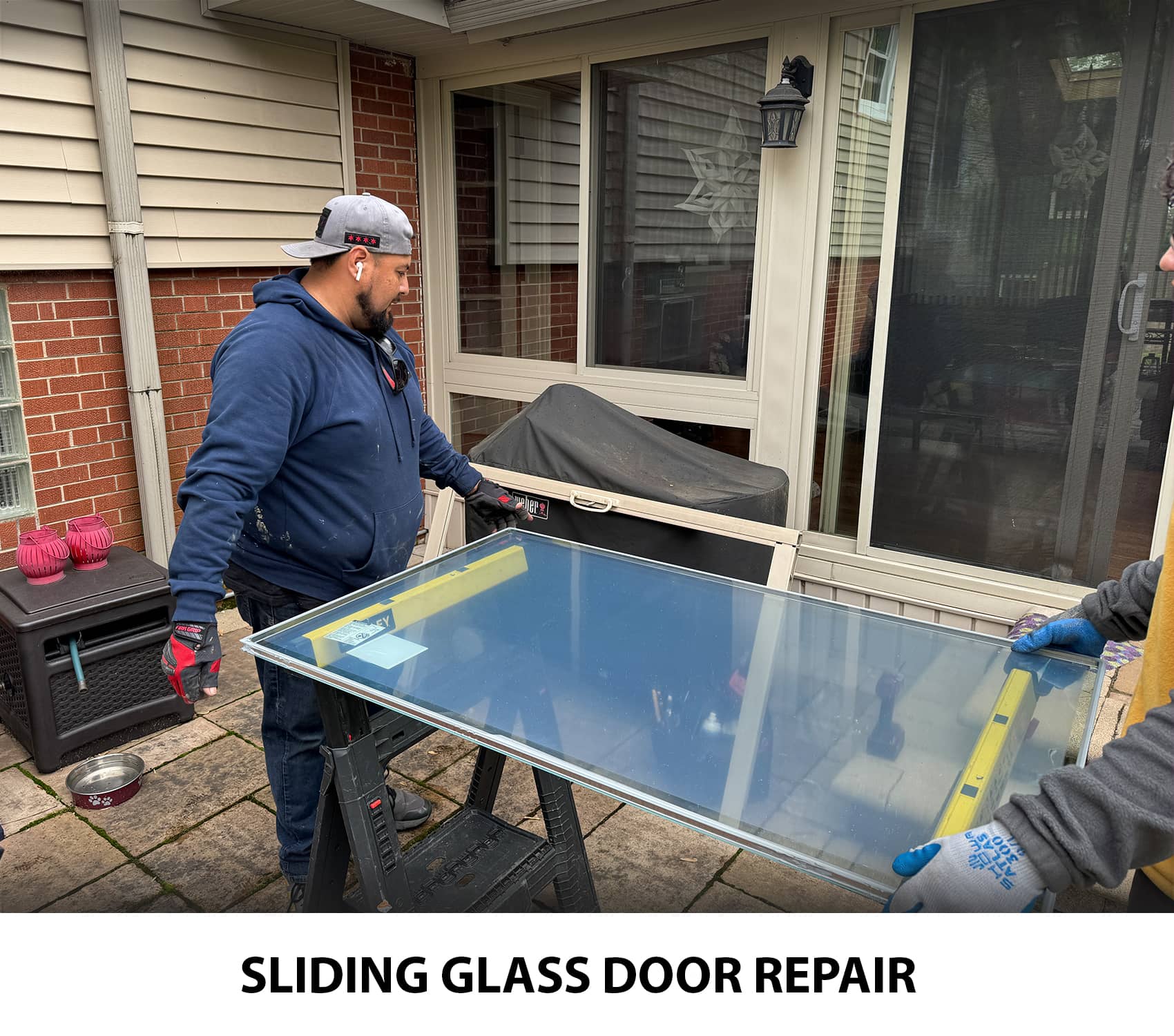
When the glass itself is the failed part, sliding glass door service usually follows the same practical sequence: confirm the failure, take precise measurements, order the correct unit, and install it so both clarity and insulation are restored together. In urgent situations, the first step may be securing the opening, then finishing the full repair sliding glass door work once the properly built glass is ready.
Roller repair and replacement: the “suddenly heavy door” problem
Rollers are one of the most common reasons a slider begins to feel far heavier than it used to. Dirt can add resistance, but it is not always the real cause. Rollers also freeze up from corrosion, wear down flat, lose their adjustment, or fail in ways that let the panel sit lower than it was designed to ride.
The key is not just dropping in “new rollers” and calling the job done. The real objective is smooth, stable movement while the full weight of the panel is on the system. That only happens when the roller assembly actually matches the door design, whether the setup is single, tandem, or a less common specialty version. On better repairs, the panel is removed, the roller system is fully accessed, the failed parts are replaced, and the panel is set back in place so the load is carried evenly again.
That reset is more important than it may sound. Without it, the track keeps taking extra wear, the panel keeps moving out of line, and the lock alignment drifts off all over again. In Arlington, VA, where sliders deal with wet shoes, grit from summer dust, snow melt, and seasonal movement in the frame, roller wear rarely stays confined to one small problem for long. It may begin as a mechanical issue, then turn into drag, missed locking points, and edge drafts. A large share of sliding patio door repairs and patio sliding door repairs start exactly there.
Track system repair or replacement: when cleaning stops being enough
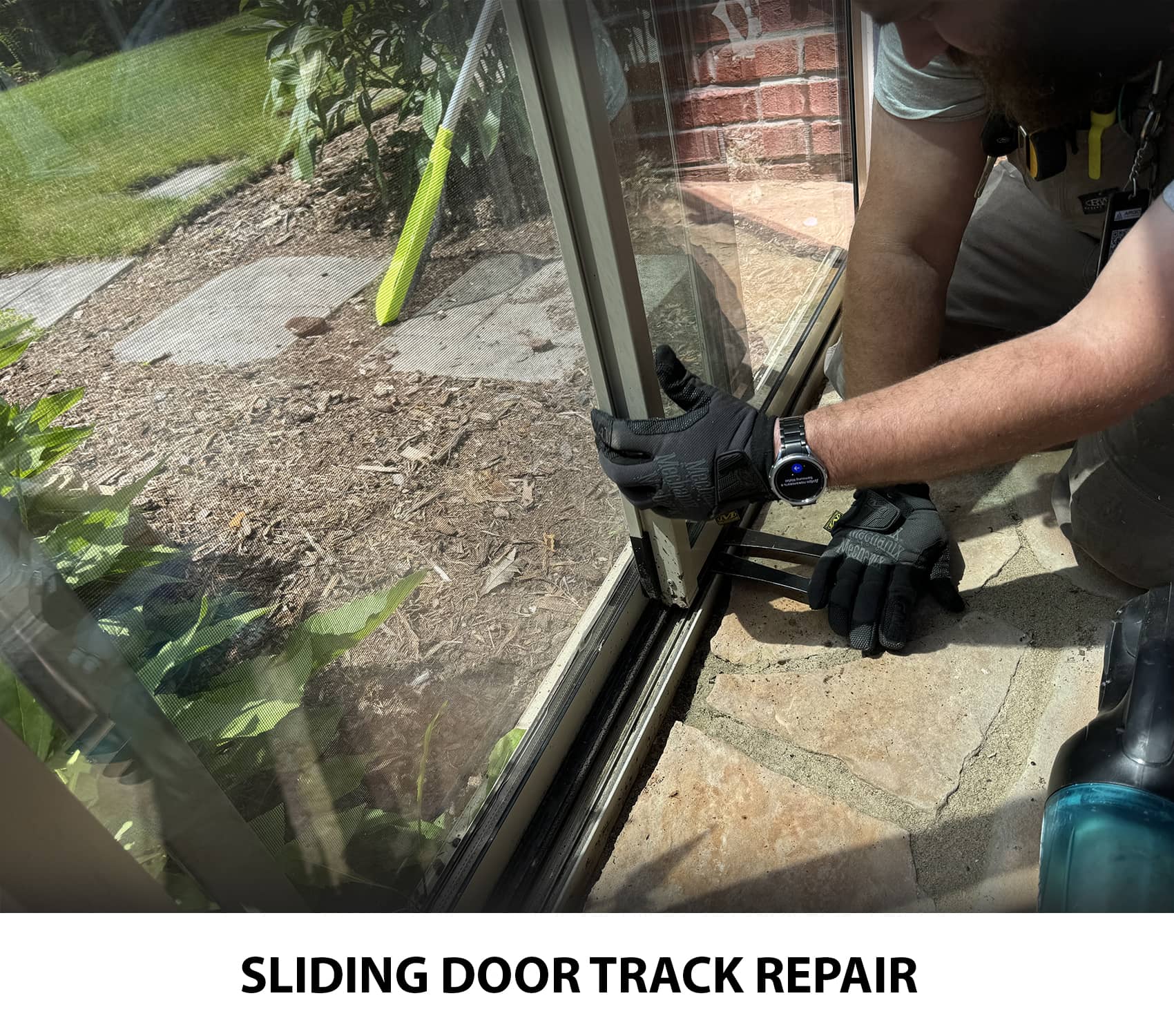
Tracks tend to fail in ways that are fairly easy to recognize once the pattern shows up. Debris in the channel can mimic a more serious issue, and sometimes the buildup really is the whole problem. But when the track is worn through, bent out of shape, or physically damaged, the door geometry changes with it. The panel may start moving unevenly, hop, scrape, or rise for a short stretch before settling back down. That is no longer a simple cleaning issue.
A worn guiding surface also helps explain why some doors slip off track to begin with. The track is there to keep the panel moving in a controlled path under load. Once that guidance starts breaking down, instability usually follows. Honest sliding door repair means recognizing when the track itself is no longer just part of the background system, but part of the failure.
One useful check is slow, controlled movement. If the panel glides normally for a short section and then suddenly turns rough, there is usually something deeper going on. At that point, repair or replacement of the track system is often the only real way to bring back consistent travel. Otherwise the door is just being nudged along, not truly repaired. In Arlington, VA, many calls for sliding patio door repair end up tracing back to a worn track and bad rollers, not just surface dirt or light wear.
Lock and handle repair: security is usually parts plus position
A patio slider that will not lock is often treated as a simple hardware problem. Sometimes that is accurate. But in many cases, the panel is no longer landing where the latch is supposed to meet it. Worn rollers, track wear, or a door that has started to sag can push the lock point out of line even when the lock itself still has usable life left.
The hardware can also fail on its own. Handles crack. Latches loosen up. Some older assemblies become difficult to identify and even harder to source. Clear photos of the handle and lock area often help narrow down the correct set before the service visit and reduce wasted time. That becomes especially important when discontinued parts are part of the job.
In real-world terms, sliding glass door repair around the lock area usually means correcting two issues at the same time: restoring the hardware itself and bringing the panel back to the position where that hardware can engage the way it should. On Arlington, VA properties, that often connects directly to sealing performance too. A door that closes out of square does not just fail at the lock point. It also loses proper compression along the weather seal.
Sagging, adjustment, and geometry issues
Not every slider starts going bad because of the rollers alone. Some doors develop larger fit and geometry issues over time. They slip out of adjustment, drop slightly, or settle in a way that changes the way the panel meets the opening from top to bottom.
The signs usually start layering together. The gap becomes uneven. A draft shows up in one corner. The lock begins to miss even though the handle itself still feels firm. In some cases, bubbled paint or moisture marks appear near the lower trim because the panel is no longer closing tightly enough to keep water out where it belongs. By that point, the added strain on the rollers and track has often already sped up wear.
Adjustment is not a cosmetic step. It is what brings the panel back into the correct relationship with the frame. Without that correction, even new parts can work poorly because the door is still sitting in the wrong position. In Arlington, VA, this is often the quiet reason behind repeat service calls that seem to fix one symptom but never resolve the full problem. That is also why a proper sliding patio door repair service checks door geometry before assuming the complaint started with rollers alone.
Wood patio door restoration: different material, different risk
Wood sliders are often worth preserving. But unlike vinyl or aluminum systems, they do not conceal damage for very long. Once moisture gets into the frame or threshold, the problem stops being just a finish issue. Softened or darkened wood, swelling along the lower edge, a peeling coating, and a closing cycle that starts sticking all point to water exposure that is already affecting the structure.
This is usually the point where the repair-or-replace decision becomes easier to read. If the damage is still limited, the affected sections can often be rebuilt or replaced, then the door can be realigned so the panel closes and seals properly again. If the wood frame has taken on broader deterioration, the safer answer may be a more extensive rebuild or full sliding door replacement.
The practical way to approach wood repair is to think in terms of containment. First stop the path the moisture is taking. Then restore the damaged sections. After that, bring the door back into square so it works like a door should, instead of acting like an opening that constantly needs to be watched. For many Arlington homes, that sequence matters more than the material category on its own.
Sliding glass door replacement: what replacement really includes
Replacement becomes the stronger option when the system can no longer be brought back to stable operation with real confidence. That usually happens when the frame has deteriorated too far, the door geometry has shifted beyond a dependable adjustment range, or the overall damage keeps the unit from sealing, locking, and moving the way it should even after targeted repairs.
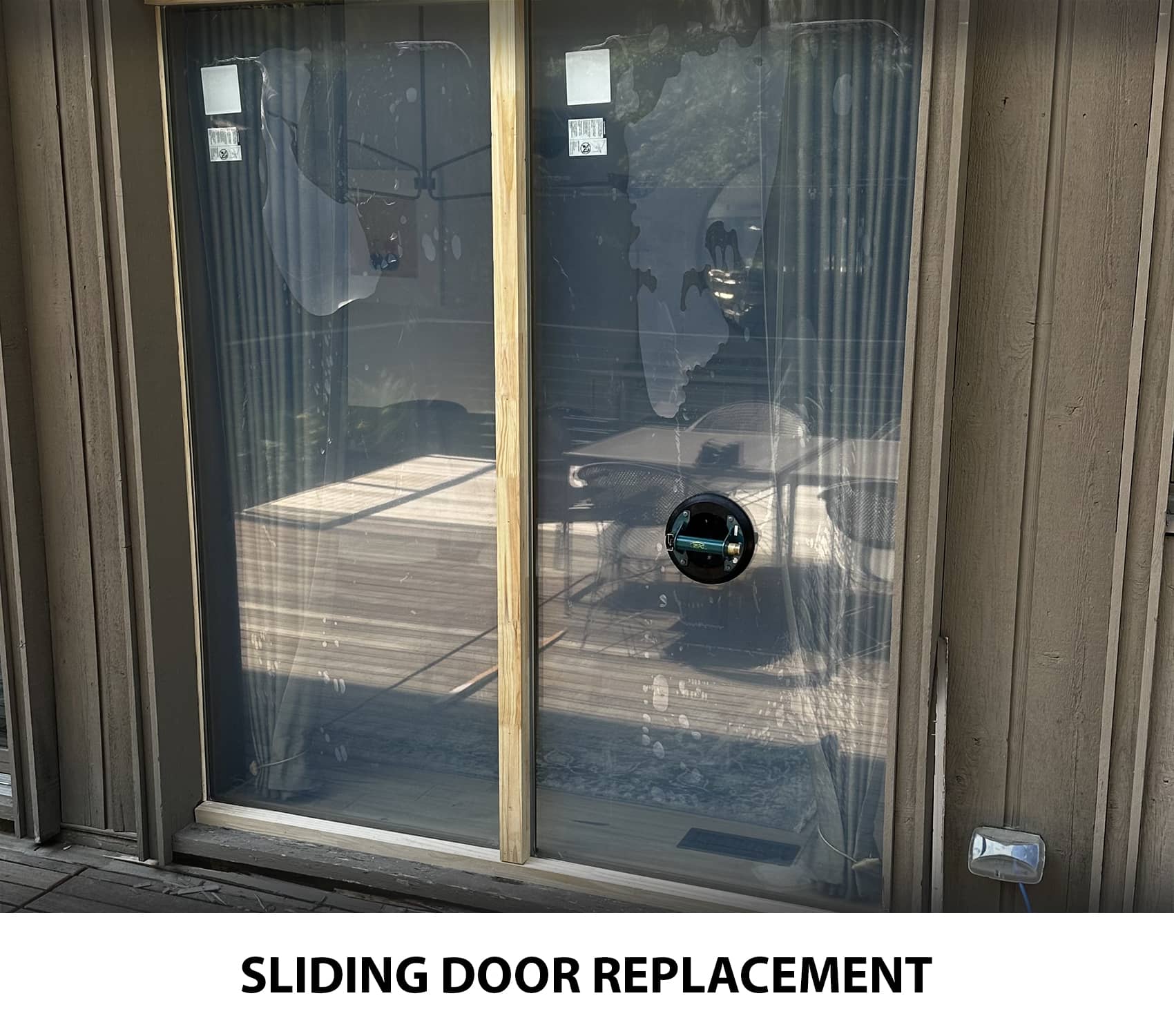
Professional sliding glass door replacement Arlington, VA work is not just about changing out a panel. It starts with exact measurement of the opening, then moves into choosing the right unit for the structure, the exposure conditions, and the kind of daily traffic the door will handle. A proper sliding door installation Arlington, VA job also depends heavily on how the opening is prepared, squared, and sealed, not simply on setting a new unit in place.
The same project may be described as sliding patio door replacement when the slider functions as the main patio access point. In that situation, sliding patio door installation has to be treated as full system work, and the skill of the sliding patio door installer matters more than whatever sales language is attached to the product. Many failed doors were not originally bad products at all. They became bad systems over time. A careful replacement corrects that by rebuilding performance into the opening itself, not by replacing only the visible parts.
Screen door service: the other slider fails in familiar ways
The screen door usually gets ignored until it stops working the way it should. But screen panels have their own rollers, tracks, mesh, and alignment problems too. When a screen starts dragging, hopping in the track, tearing, or slipping out of line, it is usually following the same basic failure path as the main panel, only in a lighter and simpler form.
Typical service may include mesh replacement, roller replacement, track cleaning, or a new screen made to fit the existing opening properly. In Arlington, VA, some calls also involve upgraded mesh options, including pet-resistant material, because the real measure is not how the screen looks right after installation. It is how well it holds up in normal household use.
Problem, service lane, and why delay usually makes things worse
|
Situation observed
|
Go
|
Caution
|
No-Go
|
|
Sliding panel drags but stays in the track
|
Clear out visible dirt and grit from the track, then test the door with light movement only
|
If the drag remains, worn rollers or an adjustment problem are likely
|
Stop pushing the panel if it starts binding hard or scraping heavily
|
|
Door moves roughly, skips, or feels like it wants to jump the rail
|
—
|
Track wear or failed rollers are likely; service should be scheduled
|
If the panel feels unstable or looks like it could fall out of line, stop using it until it is inspected
|
|
Slider comes off track or shifts in an unusual way
|
—
|
—
|
Stop using the door and arrange repair right away; off-track movement can worsen quickly
|
|
Lock misses even though the door appears shut
|
—
|
Alignment trouble or poor hardware fit is likely; do not force the handle
|
If the door will not secure at all, treat it as urgent
|
|
Air leaks or a whistle shows up at the edge
|
—
|
A sealing, compression, or alignment issue is likely; the system should be checked
|
If water is getting in as well, do not wait
|
|
Gap around the moving panel looks uneven, with a draft near one corner
|
—
|
The panel is likely out of square or out of adjustment; fix it before it turns into track and lock trouble
|
If the frame shows swelling, softness, or active leaking, move quickly
|
|
Glass looks cloudy or milky between the panes
|
—
|
The insulated glass unit has likely failed; plan for glass replacement
|
—
|
|
Glass is cracked or shattered
|
—
|
—
|
Secure the opening and arrange repair or temporary stabilization right away
|
Repair vs. replacement: cost logic and decision points
Typical repair numbers are rough ranges, not formal quotes, but they do help set expectations. Roller repair or replacement often falls somewhere around $100 to $400. Track repair or replacement is commonly in the $150 to $300 range. Glass replacement often lands around $200 to $600, depending on size and glass specification. Lock or handle repair may be closer to $75 to $200.
The comparison that actually matters is fairly straightforward. Replacing the entire patio door system usually costs more than replacing a failed glass unit or restoring an operating system that is still repairable. The better choice is rarely based on the idea that newer automatically means better. The better choice comes from answering a more practical question: can the existing door still be brought back to smooth movement, dependable locking, proper sealing, and a structurally sound frame condition?
A door that drags but stays on line can sometimes tolerate a light clean-and-test check before service is scheduled. A panel that binds hard, skips, rides unevenly, or feels like it could jump the track has already moved into caution or no-go territory. If the door will not secure at all, or water is already working its way in around the panel, the urgency rises quickly. In Arlington, VA, that kind of delay has a way of turning into a more expensive problem after the next hard change in weather.
Conclusion
A patio slider usually does not go bad for vague or mysterious reasons. The causes are typically straightforward. Rollers wear down. Tracks bend or wear through. Hardware drifts out of position. Seals inside insulated glass units fail. Wood begins to break down when moisture keeps finding a way in. The most direct path to a repair that holds up is to treat the door as a complete working system, not as one isolated symptom. Find the source of the problem, choose the repair path that actually fits it, and restore smooth travel, proper sealing, and dependable locking as part of the same solution.
When the door can still be brought back to stable operation, targeted sliding door repair is often the right move. When the system has gone too far for that to be reliable, sliding glass door replacement becomes the stronger long-term option. Either way, the priority remains the same: fix the real failure, match the parts correctly, and return the opening to dependable everyday use in Arlington, VA.