Common Semco window problems that usually point to repair first
Foggy glass, failed seals, and broken panes
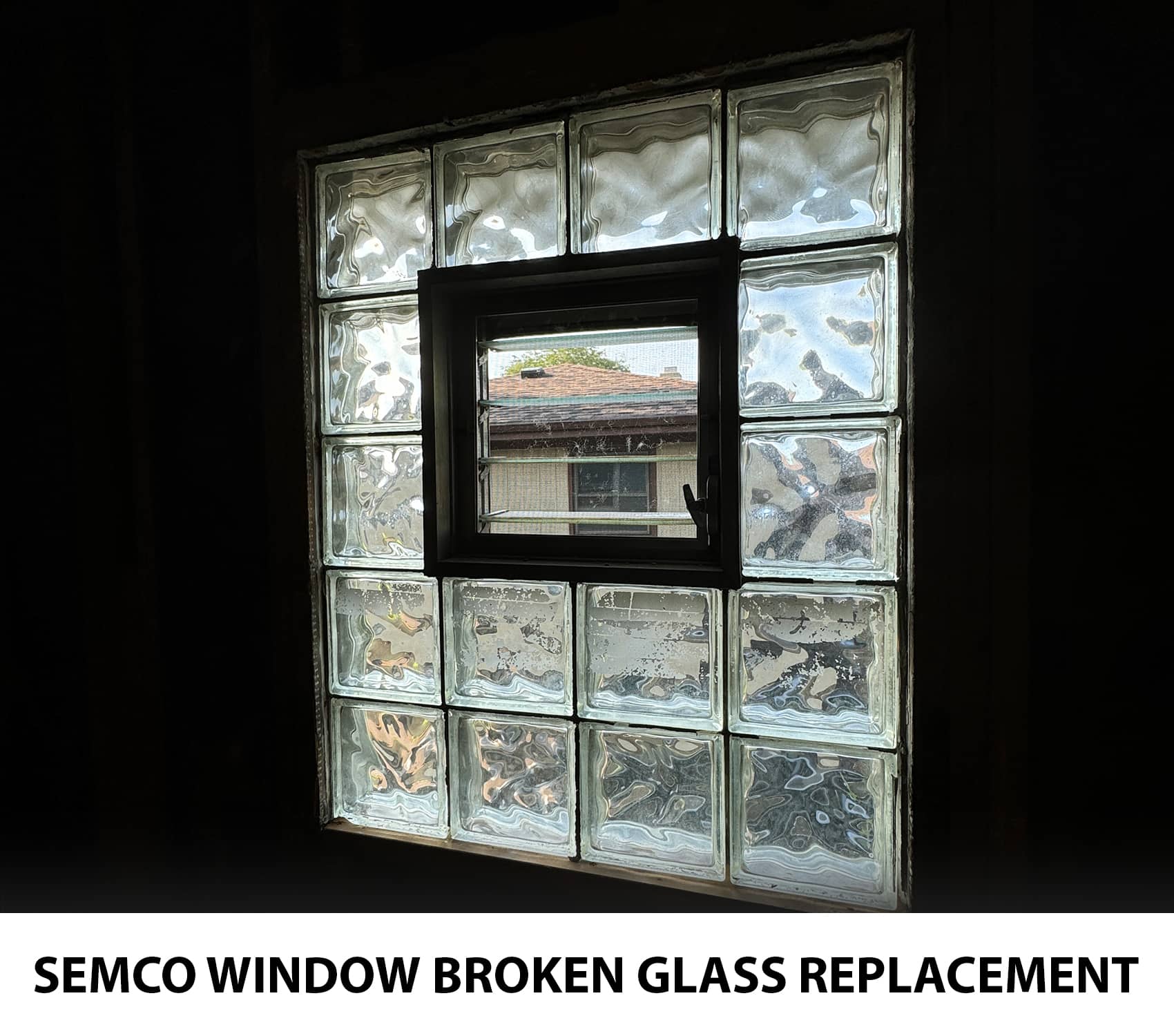
One of the most common Semco issues starts at the glass. The view turns dull, a cloudy film settles between the panes, or moisture shows up inside the unit and stays there no matter how often the surface is cleaned. Usually, that points to seal failure inside the insulated glass, not to an immediate need for full Semco window replacement. If the sash is still firm and the frame has not twisted, spread, or taken on moisture, Semco window glass replacement is often enough to solve the problem while the rest of the unit stays in place. The same logic applies to many single cracked panes or localized glass failures. In those cases, the repair stays focused on the damaged glazing section instead of turning into a full rebuild of an otherwise usable window.
Once the pane has failed, the problem stops being only visual. The area around the opening can start to feel cooler, less even, and just off in a way that is hard to miss. That shift often shows up before anything else. The real loss is happening inside the unit, where the insulated glass is no longer doing its job properly. If the surrounding wood or frame material has not gone soft, darkened, or started holding moisture, Semco glass replacement is usually the more sensible path. It restores function without expanding a limited defect into a much larger project.
Hardware that makes the window hard to live with
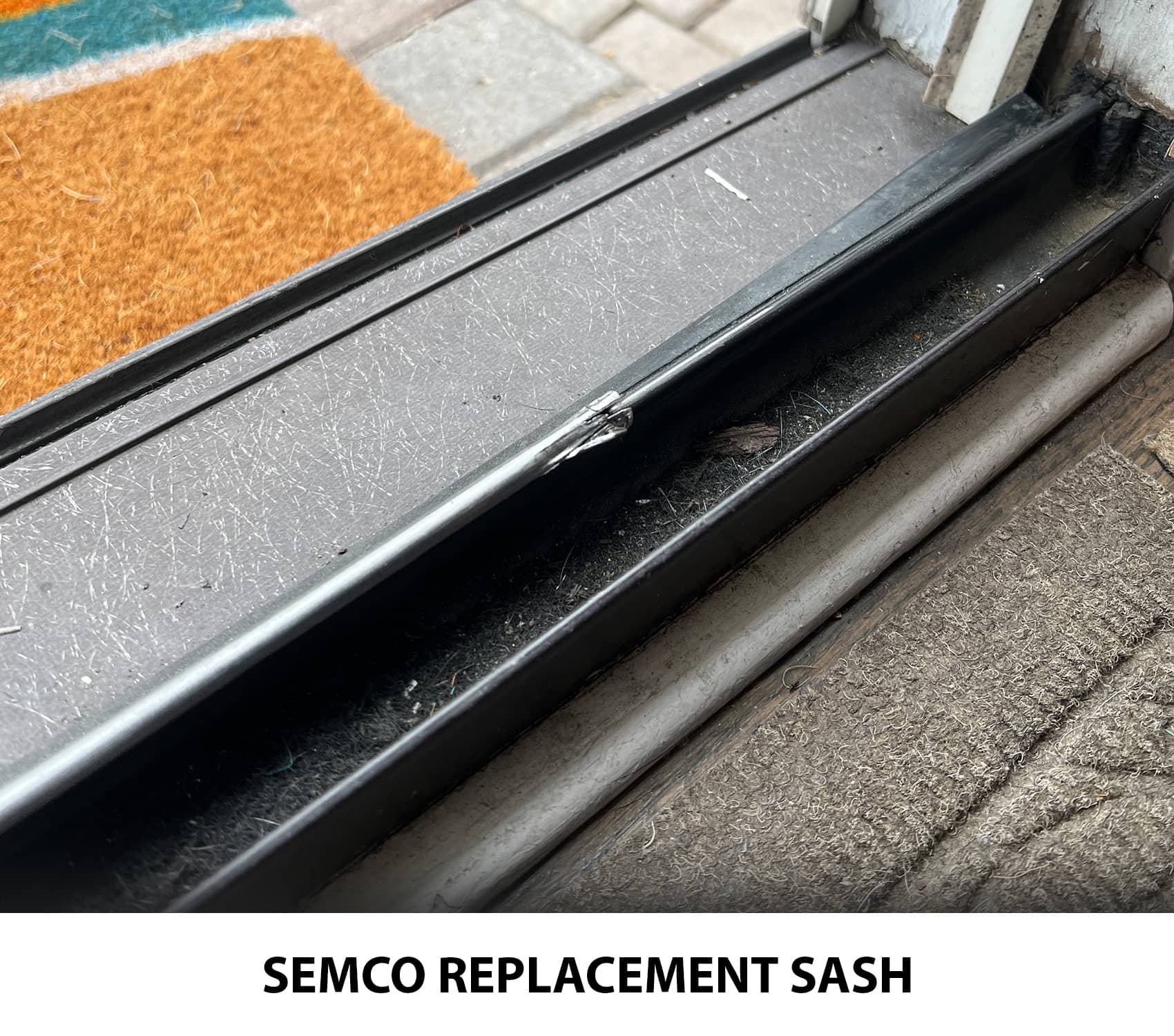
A lot of Semco units seem worse than they really are because the moving parts wear down before the window itself is truly finished. On casement and awning units, cranks and operators often wear to the point where they slip, drag, or stop pulling the sash in cleanly. On double-hung windows, the sash may slide out of place or refuse to stay where it is opened because the balance system has weakened. Sliding windows and patio doors often start with worn Semco window rollers, a rough track, or failing Semco patio door parts long before the full frame is actually beyond saving. Handles loosen up, locks stop catching the way they should, and something that used to work smoothly becomes an everyday nuisance.
That kind of wear is not just cosmetic. Hardware affects how the unit opens, how tightly it shuts, and how well the sash presses into the weather seal. Once that closing pressure starts falling off, outside air and moisture can begin working through the edges even when the glass is still intact. A patio door riding on bad rollers may scrape, hesitate, and slowly pull the panel out of square. In cases like that, a full replacement is often not the best first answer. Targeted Semco sliding door handle repair can often bring the unit back to steady daily use without unnecessary tear-out.
Rotten wood, damaged sashes, and soft sills
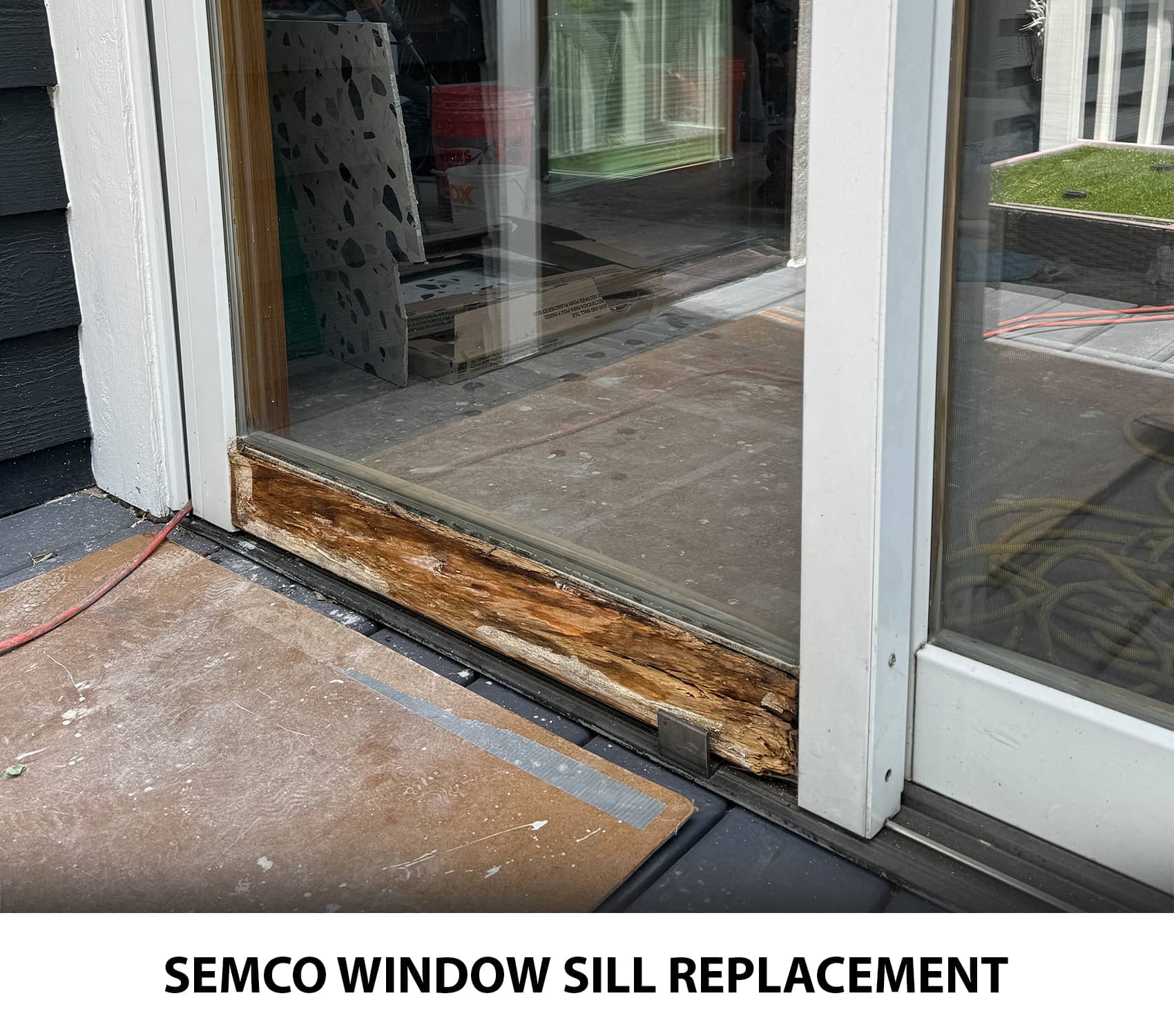
Wood deterioration is another pattern that shows up again and again in older Semco units, especially around the sill, at the lower edges of the sash, and in other areas that keep getting wet year after year. Sometimes the damage is obvious right away. Paint starts lifting. The finish turns darker in one section. The sill feels soft instead of solid when touched. In other cases, the warning is less visual and more functional: the sash begins to rub, the frame tightens up during damp weather, or one bottom corner stops closing flush like it used to.
Issues like these need a proper assessment, not a rushed verdict. Rot that stays limited to part of the sash or one section of the sill is often still a repair problem. The damaged wood can sometimes be cut back, rebuilt, pieced in, or otherwise restored without removing the whole unit. But wood failure rarely stays contained when water entry, bad seals, or drainage trouble keep getting ignored. Good Semco window repair is not about hiding weak material under filler and paint. It starts with finding the moisture path, checking how far the breakdown has spread, and figuring out whether the surrounding frame still has the strength to keep doing its job.
On older wood Semco windows, that kind of work can be much more exact than many homeowners expect. Sometimes the failed section is not the whole sash at all, but a single rail, one shaped profile, or one worn portion of the sill. In those cases, matched wood components and reproduced sash profiles can keep repair in play when a full replacement would be more than the opening actually needs. Sometimes the replacement piece is chosen less for strict one-to-one duplication and more for lower upkeep and a longer service life. The right path depends on how much original material is still sound, how exposed the repaired area will be, and whether preserving the original look matters more than reducing future maintenance.
Drafts, leaks, and frame movement
A Semco window can give up a lot of its performance before anything looks dramatically wrong. The early clues are often easy to miss: a cool draft sneaking in along the sash line, a sill that feels damp after a hard rain, or a unit that has gone just slightly off square in the opening. Sometimes one side pulls in tight while the other side never quite presses into the seal. Sometimes the latch works only after the sash is lifted a little, pushed inward, or tugged into position. Trouble like that usually traces back to worn weatherstripping, failed perimeter caulk, light frame movement, or alignment that has gradually started slipping out of true.
These are not harmless little annoyances. They are usually the first signs that the unit is no longer closing evenly or shedding water the way it was designed to. Air leaks and moisture entry tend to feed each other. Hardware starts working harder than it should, exposed wood stays wet longer, and a problem that might have been solved with a focused repair can turn into repeat sticking, spreading decay, or even mold near the opening. In many Arlington, VA cases, the right answer is much smaller than full replacement: reset the alignment, improve drainage, replace the weatherstripping, or tune the unit so the seal makes even contact again. Catching that stage earlier gives Semco window repair a much better chance of working, instead of letting the opening drift into full replacement territory.
How Semco window repair changes by window style
Casement and awning windows
With Semco casement and awning units, the trouble often starts in the moving hardware, not in the frame. The crank begins to skip, the operator loses strength, the hinges loosen up, and the sash stops pulling in evenly against the weather seal. Usually that becomes obvious in day-to-day use before anything else does. The window starts fighting back, one side pulls tighter than the other, or a corner still looks slightly proud even after closing. Because this style relies on its hardware to seat the sash correctly, even a fairly limited mechanical problem can quickly turn into a noticeable draft or water intrusion.
If the sash is still sound and the frame has not started breaking down, replacing worn hardware, restoring the operating parts, and bringing the sash back into alignment is usually far more sensible than tearing out the whole unit. When wood damage is also present at the sill or along the lower rail, the repair has to deal with both issues together. Getting the mechanism working again is only half the job. The moisture route still has to be tracked down and corrected, or the same pattern comes back: hard operation, weak sealing, and slow deterioration in the same exposed section.
Double-hung, sliding, and glider windows
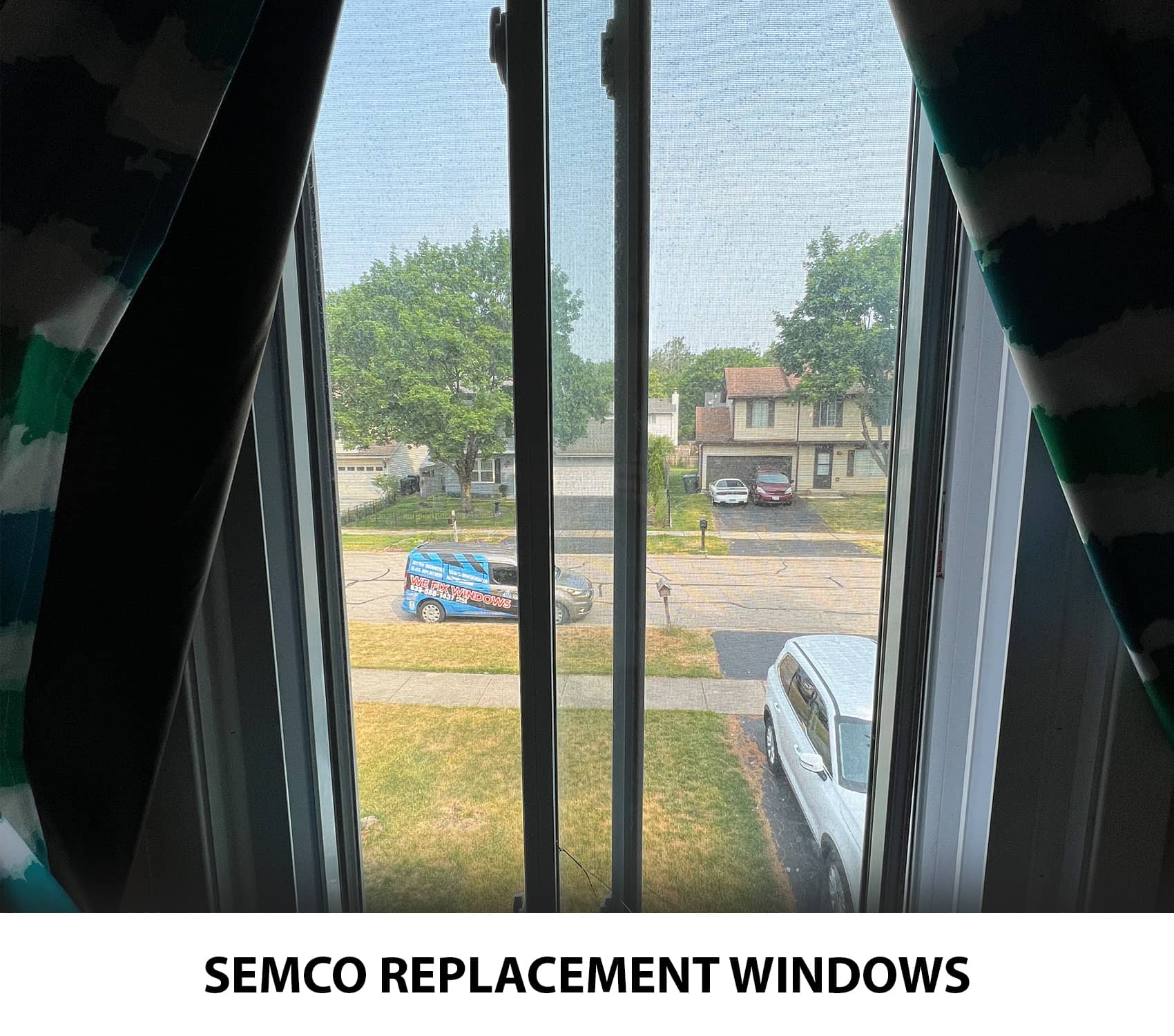
Double-hung Semco windows usually give themselves away through movement problems. A sash may start dropping little by little, dragging in the jamb, tilting awkwardly, or refusing to stay where it is left. Sliding and glider units usually show a different set of symptoms. They begin moving with more resistance, rubbing the track, or closing without that even, snug contact because the rollers are wearing down or the frame has drifted slightly out of true. On top of that, both styles can also develop failed insulated glass and leakage around the outer edges.
In many Arlington, VA homes, those are still the kinds of problems that point to repair first, because the parts most likely to fail are also the parts designed to be serviced. Balances, weather seals, rollers, tracks, and locks all wear out with time. Once that happens, the unit can feel much worse very quickly even though the main structure may still be serviceable. That is where a repair-first approach makes real sense. In many cases, the failure is centered in components that can be tuned, rebuilt, or replaced without pulling out the full window assembly.
Picture, bay, bow, garden, custom, and tilt & turn units
Fixed and specialty Semco windows usually require a more careful read. A picture window has no moving hardware to wear out, but that does not keep it clear of trouble. Failed insulated glass, broken edge seals, and deterioration in the surrounding frame still show up there. Bay and bow units add another layer because the issue is not always sitting in the sash or glass alone. Support points, weight distribution, and long-term movement can all shape what is actually going wrong. Garden windows and custom configurations usually need tighter parts matching, since sizes, trim lines, and profiles are often far less interchangeable. Tilt & turn units bring a different kind of complexity, because poor operation may come from sash adjustment, hinge position, or hardware geometry rather than the glazing itself.
That is usually the point where experience matters more than assumptions. A fogged pane in a fixed frame is one repair path. Slight settling in a bay window, or repeated moisture exposure around a specialty unit, is a different problem entirely. Repair often still makes sense, but it has to follow the way that specific unit was assembled and the exact place where strain or water is building up. On older or less common Semco designs, the parts plan becomes part of the repair from the start, not an afterthought once the diagnosis is already made.
What the repair process usually looks like
A good repair starts with diagnosis, not with guessing which part to replace first. A Semco window or door has to be evaluated as a full system. The glass matters, of course, but so do frame stability, hardware condition, sash position, moisture exposure, and the state of the surrounding wood. Only after that broader assessment does it become clear whether the right path is Semco glass replacement, hardware repair, wood restoration, partial rebuilding, or a recommendation for Semco window replacement instead.
From there, the process is usually pretty straightforward. A Semco service request goes in, a specialist inspects the unit, the recommended scope is reviewed, and the needed parts are identified before the repair date is scheduled. On Semco work in Arlington, VA, that order matters more than it may seem at first. Once the problem has been read correctly and the right components are ready, the repair itself is often the easier part.
Many of the more direct repairs can be completed in one visit once materials are on hand. A lot of Semco window repair service calls fall somewhere in the 2 to 4 hour range, while more involved work or special-order parts can push the schedule further out. That is the practical way to read it. A Semco window handle replacement, roller repair, or hardware adjustment is one kind of job. Custom glass, discontinued Semco window repair parts, fabricated pieces, or wood rebuilding is a very different one. The better approach is to confirm the condition of the unit and the parts strategy first, then talk about timing. Not the other way around.
Conclusion
Semco windows and doors do not fail in one predictable way, so one stock answer rarely fits every case. In Arlington, VA, a fogged pane, a worn operator, flattened weatherstripping, a failing roller, or decay limited to one section of the sash will often keep the unit in the repair category. A frame that has been taking on moisture for years, shifted noticeably out of square, or started breaking down across several components belongs in a very different conversation. The real value of Semco repair is in drawing that line plainly, without overselling the problem and without pretending every unit needs the same answer.
When handled the right way, repair is not a stopgap. It is a focused way to keep a solid unit working, restore smoother operation, improve thermal performance, and preserve the original look of the window or door when that still makes practical sense. And when replacement turns out to be the stronger choice in an Arlington home, the decision carries more weight because it comes from the actual condition of the unit, not from guesswork, habit, or a canned sales pitch.