Start with a fast diagnosis (type, material, and the symptom you want gone)
The first step is figuring out what is actually installed. Double-hung units are especially sensitive to balance conditions and to how the meeting rails come together. Sliding windows and patio doors depend more on rollers, track condition, and whether the panel is still running true. Casement and awning models rely on a different group of parts: crank mechanisms, hinges, weatherstripping, and multi-point locks. Doors bring in a few extra weak spots. Problems that seem random at first often trace back to strike alignment, poor threshold drainage, or uneven weight riding through the track and rollers.
From there, the symptom needs to be described directly and read as a clue, not dismissed as a small annoyance. Moisture or haze trapped between panes usually signals a failed insulated-glass seal. A sash that slips down or refuses to stay up commonly points to a balance issue. Binding, rubbing, uneven sightlines, a sticking sash, or a draft on windy days usually connect to alignment drift, and once that starts, wear and air leakage tend to feed each other. A slider that scrapes or growls instead of moving cleanly often means the rollers are worn, the track is breaking down, or both are happening at once. Water showing up on a damp sill or repeated drafts may come from the unit itself, but sometimes the real problem sits around the perimeter, where failing installation details have started undermining the whole system.
Material + series: why it changes the repair plan
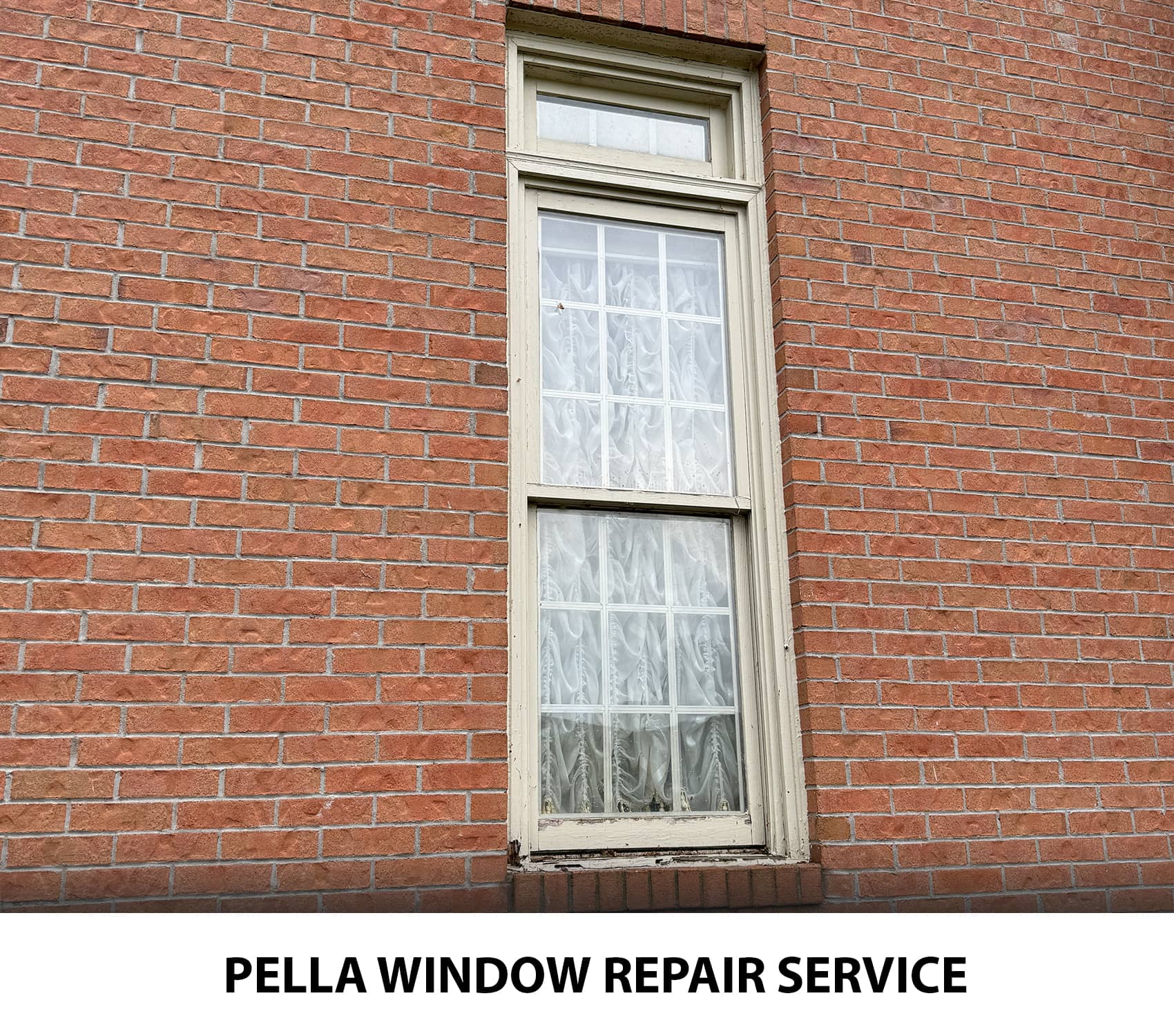
Frame material matters because it usually hints at the kind of failure that shows up first and the kind of work that still makes sense. Wood and clad-wood units tend to lose ground to moisture sooner, so attention often moves to sill areas, lower sash corners, transition points around the cladding, soft or dark wood, and finish blending after the structural repair is complete. Vinyl units more often fall into the operation-and-fit category: lock repair, balance replacement, sealed-glass replacement, and alignment correction. Stress cracking in vinyl can also shift the job toward frame restoration. Fiberglass usually holds its shape better, but failed glass seals and worn hardware still surface, and some repairs depend heavily on the condition of the glazing system and the weatherstripping. Aluminum cladding matters too. Once that exterior skin is breached, moisture can work its way inward and slowly turn a localized problem into a deeper one.
The series and age of the product matter just as much, because one line may still have parts that are easy to source while another becomes a much harder parts chase. Service discussions often point to names like Impervia on the fiberglass side, while vinyl double-hung replacement options may lead toward lines such as 150 or 250. The practical point is straightforward: before any repair plan moves ahead in Arlington, VA, it helps to verify whether the work depends on original parts, acceptable substitute components, or a bigger step such as sash replacement.
Material-specific service map (what problems typically show up, and what “service” means)
This section follows the framework most homeowners are really trying to sort out: Pella window and door repair or replacement across different materials. The chart below gives a quick way to get oriented, and the sections that follow break each category down in a more practical way.
|
Material / system
|
What tends to fail first
|
What service usually focuses on
|
When replacement starts making more sense
|
|
Wood / timber frames
|
Moisture damage usually shows up around the sill, lower sash corners, and other bottom sections that stay exposed the longest
|
Cutting out weakened material, rebuilding damaged areas, resealing vulnerable joints, and restoring finish surfaces after the repair
|
When structural rot has spread too far or moisture keeps getting back in because the source cannot be reliably corrected
|
|
Wood-clad (wood core + exterior cladding)
|
Breaks in cladding transitions or failed seal points let moisture reach the wood underneath, and the damage can stay hidden for a while
|
Repairing or rebuilding cladding sections, restoring interior finish areas, and renewing the sealing system that protects the wood core
|
When deterioration has moved through large sections of the wood beneath the cladding and localized repair stops being dependable
|
|
Vinyl
|
Most trouble shows up in operation: balances, alignment, locks, hardware, plus occasional cracking in отдельные parts
|
Restoring frame or components, correcting alignment, repairing hardware, and handling seal-related issues such as insulated-glass failure
|
When multiple systems are wearing out at the same time and the repair total starts getting too close to replacement cost
|
|
Fiberglass (including lines serviced as “specialty” builds)
|
Failed insulated-glass seals, worn hardware, and aging weatherstripping are the most common patterns
|
Glass-unit replacement, hardware repair, and upkeep of glazing details and weatherseal components
|
When the fix depends on parts that are no longer realistically available or the unit cannot be brought back to reliable working condition
|
|
Aluminum-clad elements
|
Once the cladding system opens up, deeper deterioration can begin underneath where moisture is harder to spot early
|
Rebuilding damaged cladding sections, resealing joints and moisture barriers, and restoring finish layers after the main repair
|
When long-term damage has already spread behind the cladding and the problem is no longer limited to the outer layer
|
|
Sliding patio doors (heavy panels)
|
Worn tracks, failed rollers, threshold leaks, and air leakage are common, especially when the panel starts dragging instead of gliding
|
Track restoration, heavier-duty roller replacement, panel adjustment, and threshold work aimed at water control
|
When the track or supporting structure is too far gone to restore properly, or when repeat water damage keeps coming back at the threshold
|
When the correct category is not clear right away, the simplest move is to start with the symptom and trace it back to the source. From there, this map helps narrow down which repair route actually fits the job. For a closer read on the failure patterns that show up most often, the next sections break down wood rot, fogged glass, leaks, and hardware or operation trouble in more practical terms.
Rotten wood and moisture damage (what causes it, what to fix)
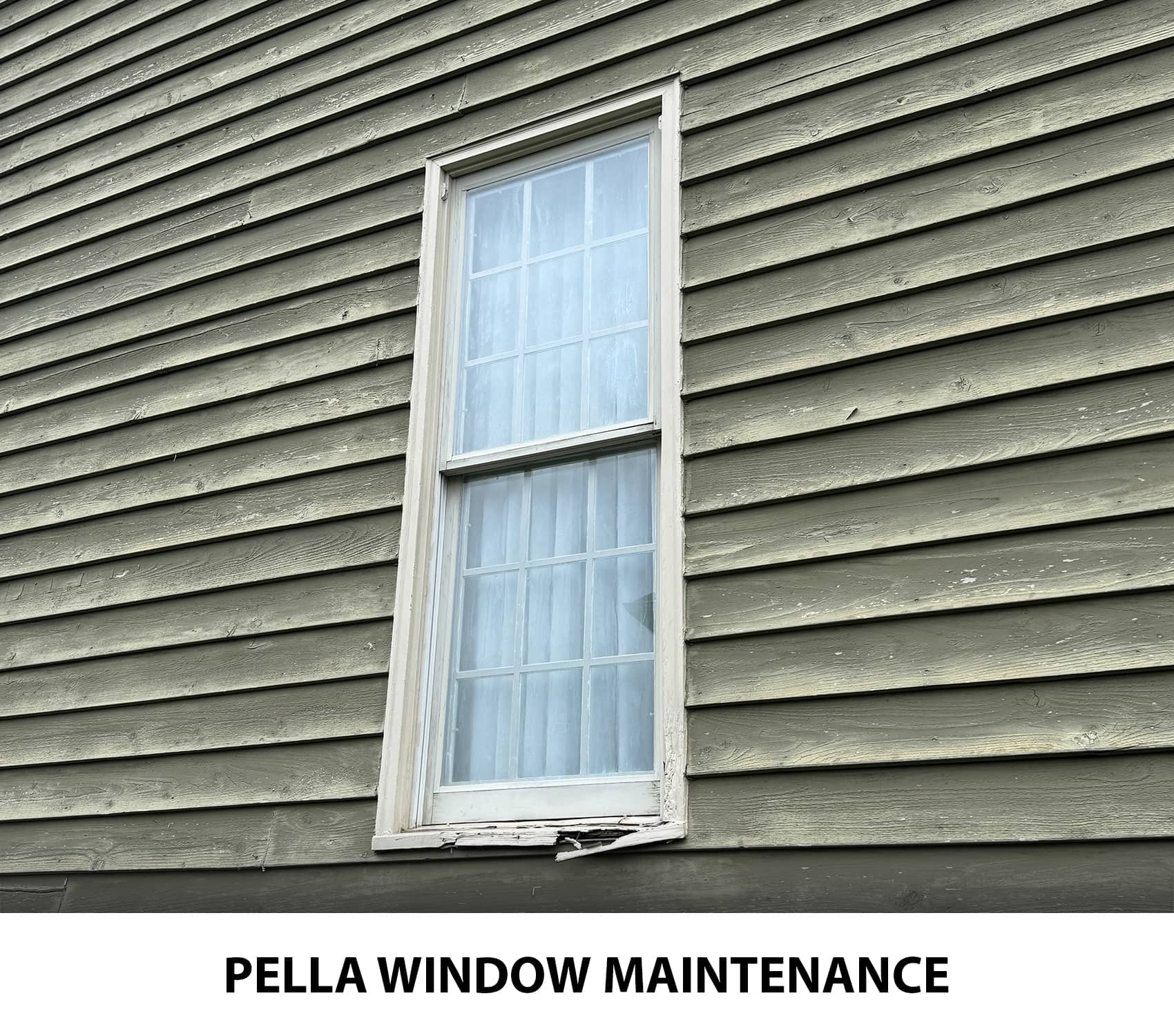
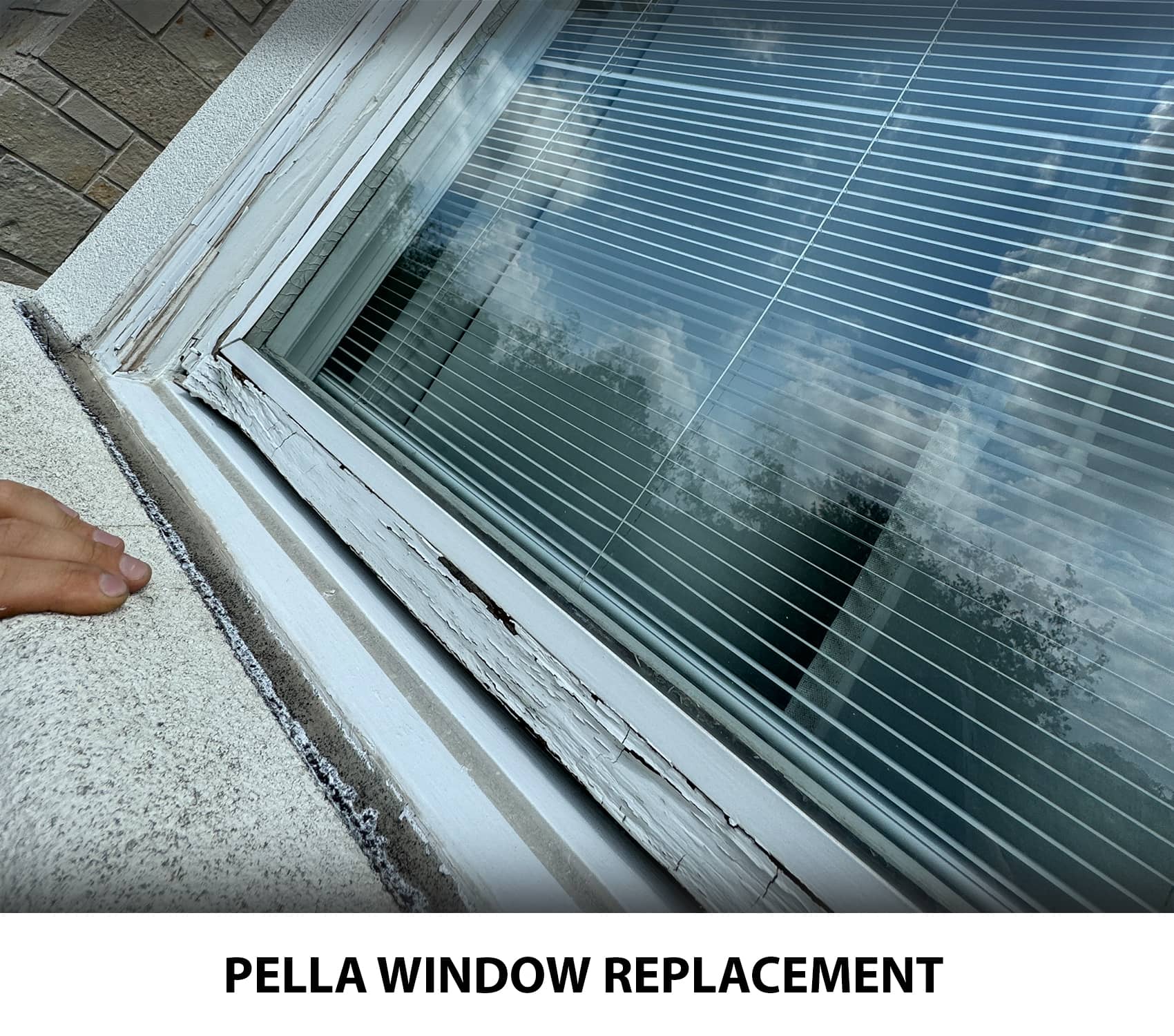
Wood rot is one of the costlier issues found in older wood and clad-wood windows, and it rarely begins with one isolated event. More often, it develops along the same moisture path over and over. Water gets in where cladding begins to open up near the glass, where the sill does not shed water well enough, where the unit has shifted just enough to leave small gaps, or where the original install never sealed as tightly as it should have. Delayed painting and skipped upkeep speed that up, but age does plenty on its own. In Arlington, VA, wind-driven rain, interior condensation, and trapped moisture with nowhere to dry keep that cycle going, especially around the sill and lower frame sections.
The weak spots are usually not hard to spot once the pattern is understood. Trouble tends to appear first at the sill, along the lower edge of the sash, and around hardware locations like bottom hinge corners or operating points. That matters because a repair that only freshens up the visible surface can look fine for a while and still fail once the same water entry path opens again. Bubbled paint, soft wood, a darkened lower corner, or a damp area near the sash often show up before the damage looks serious from across the room.
The repair method has to match the actual depth of deterioration. Quick patch-style fixes do exist, but they belong more to the short-term category. A more durable approach is to cut out weakened wood, splice in solid replacement material, and refinish the area so the work blends back into the original unit. Filler or epoxy by itself is usually not enough. When the damage has moved beyond what a localized repair can realistically hold, sash replacement often becomes the middle option. Once the structure can no longer be brought back to a condition where it opens, closes, and seals properly, or once decay has spread too far through the assembly, full replacement becomes the more dependable choice.
Long-term performance depends on more than removing bad wood and fitting in new sections. Frame-restoration work often includes resealing joints, rebuilding moisture-control details, and restoring the finish so the original appearance stays in place while the chances of the same deterioration coming back are reduced.
Foggy glass, cracked panes, and failed seals (what “needs replacing” and what doesn’t)
Glass that turns cloudy between the panes is one of the issues people misread most often. That milky film inside the unit makes it easy to assume the whole window is done for, but in many cases the damage is narrower than that. What has failed is the insulated glass unit, not the full window system. Once the seal gives out, moisture works its way into the space between the panes, the glass loses clarity, and the unit stops insulating the way it was designed to.
In a lot of cases, the fix is much more contained than a full replacement. The failed glass unit can often be taken out and replaced while the existing sash and frame stay in place, provided those surrounding parts are still sound. That brings back clear sightlines and better thermal performance without changing trim, opening up the wall, or disrupting the exterior appearance of the house. The same general approach often works for patio doors too. Fogged panels or cracked glass inserts can frequently be changed without rebuilding the entire door system. In Arlington, VA, that kind of targeted repair often makes good sense when the rest of the structure is still holding up well. Some setups also leave room for upgrades, including triple-pane or impact-resistant glass, depending on how the glazing system was originally built. Once the replacement glass is in, the unit is reassembled with new glazing materials and fresh sealants so it goes back together the right way.
Cracked glass is a different kind of problem because it usually leaves less room for delay. Even a hairline crack deserves attention sooner rather than later, since it can keep traveling, begin pulling in moisture, and turn into a safety concern. A fracture creeping out from a corner or a pane that starts rattling after a hard storm is usually not something to ignore. The repair path is often fairly clear: replace the glass alone when the surrounding parts are still solid, move to sash replacement when that gives the cleanest and most reliable result, and lean toward full replacement when several components are breaking down together or the structure itself no longer feels dependable.
Hardware and operation problems (balances, cranks, alignment, rollers, locks)
Complaints about window operation usually sound worse than they are. A sash that will not stay up, a lock that refuses to engage, a panel dragging across the track, or movement that suddenly feels heavy often points to a repairable problem. The key is not to stop at the obvious symptom. The failed part underneath it has to be found first.
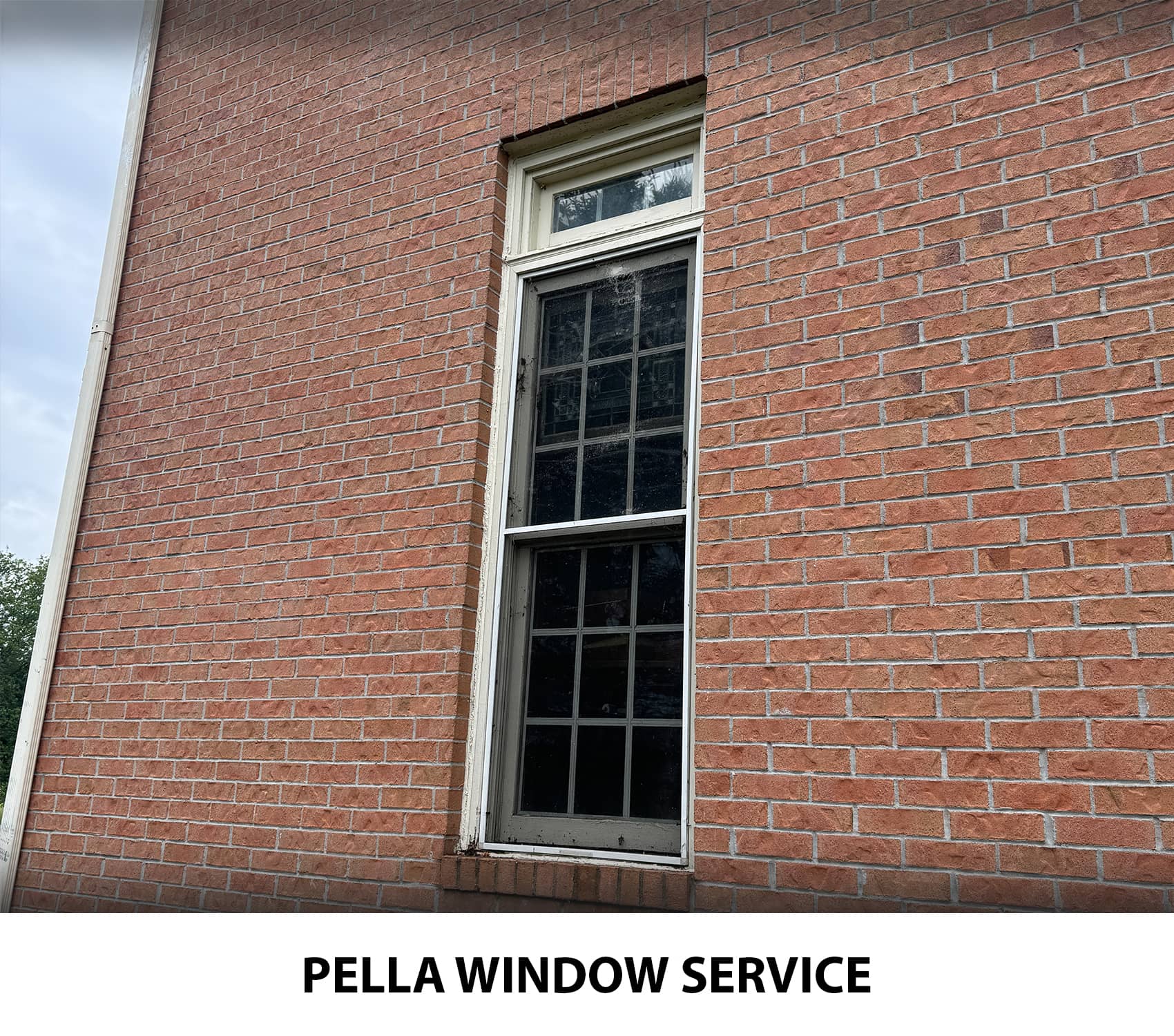
In double-hung windows, the cause often leads back to the balance system and to the way the sash is riding inside the frame. When the sash drops too quickly, will not hold where it is left, or needs too much effort to raise, the balance assembly is usually at the center of it. These systems are not interchangeable. Spring balances, spiral balances, and block-and-tackle setups wear out differently and fail in different ways. A proper fix starts with identifying the exact setup, replacing the worn pieces, and dialing the tension back in so the sash moves evenly and stays put. Tilt-wash hardware and meeting rails matter too. Once those contact points get bent, worn down, or slightly distorted, the whole unit can start feeling loose and tired even if the frame itself is still in decent shape.
Alignment trouble usually builds in layers instead of showing up all at once. Binding starts to seem normal, drafts become easier to feel, and hardware begins wearing out faster because the sash keeps fighting the opening every time it moves. Alignment work is meant to bring back even reveals and a cleaner line of travel from top to bottom. That usually takes careful measurement and adjustment through the full movement range, especially when the real cause is a slight frame shift or subtle racking. In Arlington, VA, this kind of problem often shows up after repeated seasonal expansion, moisture exposure, and temperature swings.
Sliding windows and patio doors most often wear down at the rollers and the track. Once the rollers flatten, or the track turns rough, bent, or chewed up by long-term wear, the panel may hop, scrape, or grind instead of sliding cleanly. A thorough repair can include restoring the track surface, replacing worn rollers, and sometimes moving up to sealed-bearing rollers for smoother travel and longer service life. Lock adjustment often becomes part of the same repair, because the panel has to land exactly where it should before the lock will catch without force. A slider that rattles on one side or needs a hard shove to close usually falls into this same pattern.
Casement and awning windows put a different kind of strain on their hardware because the sash has to pull tight against weatherstripping and sometimes against wind pressure too. Repairs in these units often center on crank operators, hinge arms, multi-point locking parts, and worn weatherstripping. The goal is simple: a firm close and a dependable seal without making the sash feel stubborn or overly tight. Hardware service also goes further than swapping out a visible handle and calling the job done. In many cases, the better repair means opening up the mechanism, cleaning the internal parts, changing worn gears, lubricating moving points, and reassembling the system correctly. The same pattern often shows up in certain Pella lock systems, where the real failure sits inside the mechanism rather than out on the surface.
Door-specific operation and sealing (tracks, multi-point locks, thresholds)
Door operation and sealing need to be judged on their own because doors wear differently than windows do. Large sliding panels put constant load on the track assembly, so track service usually means more than vacuuming out dirt and calling it done. The work often includes removing packed debris, swapping worn rollers for heavier sealed versions, and adjusting the panel so it stops scraping and starts traveling with less strain. Sealing work is just as exact. That may involve replacing crushed primary seals, adding compression weatherstripping where it actually improves the close, and servicing thermal-break components meant to slow heat loss. Water intrusion around doors usually begins at the bottom, not the top. That is why threshold details matter so much: a properly pitched replacement, fresh bottom sealing, and drainage repair can keep rain from working its way under the panel and onto the interior floor.
Lock problems on doors and other large operable units are often tied to the system as a whole rather than one part that looks obviously broken. Multi-point hardware may need actuator replacement along with strike adjustment so every locking point engages together instead of one section catching while the rest resist. When the handle lifts but the door still does not secure, the failure is often buried inside the mechanism. In Arlington, VA, repeated seasonal movement tends to make that mismatch more obvious, especially on wider or heavier doors already carrying more load.
Sometimes the real complication is parts availability. Hardware for older units can be costly, difficult to source, or both. The sensible order is to identify the failed component first and confirm the parts path before settling on the repair plan. That can lead to original hardware, a usable substitute, or a broader replacement decision when the needed part is no longer realistically available.
Drafts and water intrusion (window problem vs installation/joint problem)
Drafts and water intrusion can get expensive fast when the source is guessed at instead of actually traced. Air and water do not always come through the window or door unit itself. Quite often, the real opening sits in the installation zone around the frame, where the joint was never sealed, flashed, or drained properly in the first place.
The timing usually tells part of the story. In newer homes, drafts do not always show up right after construction. Sometimes they appear years later, once the structure settles and nearby materials begin to shift, often in that five- to ten-year window. A leak tied to installation usually follows another pattern. It may start early if the flashing, perimeter sealing, or drainage layout was wrong from day one. Water can also get in where the window meets siding, fascia, or a nearby roof transition, then travel before it finally appears indoors as what looks like a window leak. In Arlington, VA, that kind of mix-up is common after repeated rain, freeze-thaw cycles, and seasonal movement.
One of the better ways to sort it out is to watch which interior surfaces are actually showing damage. Ongoing water entry may leave marks near the casing, but it can also show up farther away as stained drywall, swollen trim, bubbled paint under the opening, or soft flooring close by. That distinction matters because it can completely change the repair direction. Sometimes the real fix has nothing to do with the window itself. The failure may be in the perimeter joint, the flashing sequence, or the drainage path breaking down around it.
When the problem really does belong to the unit, the repair is usually more contained: sash adjustment, replacement of tired weatherstripping, added sealing where the original setup is too weak, and insulation or caulk to close the paths that let air and moisture move through. Door repairs often follow the same logic, just under heavier load. Track adjustment, roller service, renewed seals, and threshold drainage work usually sit at the center when the trouble involves a patio door or another large opening.
Leak source check (quick decision table)
|
If this is happening...
|
Most likely source
|
What makes sense to check next
|
|
Water shows up soon after installation, or only during wind-driven rain
|
An installation issue tied to flashing, drainage, or perimeter detailing
|
Start with the exterior joints and drainage path before replacing window or door parts
|
|
Drafts slowly get worse over the years (more of a settlement pattern)
|
Seasonal movement, worn seals, or gradual alignment drift
|
Check weatherstripping, sash compression, and alignment before assuming a larger failure
|
|
Staining appears around trim, or near nearby roof/fascia connections
|
A joint leak near the opening rather than a problem inside the unit alone
|
Inspect the surrounding transitions and adjacent surfaces, not just the window or door itself
|
|
Interior casing, wall areas, or flooring keep getting wet again
|
A continuing water path, either through the unit or around the joint
|
Stop the water route first, then move to restoring damaged components and finish surfaces
|
Repair vs replace: a decision tool you can actually use
The point is not to force every job into either the repair side or the replacement side. The more useful question is simpler: which option fixes the real problem without wasting money, lasts the longest, and does not set up the same trouble to come back a year or two later.
A big share of repair jobs still costs far less than full replacement. In many cases, the gap is significant, with repair work coming in roughly 70% below the price of replacing the unit outright. That kind of spread makes sense when the frame is still solid and the failure is limited to one area, whether that means glass, rollers, balances, seals, hardware, or alignment. Replacement starts to carry more weight once the damage stops being localized, once repeated moisture has started weakening the wood itself, or once the unit can no longer be brought back to a condition where it opens, closes, and seals with real consistency. In Arlington, VA, that dividing line matters. A borderline unit usually does not get better after another season of damp air, wind, and temperature swings.
Repair vs Replace Matrix (symptom → likely fix → escalation point)
|
What is showing up
|
What it usually points to
|
Best next step
|
Material / series note
|
|
Fogging trapped between panes
|
The insulated-glass seal has failed
|
Replace the IGU while keeping the existing sash and frame in place if both are still structurally sound
|
This can happen across several materials, and the series often affects how the glass assembly is removed and rebuilt
|
|
Sash will not stay open or slides back down
|
Balance failure or lost tension in the system
|
Identify the exact balance setup first, then replace or recalibrate it so the sash moves and holds correctly
|
Most often seen in double-hung units, and the balance design can change a lot from one line to another
|
|
Slider drags, scrapes, or makes a grinding sound
|
Worn rollers combined with a rough, dirty, or damaged track
|
Restore the track, replace or upgrade the rollers, then dial in the lock position so the panel lands correctly
|
Heavy sliding panels wear rollers faster, so sealed-bearing rollers are often the stronger upgrade path
|
|
Window binds or the gaps look uneven
|
The sash has shifted out of alignment
|
Reset the sash position and clearances, then address the secondary wear caused by that movement
|
Misalignment often leads to drafts and tends to accelerate hardware wear over time
|
|
Drafts are noticeable even though nothing looks obviously broken
|
Worn weatherseals or movement within the unit
|
Replace weatherstripping, adjust the sash, and check nearby joints in case the air leak is outside the unit itself
|
What feels like a window draft may actually be coming from trim, siding, or another joint close to the opening
|
|
Soft or deteriorated wood around the sill or sash
|
Ongoing moisture entry and breakdown of the material itself
|
Remove and rebuild the damaged wood sections, or replace the sash if needed, then correct the moisture path
|
Wood and clad-wood units usually need follow-up work too, including finish restoration and resealing
|
|
Hardware will not latch or lock the way it should
|
Misalignment or worn internal hardware parts
|
Adjust the strike or actuator, or replace the worn hardware inside the mechanism
|
Parts availability can vary sharply depending on the product line and the age of the unit
|
Go / Caution / No-Go decision tool
|
Go (repair usually makes the most sense)
|
Caution (inspect first, then decide)
|
No-Go (replacement is usually the cleaner answer)
|
|
The frame is still solid and the problem stays localized, whether that means glass, balances, rollers, weatherstripping, or hardware
|
Several symptoms are showing up at once, or the parts path is still unclear and needs to be confirmed before choosing a direction
|
Damage has moved too far, structural wood decay is widespread, or the unit cannot be brought back to a condition where it will open, close, and seal reliably
|
|
Keeping the existing trim, opening, and original look matters, and the unit still has enough integrity to justify repair
|
The repair scope keeps growing and starts drifting toward replacement-level cost
|
The same failure is likely to come back because the moisture path, geometry problem, or deeper structural issue cannot be corrected in a dependable way
|
Conclusion
Pella window and door repair is usually about bringing a system back to proper working condition when it still has useful life left, not jumping straight to a full tear-out. The smart place to begin stays the same: identify the unit type, confirm the material, and narrow the problem down to the exact symptom. From there, the repair should focus on the part that actually failed, whether that is the glass, balances, rollers, alignment, weatherseals, locks, or thresholds, while also correcting the condition that caused the issue in the first place. Once the structure has lost integrity, or once the unit can no longer be brought back to a point where it opens, closes, and seals with dependable consistency, replacement becomes the stronger route. Even then, the same principle holds. The replacement product and the installation details still need to fit the real demands of the house, especially in Arlington, VA, where heat, humidity, and wind-driven rain tend to expose weak decisions pretty fast.