Start with the type, because it controls the failure points
Before repair and replacement even enter the conversation, the first thing to identify is the exact window or door style. A double-hung unit has its own wear pattern, a casement behaves differently, and a sliding patio door usually develops trouble in places a hinged door never will. That difference is not minor. It changes where the weak points tend to show up, what kind of repair makes sense, and which parts are usually involved.
On double-hung windows, the usual issues tend to build around sash travel, worn balances, and a frame or sash that has shifted just enough to throw things out of line. Casement and awning units depend more on hinges, crank mechanisms, and the way the sash compresses into the weatherstripping when shut. Sliding windows and sliding patio doors more often run into tired rollers, tracks that feel rough or gritty, and sealing problems where the panels come together. Swinging patio doors usually lead back to hinge placement, latch contact, and worn weatherstripping along the perimeter.
Hurd units also show up in garden windows, tilt-and-turn models, and custom configurations. Those versions are not automatically more difficult, but they do affect access, labor, and the way the repair is handled in Arlington, VA. Some projects can be completed entirely on-site. Others are better handled with part of the work moved to a shop, especially when the unit needs careful restoration work rather than a quick fix that only cleans up the surface.
Materials reality (how service companies think about it)
Most work tied to Hurd products is still organized around what actually breaks in real use, not around the label itself. The job usually comes back to insulated glass and glazing, moving hardware, caulk joints, weatherstripping, or structural repair when the sash or frame has started losing strength. The material mainly affects which problem shows up first and how far it has gone by the time service is needed.
With wood Hurd units, repair notes more often center on sash rebuilding, frame restoration, or track correction after swelling, rot, slow decay, or slight twisting begins to change the way the unit sits and moves. Sometimes the first sign is darkened, soft wood near the sill. In other cases, it shows up as bubbled paint along the bottom rail or a damp sill after a heavy Arlington, VA rain. Aluminum, vinyl, and similar builds usually shift the pattern. Material breakdown is less often the main story there, but seal failure, cloudy glass, air seepage, and worn operating parts still surface all the time.
The working logic stays about the same either way. First identify the operating style. After that, the focus moves to the exact system that is actually causing the trouble.
Hurd window repair & replacement services: what pros actually fix
Glass and insulated units: clarity, insulation, and safety
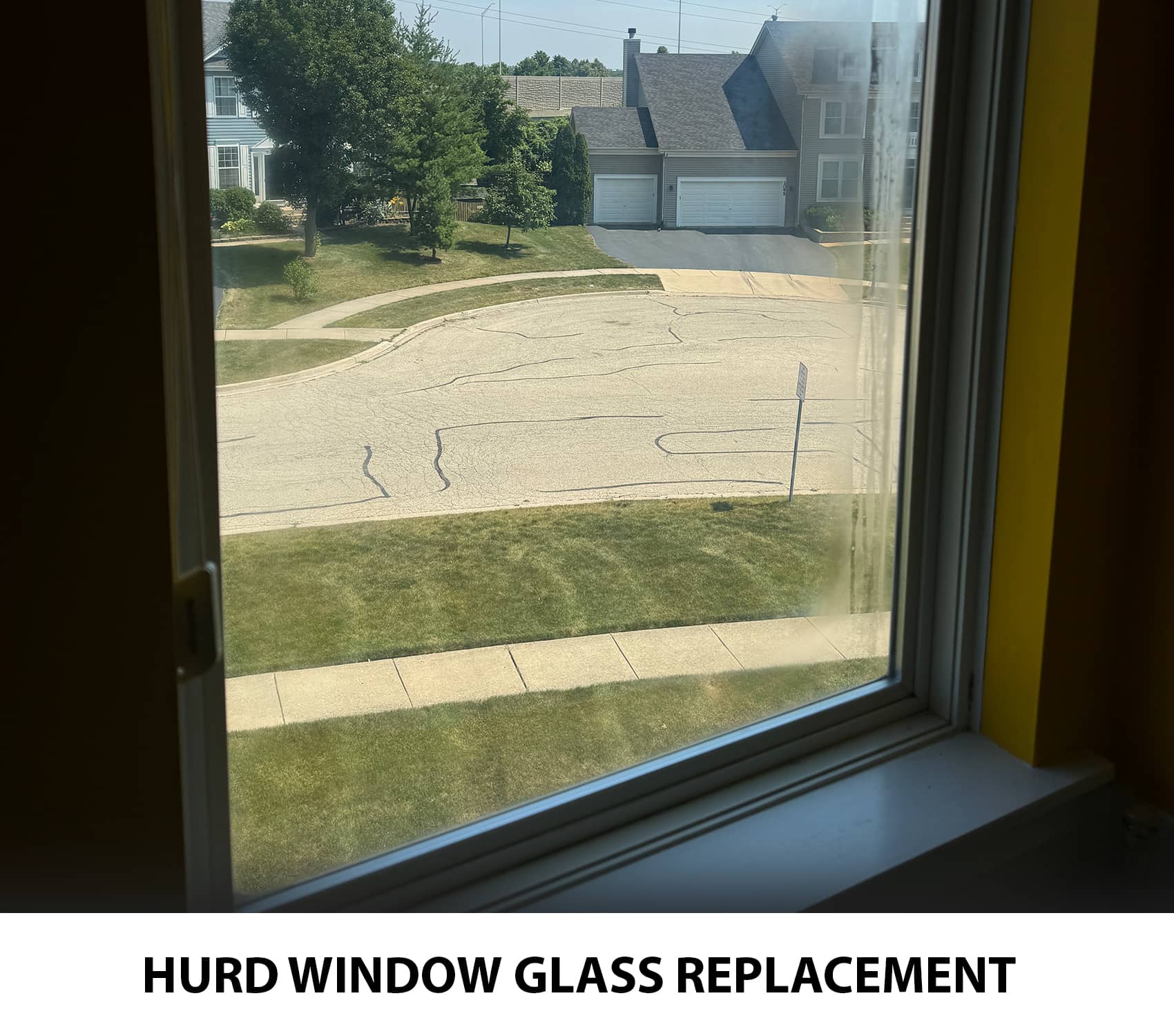
Glass problems do not all lead to the same kind of work. When the glass is cracked, broken, or fully shattered, the issue turns first into safety and security, so replacement is usually the sensible step. A different situation shows up when the glass looks milky, hazy, or damp between the panes. That usually traces back to a failed seal inside the insulated unit. In that case, the repair often stays focused on the sealed glass itself or, if the sash has started breaking down too, on the sash assembly rather than the full window.
One of the more practical rules here is simple enough: seal failure on its own does not mean the whole window is finished. In many cases, Hurd window repair begins and ends with the glass or sash because the rest of the unit is still sound. Full Hurd window replacement usually becomes the better route only when the surrounding frame, nearby wood, or the structure around the opening has also started giving way.
Hardware and mechanisms: fix the geometry before you blame the parts
A lock that misses the strike, a crank that feels loose one moment and stiff the next, or a window that drags instead of moving cleanly often gets blamed on bad hardware right away. Sometimes that call is backward. Quite often, the real problem starts with position and fit, not with the hardware itself. Even solid parts can seem worn out when the sash has shifted, the closure pressure is off, or the contact points no longer line up the way they should. A repair with some staying power usually starts by correcting the geometry, the closing pressure, and the way the unit sits, then moves on to the parts that are actually spent: hinges, locks, handles, cranks, and other operating pieces.
On Hurd units, crank systems and balance-related parts deserve a closer look because they control the whole movement cycle from the first pull to the final close. Once those parts start wearing out, operation turns uneven, the sash may bind or pause halfway, and the unit can lose security right along with smooth function. The practical fix is usually not dramatic. Keep the components that still have service life, correct the alignment, and replace only the hardware that is truly past saving.
Wood restoration and structural repairs: rot, warping, and lost alignment
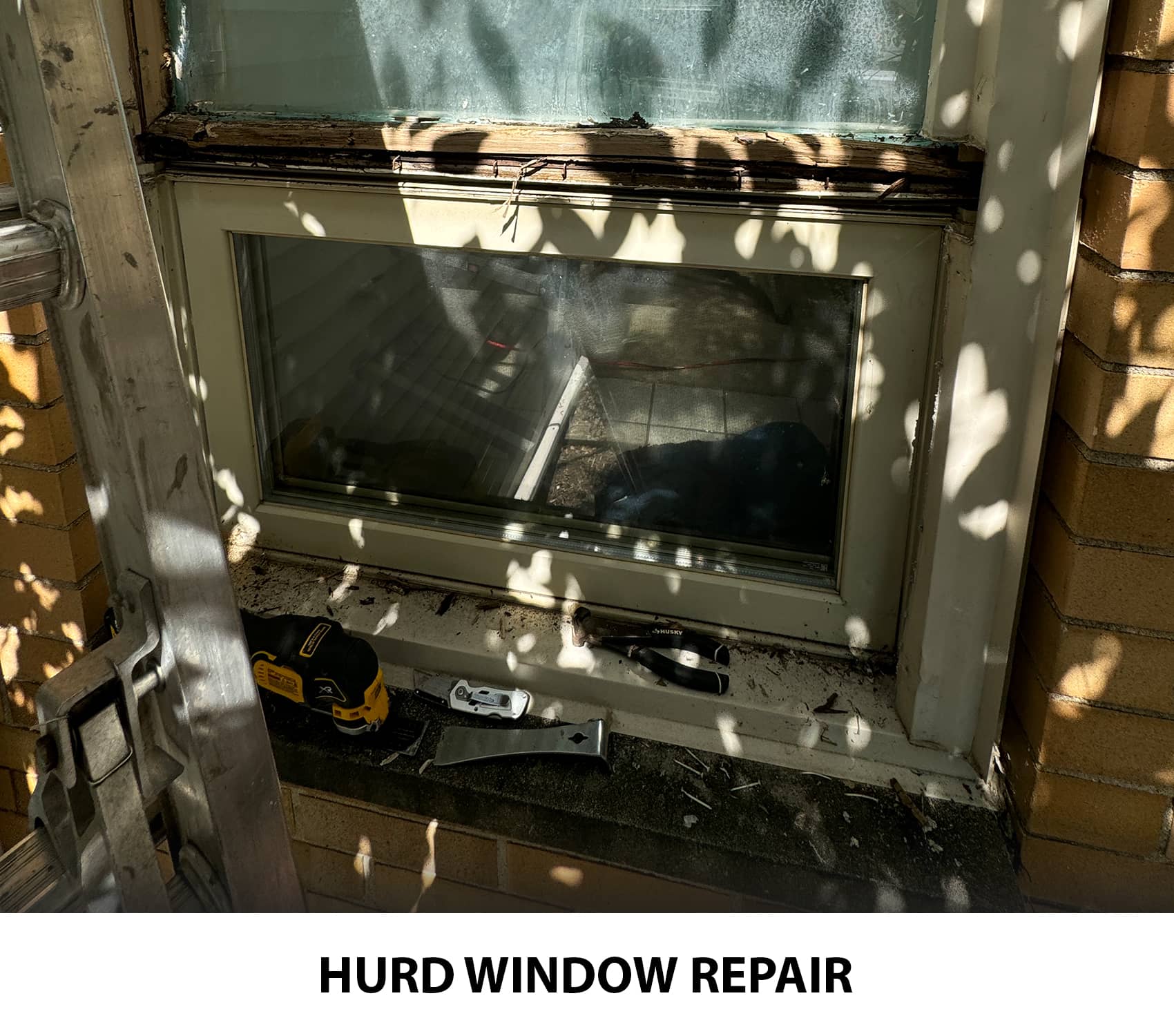
Where Hurd windows include wood components, rot and warping are not just cosmetic defects sitting on the surface. They change how the unit rests in the opening, how tightly it seals, and how stress travels through the hardware every time the sash opens or shuts. In that kind of repair, the work usually turns toward the sash, the frame, and sometimes the track itself, with the goal of correcting softened wood, twist, and decay so the unit can sit true and close evenly again. In Arlington, VA, that kind of damage usually builds slowly through moisture exposure and seasonal expansion, not from one dramatic failure all at once.
One clue that tends to matter more than it first appears is a window that never pulls in flat or keeps leaving the same narrow gap at one corner. That often points to hidden wood damage rather than tired hardware alone. Soft dark wood near the sill, a damp sill after rain, or blistered paint along the lower frame can all point in the same direction. In cases like that, the repair usually targets the damaged section itself, whether the job calls for rotten sash repair, rebuilding a weakened sill area, or replacing an older wood sill so the window can close with firm, even contact again.
Seals, weatherstripping, and caulking: the draft/noise/moisture control system
When the complaints involve cold air creeping in, outdoor noise carrying too easily, or moisture showing up inside where it has no business being, the real problem often sits in the sealing system. The work usually starts with the frame weatherstripping, because that is what closes off the narrow gaps that let drafts, water, and sound move through. Caulking and sealant work matter here too, not as light cosmetic cleanup, but as part of tightening the frame system so air and water are not slipping through vulnerable joints.
Seam sealing and silicone replacement deserve more weight than they often get. That work usually deals with the narrow joints and transition points where wind and rain tend to work their way in, especially when the main frame is still sound and does not need heavier structural repair. In Arlington, VA, that kind of detail work can change the feel of the unit pretty quickly, because small leaks tend to show up fast once wind, moisture, and seasonal movement start pressing on the frame together.
Replacement (when service stops being “repair”)
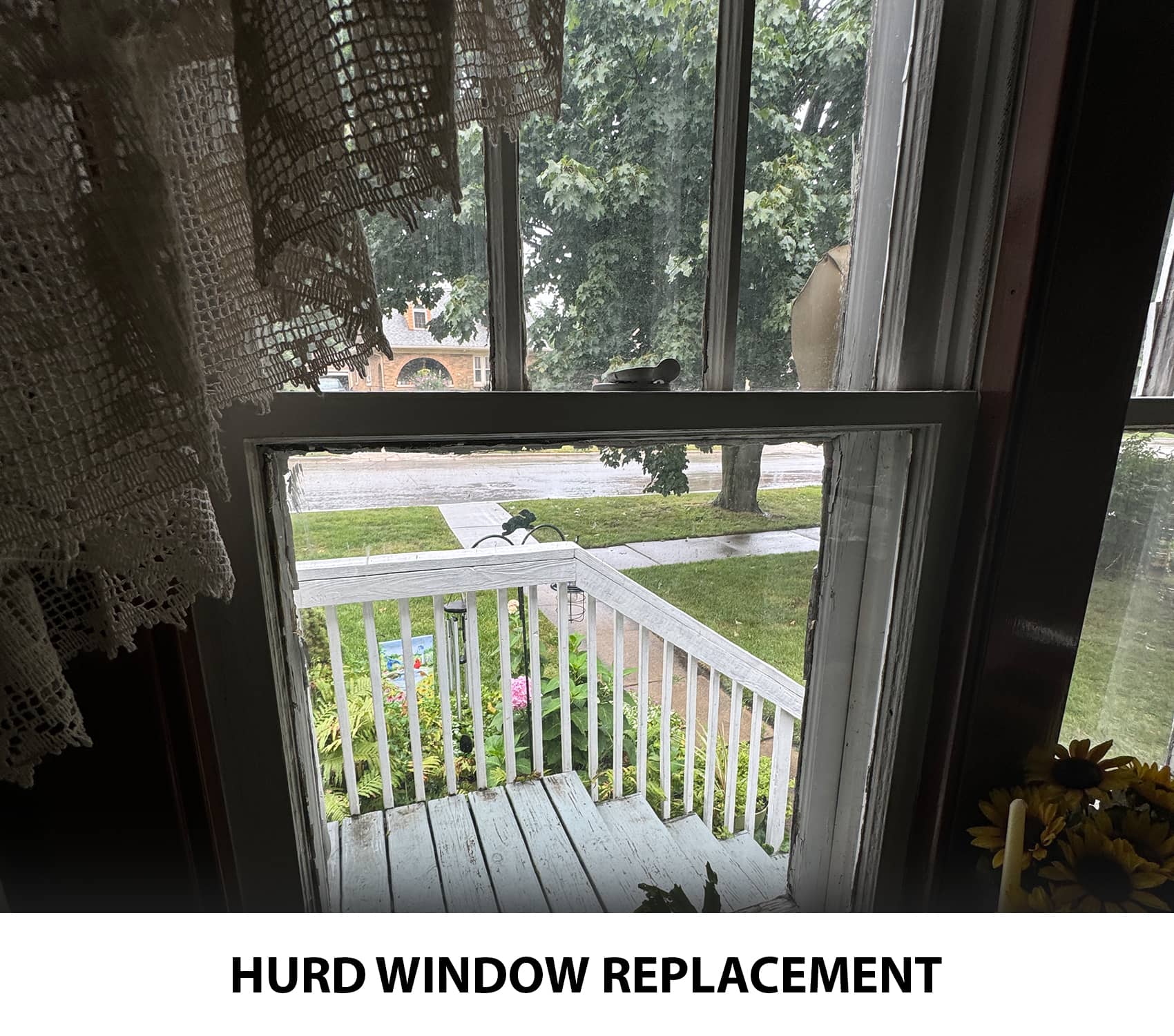
Replacement usually becomes the better answer when repair can no longer return the unit to stable, dependable operation. That can mean major frame deterioration, a sash that has lost its structural strength, or a window or door that cannot be brought back into square, sealed function in any durable way. It also becomes the practical choice when repeat repairs start consuming too much money, too much labor, or simply stop making sense for that particular Hurd window or door.
Common Hurd symptoms and what they usually point to
Most homeowners notice the symptom first and only later find out what is actually causing it. Fogging or a whitish film trapped between the panes usually points to a failed insulated glass seal. Drafts and general air leakage more often trace back to compressed weatherstripping, worn seals, joints that need fresh caulk, or a unit that has shifted just enough to stop sealing evenly. When a window drags, catches, or stops moving with a clean, smooth glide, the cause is often tied to misalignment, warped components, or operating hardware that has worn down over time.
Leaks can begin at the seal lines, but that is not always where the story ends. In some cases, the real source runs deeper, including damaged framing or an older installation that was never properly tightened and protected in the first place. Once water stains, a damp sill, or mold start to appear, many service technicians in Arlington, VA treat the problem as moisture intrusion first and deal with the paint, trim, and other finish damage after the path of entry has been corrected.
Outside noise often drops once the frame is tightened up and the weatherstripping is brought back into working shape. And not every condensation complaint means failed glass. Sometimes the issue has less to do with the insulated unit and more to do with indoor humidity or weak ventilation, which calls for a different fix altogether.
Symptom-to-action table (fast triage)
|
What shows up
|
What it usually points to
|
What a pro usually does
|
|
Fog, film, or haze trapped between the panes
|
Failed insulated-glass seal
|
Replace the sealed glass unit or, if needed, the sash depending on the overall condition
|
|
Cracked glass or obvious breakage
|
A broken pane and an immediate safety concern
|
Replace the damaged glass and check glazing details, sizing, and fit
|
|
A noticeable draft around the window
|
Flattened weatherstripping, worn seals, and/or a unit that has shifted out of line
|
Restore the sealing points and weatherstripping, correct the fit, and apply fresh caulk or sealant where needed
|
|
The sash drags, binds, or will not close the way it should
|
Misalignment, warping, or worn balance and operating parts
|
Reset the alignment, repair or replace the mechanism, and restore weakened wood if the frame requires it
|
|
The lock misses, slips, or refuses to catch
|
A geometry issue that looks like bad hardware at first glance
|
Correct sash position and contact points first, then repair or replace the lock or handle if needed
|
|
Water stains, damp spots, or active leaking
|
Seal failure or a deeper water-entry path tied to frame condition or installation defects
|
Find the entry path, repair seals, caulking, and weatherstripping, then confirm closure and drainage
|
|
Outside noise feels stronger than before
|
Gaps along the closure line and compressed sealing areas
|
Seal the leakage paths and improve or replace the weatherstripping
|
|
Musty odor or mold near the window
|
Ongoing moisture intrusion
|
Stop the moisture source first, then repair or replace the affected material
|
Fog, condensation, and mold: don’t mix them up
Moisture around a window is one of the easiest things to misread, and the right repair usually depends almost entirely on where that moisture is actually appearing.
When haze or water sits between the panes, the problem usually starts inside the sealed insulated-glass unit. One of the plainest checks is still one of the best: clean the glass well on both sides. If the cloudiness, streaks, or speckling do not move and still look trapped inside the unit, the usual cause is seal failure. That typically leads to a glass-unit repair or sash-level work, not straight to full window replacement.
When moisture forms on the room-side face of the glass, the issue is often less about the window itself and more about indoor humidity, weak airflow, or insulation conditions around the opening. In that situation, the fix usually has to do with air movement and temperature balance, so the glass surface stops staying cold enough to keep collecting moisture and causing follow-up damage around the frame.
When mold, staining, or visible water damage starts showing up, the safer assumption is usually repeated moisture entry, not a one-time event. A lasting repair in Arlington, VA usually begins by stopping the water path at failed seals, aging caulk, or weatherstripping that has flattened out, and only after that does finish repair make sense.
Leaks need one more separation, because this is where a lot of repair decisions go off track. Some leaks begin at worn seals. Others come from installation defects buried deeper in the assembly. If the work only addresses what can be seen on the surface and misses the actual entry route, whether that turns out to be failed sealing or a bad install, the leak usually comes back.
Quick decision tool: where is the moisture?
|
Where moisture shows up
|
Go
|
Caution
|
No-Go
|
|
Between the panes
|
Start by treating it as a sealed-glass unit issue or possible sash-related repair
|
First confirm it is not just surface film, residue, or dirt before moving further
|
Do not keep putting it off if the haze is spreading or visibility keeps getting worse
|
|
On the room-side glass surface
|
Check ventilation, airflow, and insulation conditions first, and pay attention to when the moisture appears
|
If it shows up mostly during sharp weather swings, check indoor humidity before blaming the window itself
|
Do not jump straight to glass failure without ruling out interior conditions first
|
|
Around the frame or sill, especially with staining
|
Treat it as a moisture-entry problem and trace how the water is getting in
|
Find the true entry route before starting finish repairs or cosmetic patching
|
Do not cover stains, soft wood, or blistered paint before the leak source has been stopped
|
Conclusion
Hurd window and door service usually works best when the unit is treated as a working system, not as one isolated bad part. The operating style has to be identified first. After that, the visible symptoms need to be tied to the exact subsystem that is failing, and repair stays focused at the component level when the surrounding structure is still sound enough to support a repair that will last. Hurd window replacement has its place too, but mainly when wear, distortion, or structural breakdown prevent reliable sealing, secure closure, and smooth everyday operation.
The main idea is simple: one symptom should not force an all-or-nothing decision. A careful inspection should separate insulated-glass failure from hardware trouble, sealing breakdown, wood decay, or larger replacement needs. Sometimes the right answer is not one major fix, but a staged repair plan shaped by condition, scope, and parts availability. In Arlington, VA, that kind of measured approach usually leads to a better result than jumping from the first obvious symptom straight to full replacement.