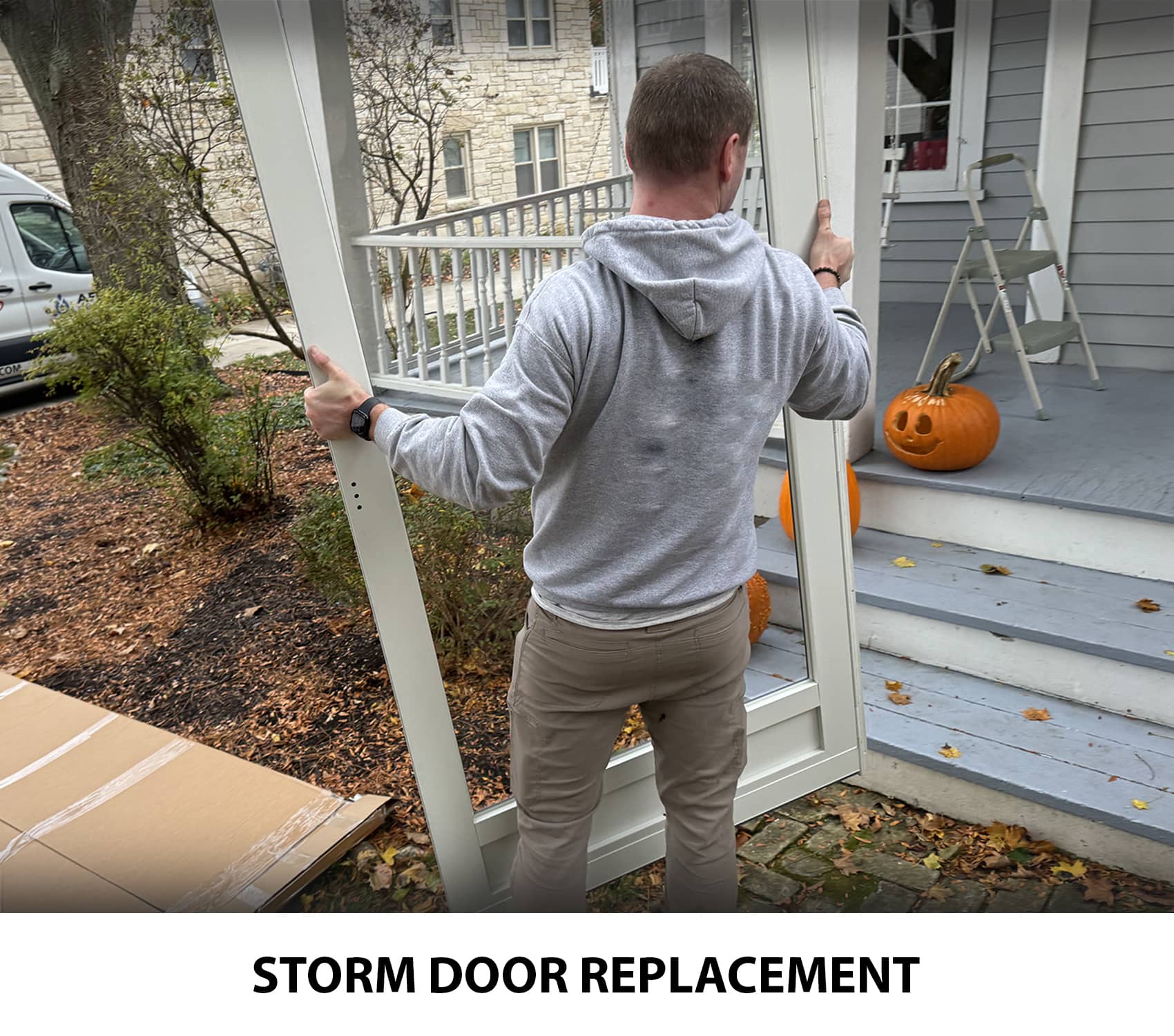
Storm door repair & replacement services: what we actually handle
Most storm door service calls fall into a handful of familiar lanes, but the right answer is not always the same from one door to the next. Some only need a straightforward repair to bring back smooth operation and tighten the seal again. Some have already crossed into storm door replacement territory because the frame is out of shape, the fit has drifted, and any repair would only hold for so long. Others sit in the middle, where the door itself is still worth saving and only certain parts need work, such as new glass, fresh screen mesh, replacement hardware, or weatherstripping that has flattened out with age.
In day-to-day service terms, that usually means repairing damaged storm doors, replacing older units, installing new ones, swapping cracked glass, changing hinges, closers, handles, or latches, and stepping up to a newer aluminum storm door when the existing setup is worn down, scraping at the bottom rail, or simply past the point where more repair work makes practical sense.
Fix first — replace at worst
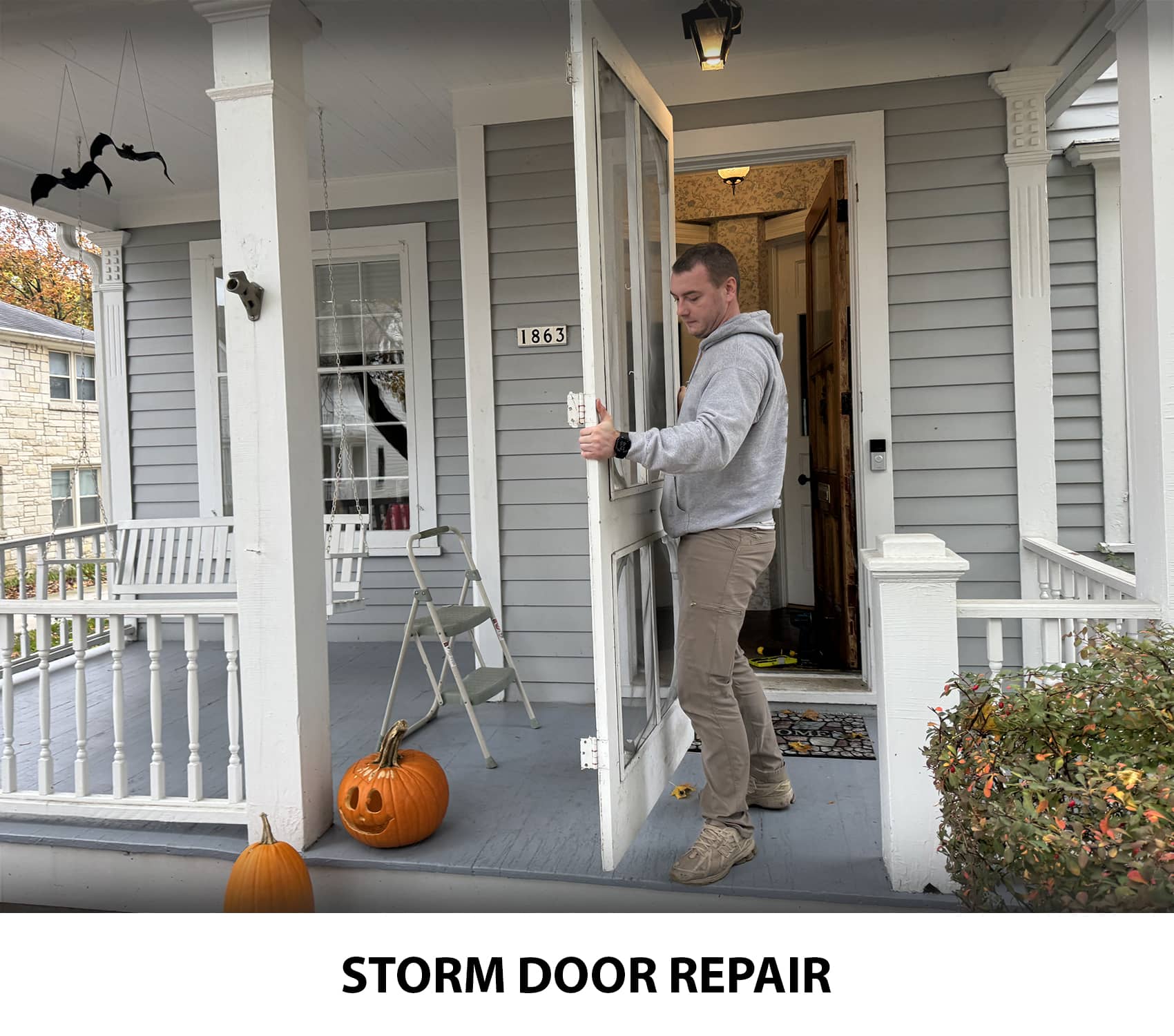
A practical storm-door decision usually comes down to one pretty simple rule: repair the failed parts, but replace the door once the real problem is the shape of the unit itself. If the slab is still hanging straight and the frame has stayed in line, work such as new weatherstripping, hinge adjustment, closer repair, or lock and handle replacement can put the door back into decent working order. Once the frame has warped or the opening has started to shift, though, that same door can be tweaked again and again and still feel wrong every single day.
Repair vs replace decision tool (Go / Caution / No-Go)
|
What is showing up
|
When repair still makes sense
|
What needs to be checked first
|
When replacement is usually the stronger move
|
|
Drafts or light air leakage
|
Weatherstripping is visibly worn, compressed, or no longer sealing evenly
|
The gasket line is inconsistent, with one section snug and another loose
|
The door or frame is warped and still refuses to align after adjustment
|
|
Operating trouble
|
The closer, hinges, or nearby hardware only need service or adjustment
|
The door rubs in one isolated spot, often near the bottom rail or edge
|
The slab is badly out of line, or the frame itself is bent
|
|
Glass damage
|
The problem is limited to the panel, and the surrounding frame is still sound
|
The impact pattern suggests the hit may have shifted the frame
|
The frame took the force of the impact and is no longer structurally solid
|
|
Screen issues
|
The mesh is ripped, but the screen frame is still straight and usable
|
It is not fully clear yet whether the damage is limited to the mesh or spread farther
|
The screen frame is bent, loose, or keeps failing after repeated fixes
|
One small check before scheduling a service can reveal a lot. If light shows through one corner at the gasket even with the door fully closed, and basic hinge or strike adjustments do not change the gap, the problem is often beyond a clean repair. At that point, replacement usually makes more sense than another round of minor fixes.
Do you even need a storm door on this entry?
Not every front or side entry gets the same benefit from a storm door. It usually earns its place where the opening takes real weather exposure: wind-driven rain, winter cold, lingering summer heat, or the steady seasonal swings Arlington, VA homes deal with year after year. It also makes more sense where airflow, extra daylight, or everyday draft control actually change the way the entry gets used.
There are also plenty of cases where leaving it out makes sense. An entrance tucked under a deep overhang, or a main door that sits in hard direct sun for long stretches, may gain very little from the extra layer. That becomes pretty clear when the primary door already seals well, the sill stays dry, there is no draft on windy days, and the opening is not really being used for ventilation in the first place.
Go / Caution / No-Go quick check
|
Situation
|
Strong candidate
|
Needs a closer review
|
Usually not worth adding
|
|
Entry exposure
|
Opening is hit directly by wind, rain, and changing weather
|
Some protection is there, but storms still reach the entry now and then
|
Deep overhang keeps the entry mostly shielded
|
|
Comfort concern
|
Clear draft at the door or noticeable temperature swing nearby
|
Minor comfort issue is present, but it is not steady or severe
|
No meaningful comfort problem at the entry
|
|
Ventilation use
|
Fresh air matters, but insects still need to be kept outside
|
Venting only matters for a short stretch of the year
|
Entry door is rarely, if ever, used for ventilation
|
|
Main door protection
|
Finish is wearing down from repeated weather exposure
|
Wear is still mostly cosmetic and has not gone very far
|
Main door already has solid protection from the elements
|
What you should feel after the job is done
A solid storm door repair or the right replacement usually proves itself in the little things that start feeling normal again. The main entry door takes less abuse from rain, cold snaps, and gusty weather. The area near the entrance often feels steadier, without that sharp temperature shift by the threshold. Air can pass through the opening without turning the house into an open invitation for bugs. There is also a quieter sense of security at night once the extra lock is catching and holding the way it should.
On a quiet residential street, that improvement can seem modest at first. On a busier stretch in Arlington, VA, though, the extra layer often softens outside noise just enough to take the edge off traffic, passing cars, and the steady background sound that otherwise hangs around the entry.
|
Benefit to aim for
|
How it tends to show up in everyday use
|
What usually creates that result
|
|
Weather protection
|
Less water and road-salt residue collects at the threshold, and the finish on the main door takes less wear
|
A proper fit, reliable sealing, and the right sweep or weatherstripping setup
|
|
Comfort and draft control
|
Cold air stops being noticeable around the latch side and at the corners
|
Better alignment, tighter perimeter sealing, and weatherstripping replacement when the problem is limited to that area
|
|
Ventilation without insects
|
The entry can stay slightly open on mild days without bugs getting inside
|
A solid screen, an overall snug fit, and a venting setup that actually works the way it should
|
|
Added security layer
|
The storm door closes cleanly, locks the way it should, and stays in line
|
Good lock and hardware quality, along with correct adjustment
|
How door materials change the repair plan
Storm doors and main entry doors do not fail in quite the same way. Material plays a big role because it affects which parts usually start giving trouble first, how stable the repair is likely to be, and whether the fix will actually last or just buy a little time before the same issue shows up again a few months later.
Storm door frame materials: aluminum, fiberglass, steel
A large share of storm doors are made with aluminum, fiberglass, or steel frames because those materials generally stand up to outdoor exposure without demanding much routine upkeep. Even then, the frame itself is often not the first thing to go wrong. More often, the trouble starts in the working pieces. Alignment begins to drop, the closer stops controlling the swing, hinges loosen, seals get crushed flat, screen mesh tears, or one hard hit into the stop damages a corner and throws the fit off.
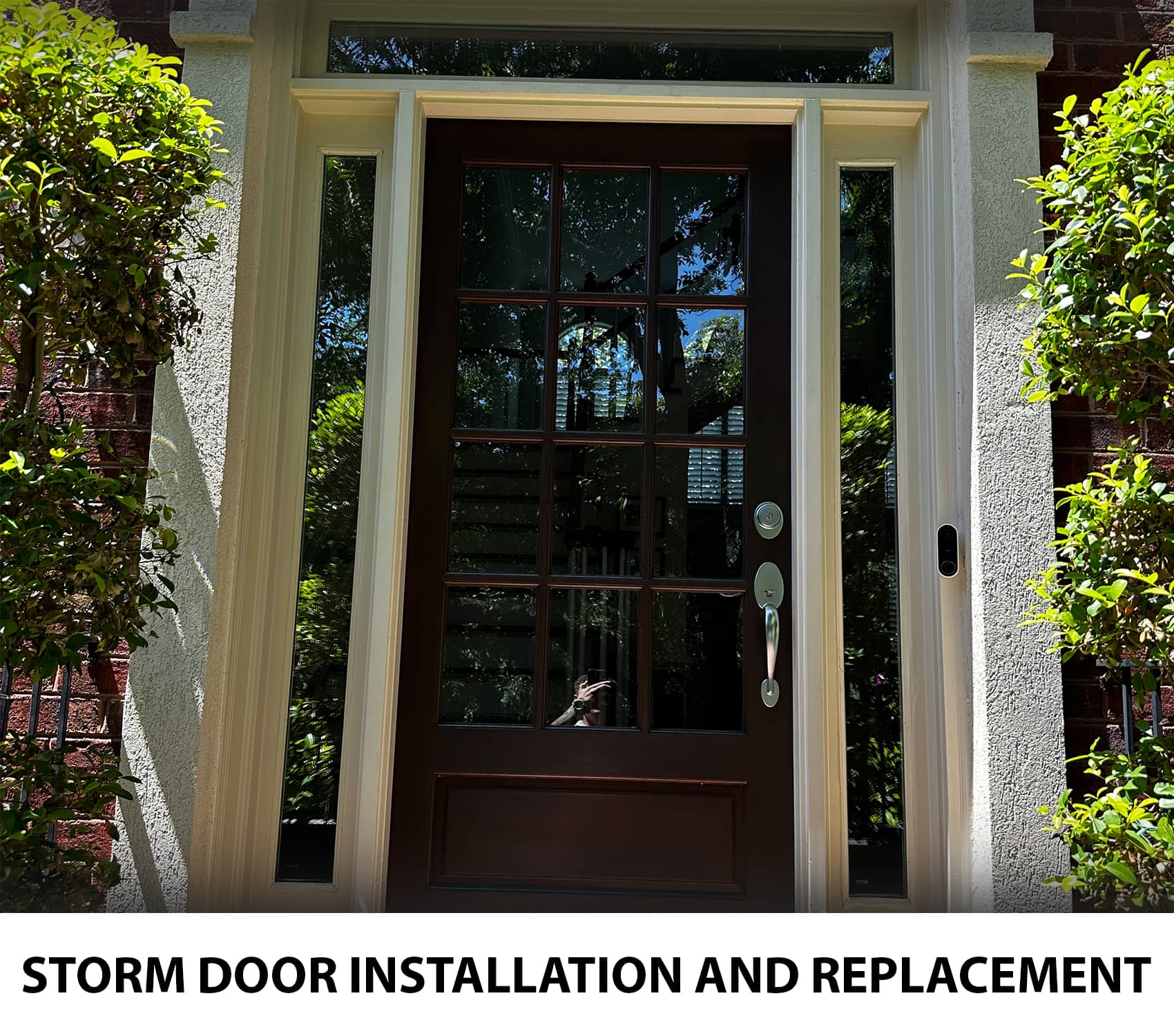
Once storm door replacement enters the conversation, the construction details usually matter more than the brand name printed in a catalog. Heavier-gauge aluminum usually holds its shape better over time. Reinforced corners, stiffer frame sections, and better weatherstripping often mark the difference between a door that was merely installed and one that still closes cleanly years later. That gap shows up in daily use: less rattling, less scraping, fewer latch problems.
There is also a very common shift toward newer aluminum storm doors. In real-world terms, that often means a stronger frame, more glass choices such as Low-E, decorative, tinted, or full-view panels, a broader range of finishes and styles, and more dependable locking hardware. Those upgrades are not just for looks. In Arlington, VA, they often mean fewer loose parts, less fiddling with handles and closers, and a door that feels more stable once the weather starts swinging from humid summer heat to sharp cold and back again.
Entry door materials under the storm door: fiberglass, vinyl, wood, steel
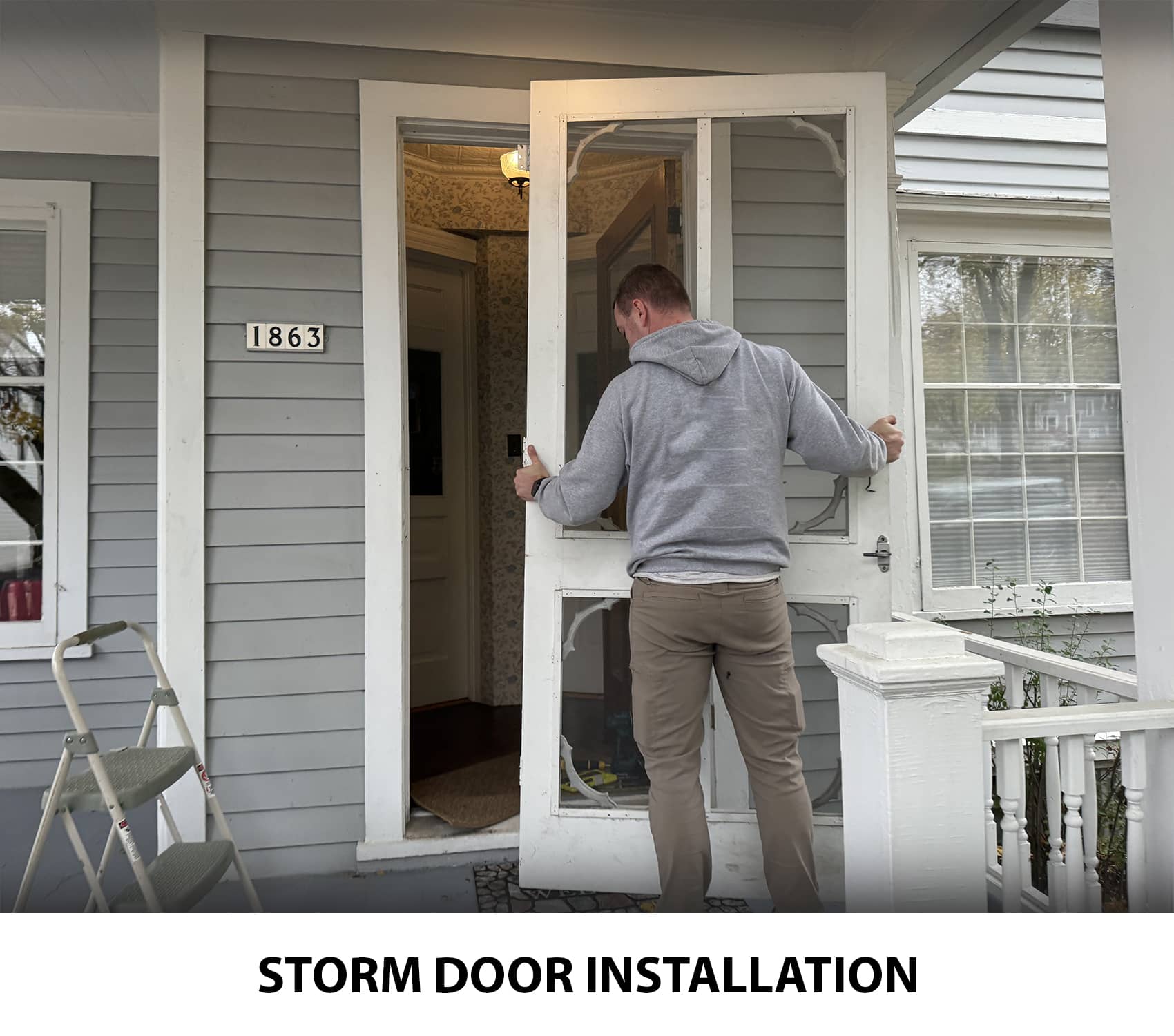
A storm door also has to work with the main entry door behind it and with the surface where the hardware mounts. Most exterior entry systems are built from fiberglass, vinyl, wood, or steel, and each one changes the repair picture and storm door installation plan a little. Wood usually needs the closest look. Solid wood responds to moisture and temperature swings, so seasonal expansion and shrinkage can throw the fit out, open up a draft near the latch side, leave paint bubbling along the edge, or make the reveal look uneven from top to bottom.
From a service standpoint, the basic rule stays the same: even good material will not overcome a weak installation or years of deferred upkeep. Once the mounting surface turns soft, slips out of square, or starts moving, the seal stops staying even and the hardware begins wearing faster than it should. That is often when rubbing starts at the bottom rail and small alignment problems stop being small.
Material × symptom × likely service (quick reference)
|
What is in place
|
What usually starts going wrong
|
First service step that usually makes the most sense
|
|
Aluminum, fiberglass, or steel storm door frame
|
Drafts begin showing up around the perimeter
|
Check whether the issue comes from worn weatherstripping or alignment. Replace perimeter seals if the problem is isolated, and move toward storm door replacement if the door itself is warped
|
|
Any storm door
|
Door slams shut or no longer closes cleanly
|
Service and adjust the closer and hinges first. Replace the closer if it is no longer controlling the swing properly
|
|
Any storm door
|
Torn screen or insects getting inside
|
Repair or replace the screen mesh, then confirm that the frame is still straight and holding its shape
|
|
Entry door with a wood-based system
|
Seasonal rubbing or latch alignment that keeps shifting
|
Treat the opening as one system: storm door plus entry door. Re-check fit, sealing, and hardware alignment together
|
|
Entry door with fiberglass or steel
|
General comfort complaints
|
Start with fit, sealing, and hardware adjustment instead of assuming the material itself is the problem
|
Main issues that lead to storm door repair or replacement
The issues below show up on storm door repair jobs again and again. A repair that actually holds usually starts with reading the symptom correctly, tracing it back to the real failure, and choosing the smallest fix that still has a fair chance of lasting instead of turning into the same callback a few months later.
Warped or bent frame
Why it happens: Frames lose their shape after years of heat, humidity, rain, and constant weather swings. One hard hit can speed that process up in a hurry. Over time, repeated expansion and contraction weakens the structure and slowly pulls the door out of line.
Most affected parts: The frame usually takes the worst of it, but hinges and mounting points are often part of the problem as well. In everyday use, the warning signs are usually obvious. The door starts dragging across the sill, catching near the top or bottom, or no longer closing the way it did before on damp Arlington, VA days.
Prevention: Better-built aluminum or fiberglass storm doors usually hold their shape longer. Occasional alignment checks, along with protective sealants where they actually help, can also reduce moisture-related movement and slow the wear.
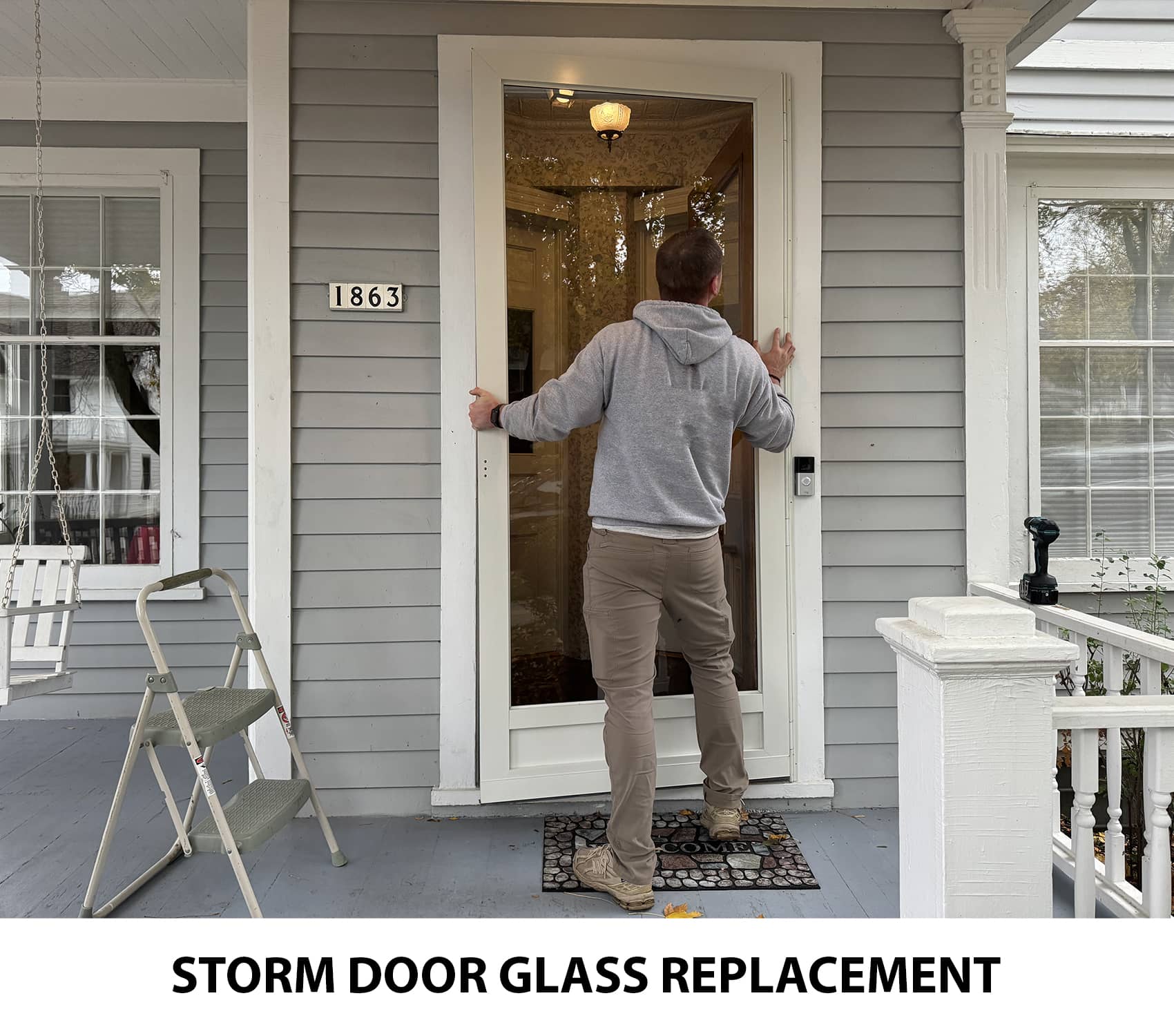
Service fix: Minor movement can sometimes be improved with hinge adjustment or a small correction at the mounting points. Once the frame is clearly bent, though, storm door replacement is usually the only option that makes lasting sense. A heavier reinforced frame tends to stay in line better over time.
Broken, cracked, or foggy glass
Why it happens: Glass panels usually fail for a pretty familiar mix of reasons: a direct impact, rough weather, sudden temperature swings, or a slow seal breakdown that leaves the panel hazy and less effective as time passes.
Most affected parts: The glass is usually the first thing that gets noticed, but the damage does not always stop there. If the surrounding frame took the same hit or has already started moving out of square, what looked like a simple glass issue can shift into full storm door replacement territory.
Prevention: Tempered or laminated glass usually handles impact better. Protective film can also help reduce the chance of dangerous shattering when a panel finally gives out.
Service fix: If the frame is still sound, snug, and square, storm door glass replacement is often the most practical answer. If the frame is cracked, loose, or no longer holding shape, full replacement is usually the safer long-term choice.
Faulty or sticking hinges
Why it happens: Hinges usually wear down little by little from moisture, grit, skipped lubrication, and everyday cycling. Rust, looseness in the hardware, and stiffness tend to build slowly. Once that process starts, the whole door often begins drifting out of alignment.
Most affected parts: Hinges, screws, and the overall fit of the door usually show the problem first. Common signs include squeaking, a rough swing, rubbing at the threshold, or a door that no longer closes cleanly. In Arlington, VA, damp weather swings can make that dragging feel noticeably worse from one season to the next.
Prevention: Silicone-based lubricant, occasional screw tightening, and basic cleaning usually do more than expected. Keeping the door properly aligned also cuts hinge wear before it grows into a bigger repair.
Service fix: Light sticking or minor noise can often be corrected with cleaning, lubrication, and adjustment. If the hinges are bent, heavily rusted, or no longer supporting the door the way they should, replacement with stronger hardware is usually the more sensible repair.
Screen damage or torn mesh
Why it happens: Screen mesh usually wears out through ordinary use, but pets, strong wind, flying debris, and long sun exposure can speed the damage up quite a bit. Over time, the material gets brittle, starts loosening, or begins tearing near the corners and along the spline.
Most affected parts: The mesh is usually the first part to give out, although the screen frame can be knocked out of shape too. Once that happens, the issue is not limited to airflow. Bugs get in more easily, and the whole panel starts feeling flimsy and unstable.
Prevention: Heavier screen materials, including pet-resistant mesh, often last better in busy households. Routine checks help too, especially since one small hole near the bottom rail or a loose corner can spread into a full tear faster than expected.
Service fix: A small rip can sometimes be patched, or the mesh can be replaced without rebuilding the full assembly. If the screen frame is bent, loose, or no longer sitting correctly in the door, replacement is usually the better long-term fix, sometimes as part of a broader storm door repair service in Arlington, VA.
Worn-out weatherstripping (drafts, dust, pollen)
Why it happens: Weatherstripping breaks down under constant compression, moisture, summer heat, winter cold, and simple daily wear. As the material gets flattened, brittle, or split, outside air starts slipping through. Dust and pollen usually follow, and sometimes a little moisture begins collecting in the lower corners.
Most affected parts: The bottom sweep and the perimeter seals usually fail first. In everyday use, that often shows up as a draft on windy days, grit gathering near the threshold, or an entry that no longer feels tight even when the door is fully shut.
Verification step: If the door closes and latches normally but moving air is still noticeable at the edges, the seals are a strong suspect. If the gap changes from top to bottom, or the latch needs a hard push to catch, the issue is usually bigger than weatherstripping alone and may point to sagging or frame movement.
Prevention: Seasonal inspection helps more than it tends to get credit for. Replacing weatherstripping once it starts peeling back, stiffening, or tearing keeps a small comfort issue from turning into a steady leak at the entry. In Arlington, VA, that kind of early attention can also cut down on the dust and cold air that show up fast once the weather shifts.
Service fix: If the rest of the door is still straight, new weatherstripping can tighten the seal and noticeably reduce the draft. If the slab is warped or the frame has moved out of line, though, fresh seals can only do so much. At that stage, storm door replacement is usually the cleaner fix.
Difficulty opening or closing (dragging, rubbing, won’t latch)
Why it happens: A storm door usually becomes hard to operate when the frame starts moving out of line, the hardware wears down, or moisture causes parts of the system to swell and bind. Heavy daily use can wear out the closer, loosen the hinges, or pull the latch side just far enough off track to make the door irritating every single day.
Most affected parts: The usual trouble spots are the frame, hinges, latch, and closer. Once one of those starts giving way, the whole door begins to feel off. It drags across the threshold, scrapes at an upper corner, or swings nearly shut and then refuses to latch.
Prevention: Occasional alignment checks, tightened fasteners, and light lubrication usually do a lot to keep the door moving the way it should. Small steps like that prevent extra strain from building up in the hardware and turning into a bigger service call.
Service fix: Mild trouble can often be corrected with hinge adjustment, latch tuning, or closer replacement. If the door is badly out of square or the frame has clearly shifted, though, storm door repair often becomes a temporary patch rather than a lasting answer. In Arlington, VA, where weather swings and seasonal movement keep working on the opening, replacement is often the only fix that truly holds up.
Conclusion
Storm door repair and storm door replacement are not especially complicated, but the right choice depends heavily on condition. Most of the outcome comes back to alignment, sealing, and choosing the smallest fix that can actually hold up. A useful starting rule stays simple: repair the isolated failure first, and replace storm door components or the full unit only when the door has gone too far out of shape to function properly. Material matters too. Storm door frames are built for exterior exposure, but the entry door behind them, whether wood, vinyl, fiberglass, or steel, along with the quality of the fit and storm door installation, has a lot to do with how stable the whole setup stays through Arlington, VA heat, humidity, wind, and cold snaps.
When repair is the better answer, the main focus usually belongs on sealing and operation: weatherstripping, hinges, the closer, hardware, screen, or storm door glass replacement. When replacement makes more sense, the smarter purchase is the one that matches the way the entry is actually used every day, whether the priority is durability, visibility, or a cleaner screen setup. Good fit is what separates a real upgrade from a door that keeps rattling, leaking air, showing a draft on windy days, and putting up a fight every time it opens.