What a window sill actually does
A window sill is not there only to finish the opening. It helps carry the lower edge of the window, keeps the sash seated where it should be when closed, and works as part of the seal that holds back outside air and water. In many homes, it also becomes a shelf for candles, plants, or small decorations. Seems harmless. Still, moisture that sits on that flat surface wears the finish down much faster, especially when the corners stay damp, the paint starts looking rough, or the sash begins sticking after a long spell of wet weather.
Why window sills fail in the first place
Most sill damage starts the same way: moisture sits where it should not. Sometimes the water is getting in from outside through split caulk or aging paint. In other cases, it begins indoors, when condensation forms on the glass and keeps running down onto the sill.
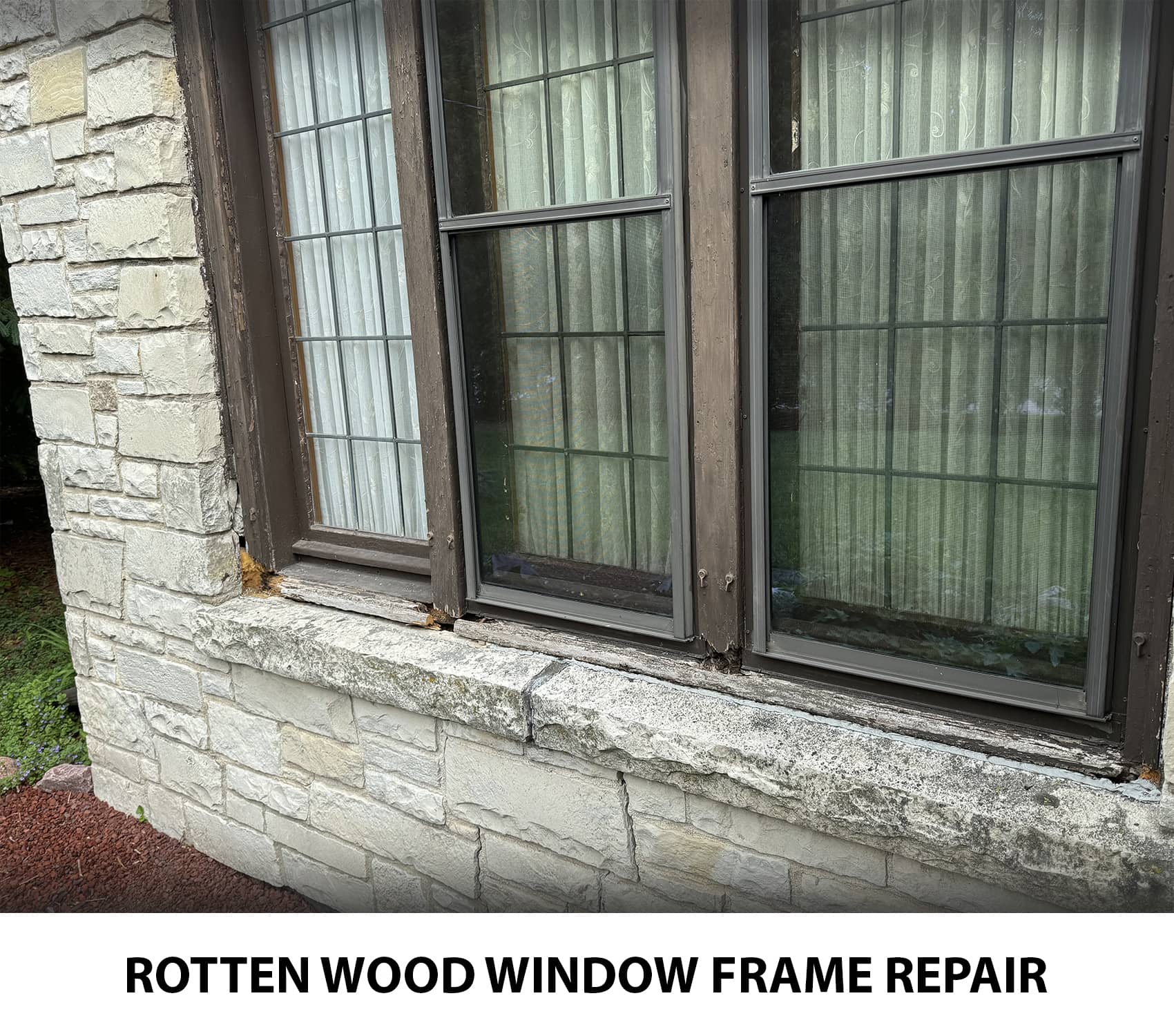
The same trouble shows up again and again. Water often gets in when the flashing around the window is missing, poorly fitted, or only partly there. Even a small gap can let moisture slip behind the trim and stay trapped long enough for rot to start. Bad drainage leads to the same result. Gutters clogged with leaves or a downspout dumping water too close to the wall can keep the sill wet far longer than it was meant to stay. Condensation is simply the indoor side of the same pattern: warm air meets cold glass, moisture appears, and it works its way down to the sill. When airflow in the room is weak, that cycle can repeat through the whole winter. Failed caulk is another common cause. Small cracks along the edges give water an easy path, especially into the corners where damage often begins. Age matters too. Older wood, particularly if it spent years exposed or was never sealed well, loses strength and starts breaking down faster. In Arlington, VA, freeze-thaw swings make that wear hit even harder.
Once a sill starts taking on water, the problem usually does not stay limited to the sill itself. Moisture can move into the nearby trim and then into the frame. At that point, what first looked minor can turn into a much larger repair.
The signs that mean “don’t ignore this”
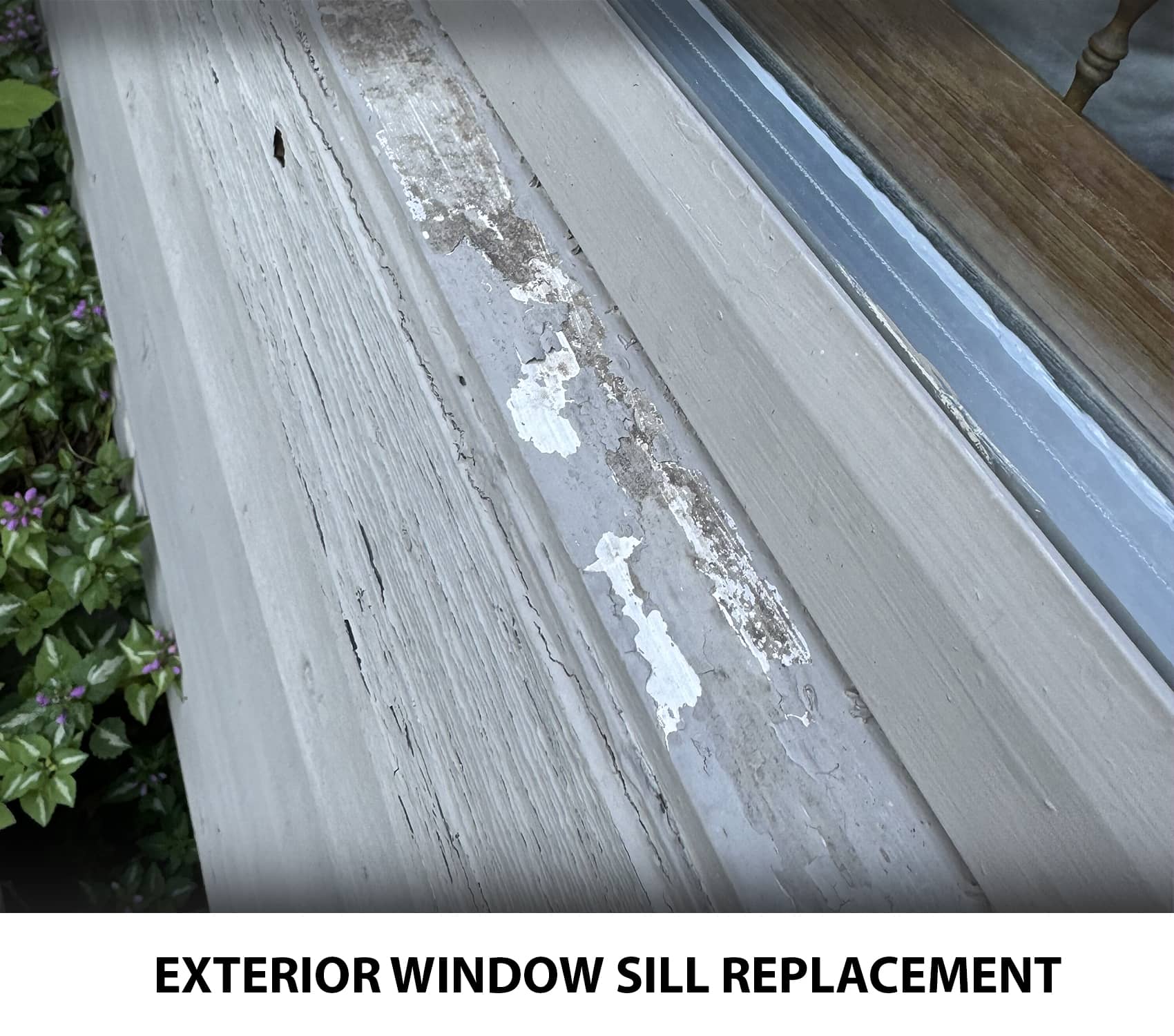
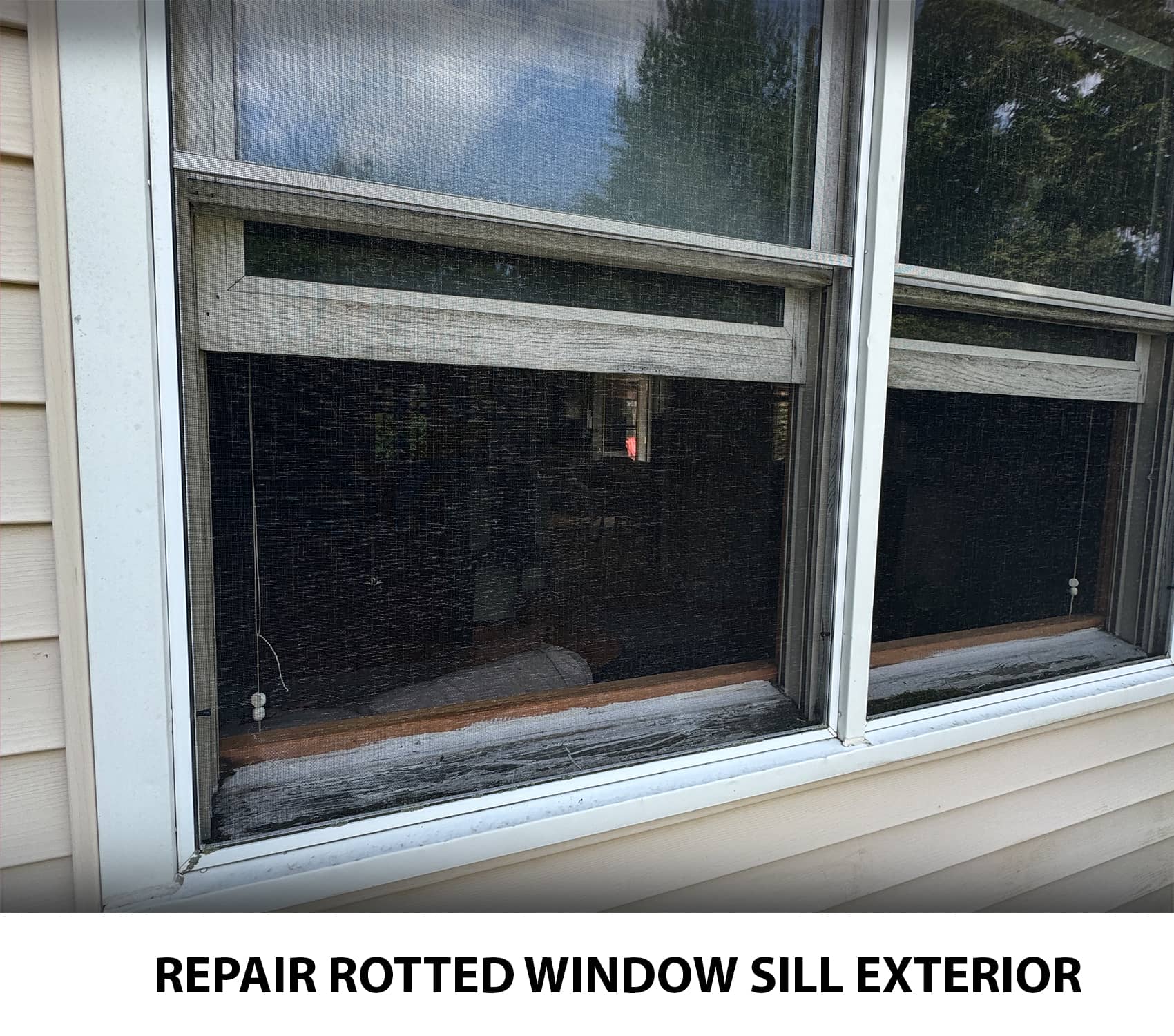
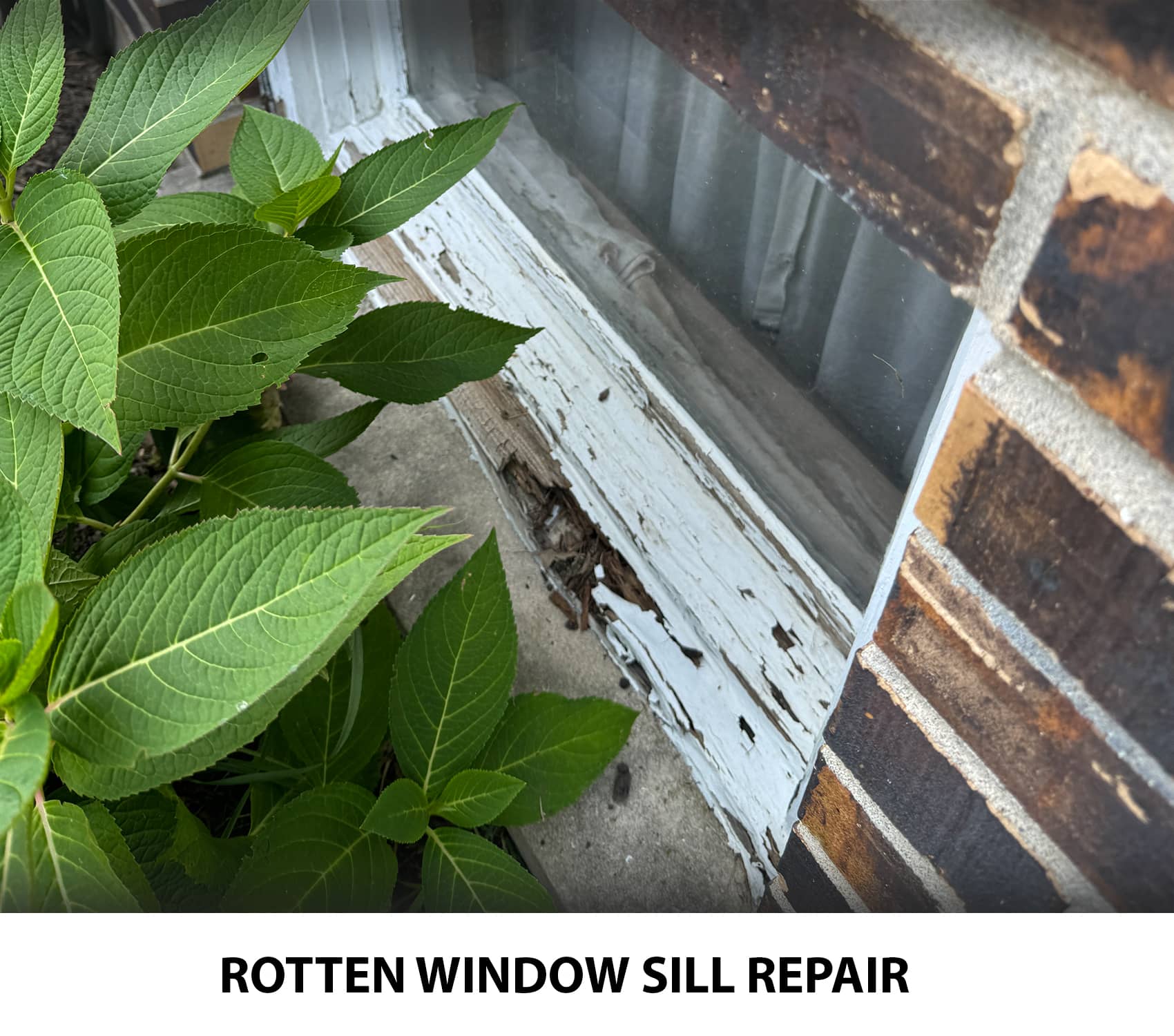
The first hints are usually easy to miss. Paint lifting or flaking along the nose of the sill is one of the usual early signals. Deep discoloration, opened-up corners, or short sections of wood starting to crumble are just as telling. If the surface gives slightly under a hand and feels soft instead of solid, the problem has already moved past a cosmetic stage. In some cases, a musty damp odor starts hanging around the lower trim, or the sill stays clammy long after the rest of the area has dried. Wood can keep that moisture hidden for quite a while before the damage becomes obvious from the middle of the room.
At times, the window starts revealing the issue on its own. The sash may begin rubbing instead of moving cleanly, the lock may stop lining up the way it used to, or a light draft may show up during windy Arlington, VA weather even with the window closed tight. That usually points to swelling or slight shifting in the sill and the wood around it.
Repair vs Replace: A Practical Decision Guide
Repair vs replacement: what’s realistic
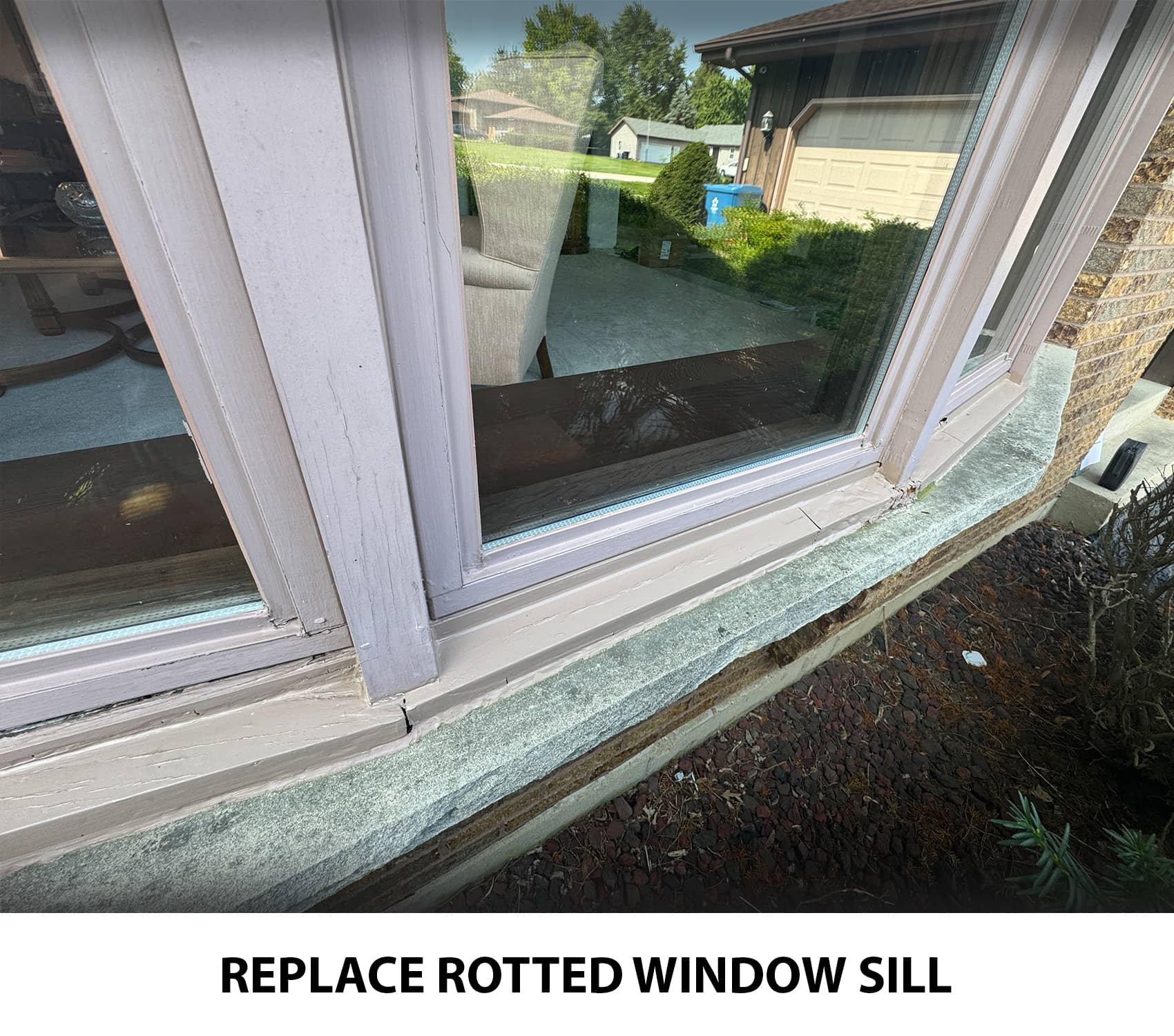
The real answer is not complicated. Repair is still a sensible route when the damaged portion can be cut back to clean, solid wood, rebuilt properly, and sealed well enough for the sill to drain and dry the way it was meant to. Replacement starts making more sense when rot has moved too far, when the sill is no longer doing its share of the structural job, or when water is still getting in, because a patched area in that condition usually starts breaking down again much sooner than expected.
A simple field benchmark helps. When rot is limited to about 10 to 25 percent of a wood sill, an epoxy repair can still be a practical option. Once the damaged section grows past that point, replacement is usually the steadier and more reliable call.
Those percentages are not hard limits. They work better as jobsite guidelines than fixed rules. The more wood that has gone soft or hollow, the harder it becomes to build a repair that will truly last and still anchor into sound material with enough strength behind it.
Two things matter more than the math anyway. If the sill has weakened enough that the window frame is no longer sitting on it with confidence, replacement is the safer direction. And when water is still entering because flashing defects, failed caulk, or drainage trouble were left untouched, even a careful epoxy rebuild will have a short life. Constant moisture means the root cause is still there, and the decay will keep moving.
Go / Caution / No-Go decision tool
|
What comes up during inspection
|
Go (Repair)
|
Caution (Repair only if conditions really support it)
|
No-Go (Replace)
|
|
Size of the soft or rotted section
|
Damage covers less than about 10% of the sill face
|
Roughly 10-25% is affected, but enough solid wood remains for a strong bond and proper sealing
|
More than a quarter of the sill is compromised
|
|
Structural feel (push/probe check)
|
After all decay is removed, the remaining wood still feels firm and dependable
|
Some softness shows up near seams or joints, but it can still be fully cut back to sound material
|
The sill feels weak, unstable, or no longer supports the frame with confidence
|
|
Source of moisture
|
The cause has already been corrected, whether the issue came from caulk, flashing, or drainage
|
The source appears fixable, but the correction has not been fully finished yet
|
Water intrusion or indoor condensation is still active and keeps the area wet
|
|
Spread beyond the sill
|
The damage stays confined to the sill edge itself
|
Only light trim involvement is present
|
Softness has already moved into the frame or nearby wood, so the repair area is no longer limited
|
What a durable repair actually includes
A lasting sill repair takes more than packing a damaged spot with filler, sanding it smooth, and hiding everything under new paint. The job starts with figuring out what is really going on: surface breakdown, localized rot, or moisture that is still feeding the damage right now. From there, every weak section has to be cut out until only sound material is left. Any softness left buried inside usually cuts the life of the repair short. After that, the remaining wood is hardened and stabilized, often with a consolidant, and the missing area is rebuilt either with a structural patch material such as two-part epoxy or with a fitted wood insert shaped to match the original sill. Once that has cured, the surface is brought back into line, primed, and painted so the sill has a weather barrier again instead of bare vulnerability.
A solid exterior repair also has to deal with the seams around the sill, not only the damaged face itself. Exterior-grade caulk at those joints helps stop water from slipping into the places where the sill meets the trim, and the finish matters just as much as the patch. Paint is not there only for appearance. It is part of what helps the sill stand up to wind-driven rain, damp air, freeze-thaw movement, and long summer heat in Arlington, VA. On some homes, that stage is the difference between a repair that holds and one that starts opening back up after the next wet season.
What “replacement” usually means on a sill job
On sill work, replacement can mean a few different scopes depending on how the window was built and how far the damage has moved. Sometimes only the sill board or outer nosing needs to be changed. In other cases, the apron or nearby trim has to come off too, especially when the corner wood has started turning soft or the lower edge shows blistered paint, dark staining, and deeper moisture damage. The goal stays the same either way: bring the sill back to the correct shape so it sheds water properly, supports the opening the way it should, and closes back up without leaks or cold air slipping in again. On jobs that call for exterior window sill replacement, the shape and slope matter just as much as the material itself.
When the project calls for interior window sill replacement, appearance matters too. The new piece should follow the original profile and finish closely so the result blends into the room instead of looking like an obvious patch dropped into place.
Conclusion
A failing window sill usually turns into an expensive repair only after it has been ignored for too long. When the problem is caught early, repair can still be enough: cut out the decayed wood, strengthen what is still sound, rebuild the missing section, and reseal the surface so water can drain off the way it should again. When the damage is widespread, the wood has lost too much strength, or moisture is still feeding the breakdown, replacement is usually the smarter direction.
In Arlington, VA, the clearest answer usually comes from a close inspection of the sill, the lower corners, and the moisture path that started the trouble in the first place. Surface damage never tells the whole story. A repair plan that lasts has to deal with the source, not simply cover over what is easy to see.